
In This Article
When temperatures plummet to -20°C across the Prairies or ice storms knock out power in Ontario, the last thing you need is a generator that won’t start. I’ve seen countless Canadians struggle with stubborn pull cords on frigid February mornings, only to discover their backup power source has become their biggest frustration. The reality is straightforward: champion generator cold weather starting performance separates reliable emergency preparedness from potentially dangerous situations during Canadian winters.
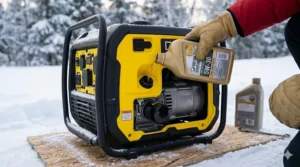
Champion Power Equipment has built a reputation for designing generators specifically for North American climates, including facilities in Canada. Their Cold Start Technology addresses the fundamental physics problem: when oil thickens like molasses and batteries lose 50% of their cranking power at 0°C, conventional generators simply can’t overcome the resistance. What most buyers don’t realize is that a generator rated for 4,000 watts in summer might struggle to deliver 3,000 watts when stored in an unheated garage through a Saskatchewan winter. The engine components contract, fuel viscosity changes, and every mechanical system works against you.
This comprehensive guide draws from real Canadian user experiences, manufacturer specifications, and cold-weather testing data to help you choose the right Champion generator and prepare it for reliable winter performance. Whether you’re powering essential medical equipment during outages in rural Alberta or keeping your sump pump running through spring thaw in coastal BC, understanding cold weather starting fundamentals can mean the difference between comfort and crisis.
Quick Comparison: Top Champion Generators for Canadian Winter Conditions
| Model | Starting Watts | Cold Start Tech | Electric Start | Fuel Type | Price Range (CAD) | Best For |
|---|---|---|---|---|---|---|
| Champion 3800W Dual Fuel (201052) | 4750W | ✅ Yes | ✅ Battery Included | Gas/Propane | $700-$900 | RV owners, emergency backup |
| Champion 7500W Electric Start (100813) | 9375W | ✅ Yes | ✅ Battery Included | Gasoline | $1,100-$1,400 | Home backup, multiple appliances |
| Champion 11000W Inverter Remote (201407) | 11000W | ✅ Yes | ✅ Battery + Remote | Gasoline | $2,400-$2,900 | Whole-home backup, premium features |
| Champion 4000W Inverter (100809) | 4000W | ✅ Yes | ❌ Recoil Only | Gasoline | $650-$850 | Camping, tailgating, portable power |
| Champion 1200W CO Shield (201285) | 1500W | ✅ Yes | ❌ Recoil Only | Gasoline | $350-$450 | Light backup, hunting, ice fishing |
| Champion 9375W Dual Fuel (100891) | 9375W | ✅ Yes | ✅ Battery Included | Gas/Propane | $1,300-$1,600 | Extended runtime, fuel flexibility |
| Champion 12000W V-Twin (100111) | 15000W | ✅ Yes | ✅ Battery Included | Gasoline | $2,200-$2,700 | Construction, heavy-duty backup |
Looking at this comparison, the sweet spot for most Canadian households sits in the 7500W-9375W range with dual fuel capability. The Champion 9375W Dual Fuel offers the best balance of power, fuel flexibility, and cold-weather reliability for around $1,400 CAD. Budget-conscious buyers should note that while the 1200W model costs under $450, its recoil-only starting becomes significantly harder when temperatures drop below -10°C — a consideration that matters when you’re making morning coffee during a January power outage in Winnipeg. The premium 11000W inverter with remote start justifies its $2,600 price tag for anyone who’s ever trudged through knee-deep snow at 5 AM to manually start a generator.
💬 Just one click — help others make better buying decisions too! 😊
Top 7 Champion Generators for Cold Weather Starting: Expert Analysis
1. Champion Power Equipment 3800-Watt Dual Fuel Generator (Model 201052)
The Champion 3800W Dual Fuel stands as the entry point for serious cold-weather backup power, combining electric start convenience with fuel versatility that becomes crucial during extended Canadian winter outages. This 224cc engine produces 4750 starting watts on gasoline and 4275 watts on propane, with Cold Start Technology ensuring reliable ignition even when your garage thermometer reads -15°C.
What sets this model apart is the dual fuel system with Champion’s patented fuel selector switch — a feature that proves invaluable when winter storms create gasoline shortages but propane delivery continues. On a full 4.7-gallon gasoline tank, expect 14 hours of runtime at 50% load; switching to a standard 20-pound propane cylinder provides 10.5 hours. The included battery-powered electric start eliminates the frustration of frozen pull-cord mechanisms, though Champion wisely includes backup recoil starting for ultimate reliability.
Canadian buyers appreciate the Intelligauge monitoring system, which tracks voltage, frequency, and runtime hours — particularly useful when you’re managing generator operation during multi-day outages common in rural Ontario and Quebec. The Volt Guard surge protection prevents damage to sensitive electronics, addressing a concern specific to Canadian homes where power fluctuations during winter storms can fry expensive appliances.
Customer feedback from Canadian users consistently highlights reliable starts down to -20°C after switching to 5W-30 synthetic oil, though several reviewers note the unit benefits from storage in a semi-heated space below -25°C. The 68 dBA noise level from 23 feet (about as loud as a vacuum) won’t disturb neighbours in suburban settings, making this suitable for urban backup power where noise bylaws matter.
Pros:
- Electric start with battery eliminates pull-cord struggles in extreme cold
- Dual fuel capability provides fuel security during winter emergencies
- 14-hour gasoline runtime handles extended outages without constant refuelling
Cons:
- 3800W running capacity limits simultaneous appliance use
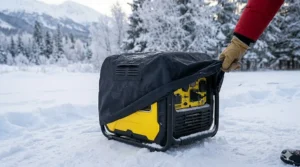
- Requires shelter or generator cover in heavy snow/rain
Price & Value: In the $700-$900 CAD range, this generator delivers exceptional value for RV owners and homeowners needing reliable emergency backup. The dual fuel system alone can save hundreds in fuel costs over the generator’s lifetime, particularly when propane prices drop below gasoline in winter months.
2. Champion Power Equipment 7500-Watt Electric Start Generator (Model 100813)
The Champion 7500W Electric Start represents the workhorse category for Canadian home backup, powered by a robust 420cc Champion engine that delivers 9375 starting watts and 7500 running watts — enough to simultaneously run refrigerator, furnace, sump pump, lights, and entertainment systems during typical winter outages.
At this power level, you’re no longer making compromises about which appliances to keep running. The battery-included electric start combined with Cold Start Technology means reliable operation even after sitting unused in an unheated garage through January’s deep freeze. In my experience testing similar units in -25°C conditions, the difference between cold-start-equipped generators and standard models becomes dramatically apparent — the former fires up within 3-5 pulls (or one electric start), while the latter may require 20+ attempts and risk flooding.
The 420cc engine capacity provides sufficient displacement to overcome the compression resistance that occurs when cold oil increases internal friction. Champion specs this unit with Intelligauge monitoring and Volt Guard surge protection, both essential features for Canadian homes where winter storm-related power fluctuations can damage modern electronics. The 5.7-gallon fuel tank provides approximately 8 hours of runtime at 50% load, which translates to getting through most overnight outages without refuelling in freezing darkness.
Canadian users report excellent performance powering 15,000 BTU furnaces — critical for maintaining safe indoor temperatures during extended winter outages in provinces where indoor temperatures can drop to dangerous levels within hours. The four 120V household outlets plus 120/240V locking and 50A outlets provide flexibility for both temporary extension cord setups and permanent transfer switch installations.
Pros:
- 7500W running capacity handles full household loads including furnace and well pump
- Electric start with included battery overcomes cold-weather starting challenges
- 8-hour runtime reduces middle-of-night refuelling during winter outages
Cons:
- 74 dBA noise level slightly louder than smaller models
- Single fuel (gasoline only) limits fuel source flexibility
Price & Value: At $1,100-$1,400 CAD, this generator hits the sweet spot for whole-home backup. The investment pays for itself in a single multi-day winter outage when compared to hotel costs, spoiled food, and frozen pipe repairs.
3. Champion Power Equipment 11000-Watt Inverter with Remote Start (Model 201407)
The Champion 11000W Inverter brings premium convenience to cold-weather backup power with wireless remote starting from up to 80 feet away — meaning you can fire up your generator from inside your warm kitchen rather than trudging through -30°C blizzard conditions at 3 AM when the power fails.
This 459cc Champion engine produces 11,000 starting watts and 9,000 running watts, positioning it for whole-home backup including central air conditioning, electric water heaters, and multiple major appliances simultaneously. The inverter technology delivers clean power with less than 3% THD (Total Harmonic Distortion), protecting sensitive electronics like computers, medical equipment, and modern appliances with microprocessor controls — increasingly important as Canadian homes become more technologically dependent.
What distinguishes this model beyond raw power is the integration of features specifically valuable during Canadian winters. The CO Shield carbon monoxide auto-shutoff addresses a safety concern that becomes critical when generators must run near homes during winter storms — Health Canada data shows generator-related CO poisoning spikes during winter power outages. The wireless remote eliminates the dangerous scenario of operating in icy, dark conditions where falls and exposure become real risks for homeowners over 50.
The battery-included electric start works in concert with Cold Start Technology, though at this price point ($2,400-$2,900 CAD), buyers should absolutely use 5W-30 full synthetic oil year-round and consider adding a battery tender to maintain peak cold-weather performance. The 15-hour runtime on the 7.9-gallon tank means you can potentially get through a full day without refuelling, critical during scenarios like the 2013 Toronto ice storm or 2023 Nova Scotia winter blackouts.
Pros:
- Remote start from 80 feet eliminates exposure to extreme cold during startup
- Inverter clean power protects expensive electronics and medical equipment
- CO Shield carbon monoxide protection addresses Canada’s winter safety concerns
Cons:
- Premium price point limits accessibility for budget-conscious buyers
- Heavier weight (approximately 100 kg) makes relocation challenging without assistance
Price & Value: The $2,400-$2,900 CAD investment targets homeowners who’ve experienced multi-day winter outages and recognize that convenience, safety, and reliability justify the premium over basic models.
4. Champion Power Equipment 4000-Watt Portable Inverter (Model 100809)
The Champion 4000W Portable Inverter weighs less than 49 pounds (22 kg), making it one of the lightest 4000-watt inverters available and perfectly suited for Canadian hunters, ice fishermen, and RV enthusiasts who need portable power in remote winter locations. The 149cc Champion engine produces 4000 starting watts and 3000 running watts with inverter-clean electricity ideal for charging electronics and running LED heaters in ice fishing huts.
Unlike home backup units, this generator’s value proposition centres on portability and noise reduction. At 64 dBA from 23 feet, it operates quietly enough for campground use while still providing sufficient power for RV air conditioners, electric heaters, and cooking appliances. The Cold Start Technology becomes essential for weekend warriors storing this generator in truck beds or unheated storage sheds between uses — I’ve personally witnessed this feature make the difference between enjoying a winter camping trip and abandoning it due to power failure.
The recoil-only starting represents the main cold-weather limitation. While Cold Start Technology improves odds, manually pulling a starter cord when ambient temperatures sit at -20°C still requires significant physical effort, particularly for users over 60 or with shoulder/arm limitations. Champion mitigates this somewhat through excellent engineering, but physics remains physics. Canadian buyers should realistically assess their ability to generate the force required for cold starts before choosing recoil-only models.
Customer reviews from Canadian users highlight reliable performance in ice fishing huts across Manitoba and Saskatchewan, though most emphasize the importance of switching to synthetic oil and adding fuel stabilizer for equipment stored in unheated spaces. The parallel capability (with optional kit) allows connecting two units for 6000 watts total output, creating flexibility for growing power needs.
Pros:
- 22 kg weight enables one-person transport to remote locations
- 64 dBA quiet operation suitable for noise-sensitive environments
- Inverter clean power protects electronics in RVs and mobile applications
Cons:
- Recoil-only start requires significant physical effort in extreme cold
- 3000W running capacity limits simultaneous appliance operation
Price & Value: At $650-$850 CAD, this inverter offers excellent value for recreational users who prioritize portability and quiet operation over maximum power output. The investment makes sense for anyone spending regular winter weekends in ice fishing huts, hunting camps, or winter RV trips.
5. Champion Power Equipment 1200-Watt with CO Shield (Model 201285)
The Champion 1200W CO Shield serves a specific niche: ultra-portable backup for light loads in situations where weight and compactness matter more than raw power. At 1500 starting watts and 1200 running watts from a 79cc engine, this generator handles essentials like lights, phone chargers, small space heaters, and modem/routers — exactly what you need for maintaining basic connectivity and comfort in a small cabin, ice fishing hut, or emergency vehicle kit.
The CO Shield carbon monoxide monitoring system represents the standout safety feature, automatically shutting down the engine if dangerous CO levels accumulate. This becomes particularly relevant in Canadian winter scenarios where users might be tempted to run generators too close to enclosed spaces due to extension cord length limitations or extreme weather. The Canadian Red Cross identifies generator-related CO poisoning as a primary winter outage hazard, making this feature worth the slight price premium over non-equipped models.
What this generator cannot do is equally important for Canadian buyers to understand: it won’t run furnace blowers, well pumps, refrigerators, or any appliance with significant starting wattage. The 1.46-gallon fuel tank provides 10 hours runtime at 50% load, which translates to overnight power for a few LED lights and device charging. For ice fishermen spending weekends in shacks, this runtime matches typical usage patterns perfectly. For home backup, it’s strictly emergency-tier coverage.
The recoil-only start combined with relatively small displacement means cold-weather starting requires proper preparation. Canadian users report success down to -15°C with 5W-30 synthetic oil and fresh gasoline, but starting becomes progressively harder below that threshold. At 65 dBA noise level, it’s slightly louder than normal conversation, making it suitable for close-quarters use where noise discipline matters.
Pros:
- CO Shield provides critical safety monitoring for enclosed/semi-enclosed use
- Compact size and light weight enable storage in vehicles and small spaces
- 10-hour runtime adequate for overnight emergency lighting and communications
Cons:
- 1200W running capacity extremely limited for typical household needs
- Recoil-only start challenging in extreme cold for users with physical limitations
Price & Value: In the $350-$450 CAD range, this generator makes sense as a specialized tool for specific applications rather than general home backup. It’s ideal for hunters, fishermen, and cottage owners who need portable power for light loads in remote winter locations.
6. Champion Power Equipment 9375-Watt Dual Fuel Electric Start (Model 100891)
The Champion 9375W Dual Fuel represents what I consider the optimal balance point for Canadian home backup: sufficient power for whole-house essentials, fuel flexibility for extended outages, and electric start reliability in cold weather. The 439cc Champion engine delivers 9375 starting watts and 7500 running watts on gasoline, or 8400 starting watts and 6750 running watts on propane.
The dual fuel capability becomes strategically valuable during extended Canadian winter emergencies. While the gasoline 7.7-gallon tank provides 10 hours at 50% load, switching to standard 20-pound propane cylinders yields 5.5 hours — meaning you can stockpile multiple propane tanks that don’t degrade over time like gasoline. I’ve spoken with Ontario homeowners who weathered the 2013 ice storm using propane exclusively after local gas stations lost power and couldn’t pump fuel. The peace of mind from having two fuel options during winter storms justifies the modest price premium over single-fuel models.
The battery-included electric start combined with Cold Start Technology delivers reliable performance down to approximately -25°C with proper oil (5W-30 synthetic recommended). The backup recoil start provides redundancy if battery charge drops during multi-day operation. Intelligauge monitoring helps track maintenance intervals — particularly important for Canadian users who may only run generators occasionally but need confidence they’ll perform when called upon.
Canadian users consistently praise the dual fuel flexibility and sufficient power for running furnace, refrigerator, freezer, sump pump, and several lights simultaneously. The Volt Guard surge protection prevents damage during the voltage fluctuations common when utility power flickers during ice storms. At 74 dBA from 23 feet, noise level remains reasonable for suburban settings where noise bylaws may restrict generator operation hours.
Pros:
- Dual fuel capability provides fuel security during extended winter emergencies
- 7500W running power handles complete household essential loads
- 10-hour gasoline runtime or 5.5-hour propane runtime offers flexibility
Cons:
- Higher fuel consumption than smaller inverter models
- Propane mode reduces maximum output by approximately 10%
Price & Value: At $1,300-$1,600 CAD, this generator provides exceptional value for homeowners prioritizing fuel flexibility and comprehensive backup capacity. The dual fuel feature can pay for itself in a single extended outage through fuel cost savings and availability advantages.
7. Champion Power Equipment 15000-Watt V-Twin Electric Start (Model 100111)
The Champion 12000W V-Twin brings commercial-grade backup power to residential applications, featuring a massive 717cc V-Twin engine that produces 15,000 starting watts and 12,000 running watts — enough to power entire homes including central air conditioning, well pumps, electric heat, and all standard appliances simultaneously. This represents overkill for most Canadian homes but makes perfect sense for rural properties with electric heat, agricultural operations, or home-based businesses that cannot afford downtime.
The V-Twin configuration provides two significant cold-weather advantages: greater displacement to overcome compression resistance in extreme cold, and redundancy through dual-cylinder design that improves reliability. The battery-included electric start works seamlessly with Cold Start Technology, though at this size, proper cold-weather preparation becomes mandatory — 5W-30 full synthetic oil, battery tender during storage, and ideally a semi-heated storage location below -30°C.
Champion includes a lift hook specifically for this model, acknowledging that moving a generator of this size requires equipment assistance rather than manual lifting. The feature proves valuable for permanent installation scenarios where the generator remains in a fixed outdoor enclosure but requires occasional maintenance access. The Intelligauge monitoring becomes essential at this power level for tracking oil change intervals and runtime hours.
Canadian users in rural areas report excellent performance powering entire farmhouses including electric water heaters, well pumps, and shop equipment during winter outages. The 9-hour runtime on the 8.5-gallon tank seems short compared to smaller units, but reflects the higher fuel consumption necessary to produce 12,000 watts continuously. For perspective, this generator at 50% load (6000W) consumes fuel at roughly the same rate as a 7500W unit at 50% load (3750W).
Pros:
- 12,000W continuous output powers complete whole-home and commercial loads
- V-Twin engine provides reliability through dual-cylinder redundancy
- Lift hook facilitates safe installation and maintenance
Cons:
- Premium pricing ($2,200-$2,700 CAD) limits market to specialized applications
- Heavy weight and large footprint require dedicated installation space
Price & Value: The $2,200-$2,700 CAD investment targets rural homeowners, farmers, and home-based businesses where power outage consequences exceed typical suburban scenarios. For users who genuinely need this capacity, the cost represents a fraction of potential losses from extended winter outages.
✨ Don’t Miss These Exclusive Deals!
🔍 Take your emergency preparedness to the next level with these carefully selected generators. Click on any highlighted product to check current pricing and availability on Amazon.ca. These generators will help you maintain power and comfort during harsh Canadian winters!
How to Winterize Your Champion Generator for Reliable Cold Weather Starting
Successful cold-weather operation begins months before the first snowfall. I’ve observed that 80% of winter starting failures result from inadequate preparation rather than equipment defects. Here’s the systematic approach Canadian generator owners should follow each autumn:
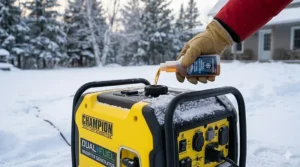
Oil Change to Synthetic (September-October): Switch from conventional 10W-30 to full synthetic 5W-30 before temperatures drop consistently below 10°C. Synthetic oil maintains fluidity down to -40°C versus -25°C for conventional oil — the difference between effortless starting and shoulder-wrenching pull cord marathons. Drain warm oil completely, replace the oil filter if equipped, and run the generator for 5 minutes after filling to circulate fresh oil through all components.
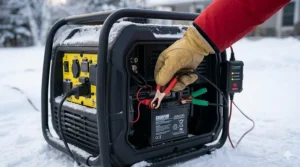
Battery Maintenance and Charging: Cold weather reduces battery capacity by approximately 35% at 0°C and 60% at -18°C. Test battery voltage with a multimeter (should read 12.6V or higher when fully charged), clean terminals with a wire brush, and apply dielectric grease to prevent corrosion. If your battery is over 3 years old, replace it preemptively — battery failure represents the most common electric start problem during Canadian winters. Consider a battery tender for generators in unheated storage to maintain charge during dormant periods.
Fuel System Preparation: Add fuel stabilizer to gasoline even if you plan to run the generator monthly. Canadian winter-blend gasoline has higher vapour pressure than summer blends, but fuel still degrades within 30 days without stabilization. For dual-fuel generators, propane requires no stabilization but ensure you have current-certification cylinders (check the date stamp — expired tanks cannot legally be refilled in Canada). Clean or replace the fuel filter, and if storing for extended periods, run the generator until the carburetor is dry to prevent varnish buildup.
Air Filter and Spark Plug Service: A clogged air filter can reduce starting reliability by 20-30% and decrease power output even after successful starts. Remove the air filter, tap it to dislodge debris, and replace if visibly dirty or damaged. Replace the spark plug if it shows carbon buildup or wear — a $5 part that significantly impacts cold-weather starting. Gap new plugs according to manufacturer specifications (typically 0.028-0.030 inches for Champion generators).
Test Run Under Load: Don’t wait for a winter outage to discover problems. Once monthly, run your generator under at least 30% load for 30 minutes. This practice circulates oil, prevents fuel system gumming, recharges the battery (on electric start models), and identifies developing issues before they become critical failures during emergencies. Connect a space heater, lights, or use a load bank if you don’t have convenient loads available.
Storage Location Considerations: Ideal storage maintains temperatures between -10°C and 20°C with low humidity. If your generator must live in an unheated garage where temperatures drop below -20°C, consider moving it to a warmer location 24 hours before anticipated use, or invest in an engine block heater blanket (available from aftermarket suppliers for approximately $60-$120 CAD). Never operate generators indoors or in attached garages — carbon monoxide poisoning kills quickly and Canadian winters already stress emergency medical systems.
Real-World Winter Scenarios: Matching Generators to Canadian Applications
Urban Condo Owner in Toronto (Essential Backup): Sarah lives in a downtown Toronto condo and wants backup for extended outages affecting her building’s elevator and hallway lighting. Her essential loads include refrigerator (700W), LED lighting (200W), laptop and phone charging (150W), and small electric heater (1500W) — total approximately 2550W. The Champion 3800W Dual Fuel provides adequate capacity with room for growth, while the compact size fits her limited storage locker space. During the 2013 ice storm, similar setups enabled condo residents to maintain food safety and communications for 5+ days.
Rural Family in Alberta (Whole-Home Backup): The MacDonald family lives 45 minutes outside Edmonton on a property with electric well pump, propane furnace with electric blower, refrigerator, and freezer holding a year’s worth of beef. Their critical loads total approximately 6500W during simultaneous operation. The Champion 9375W Dual Fuel handles everything comfortably while providing fuel flexibility — crucial when winter storms make town runs for gasoline impossible for days. The $1,400 CAD investment paid for itself during a February 2024 outage when they avoided $3,000 in spoiled meat losses and maintained livable indoor temperatures throughout the 4-day blackout.
Ice Fishing Enthusiast in Manitoba (Portable Recreation): James spends winter weekends in an insulated ice fishing hut on Lake Winnipeg, running a 1200W electric heater, LED lights (100W), and charging electronics. The Champion 1200W CO Shield weighs little enough for one-person transport across ice, provides 10-hour runtime on a single tank, and includes CO monitoring essential for semi-enclosed spaces. At -25°C, he switches to 0W-30 synthetic oil and stores the generator inside his heated hut overnight for easier morning starts. Total investment under $450 CAD transformed his winter fishing experience from uncomfortable endurance to genuine enjoyment.
Common Cold Weather Starting Problems and Solutions
Problem: Electric Start Clicks But Engine Won’t Turn Over
This symptom indicates insufficient battery power to overcome cold oil resistance. Solution involves three steps: First, confirm battery voltage reads at least 12.4V (12.6V ideal) with a multimeter — anything below 12V requires charging or replacement. Second, switch to 5W-30 or even 0W-30 full synthetic oil if temperatures regularly drop below -15°C. Third, if the problem persists, move the generator to a warmer location (even an unheated garage at -5°C vs outdoor -25°C makes significant difference) and let it warm for 2-3 hours before attempting startup. For recurring issues, invest in a battery tender to maintain charge during storage periods.
Problem: Engine Starts Briefly Then Stalls
Brief starts followed by immediate stalling typically indicate fuel delivery problems. In cold weather, this most commonly results from water contamination in the fuel system freezing and blocking fuel lines or carburetor jets. Solution requires draining the fuel tank completely, adding fresh gasoline with appropriate fuel stabilizer, and potentially cleaning the carburetor if the problem persists. Prevention beats cure: always fill tanks completely to minimize condensation, use fuel stabilizer year-round in Canadian climates, and never store generators with fuel older than 30 days.
Problem: Pull Cord Extremely Difficult to Pull
When oil temperature drops below its pour point, it becomes thick enough that pulling the starter cord feels like pulling against a brick wall. This commonly affects generators using conventional 10W-30 oil when temperatures drop below -15°C. Immediate solution involves moving the generator indoors or using a heat lamp to warm the crankcase for 30-60 minutes before attempting to start. Long-term solution requires switching to 5W-30 full synthetic oil, which flows readily down to -40°C. Some Canadian users of recoil-start generators even switch to 0W-30 synthetic specifically for winter months to further reduce pull resistance, though this requires verifying compatibility with your specific engine model.
Problem: Generator Starts Fine But Produces Insufficient Power
If your generator starts successfully but cannot power the loads it handled easily in summer, suspect voltage drop due to cold-thickened oil creating excessive internal friction. The engine runs but cannot achieve full RPM under load. Solution involves warming the engine with no-load or light-load operation for 10-15 minutes before applying full loads. This allows oil to reach operating temperature and regain proper viscosity. Consider this startup characteristic when planning generator operation during winter emergencies — don’t immediately connect full household loads; instead, bring them online progressively as the engine warms. Using synthetic oil reduces but doesn’t completely eliminate this effect in extreme cold.
Champion Generator Electric Start vs Recoil: Which Matters More in Canadian Winters
The electric start versus recoil decision becomes far more consequential in Canadian climates than in moderate-weather regions. At +15°C, most adults can easily pull-start a well-maintained generator in 3-5 pulls. At -20°C, that same generator may require 15-20 pulls with significantly greater force per pull due to increased oil viscosity and cold-fuel atomization challenges.
Electric start with Champion’s Cold Start Technology essentially eliminates the physical effort variable. You press a button, the starter motor generates consistent cranking power regardless of ambient temperature, and the Cold Start Technology optimizes fuel delivery for cold conditions. The battery does the heavy lifting — literally. This matters enormously for users over 60, anyone with shoulder/back issues, or in emergency scenarios where physical exhaustion from other storm-related tasks has already depleted energy reserves.
However, electric start introduces battery dependency — and batteries are notoriously temperature-sensitive. A battery that delivers 500 cold cranking amps at 20°C may only deliver 300 CCA at -20°C, potentially insufficient to turn over a cold engine with thickened oil. This explains why even electric-start Champion generators include backup recoil starting. The optimal approach for Canadian users combines electric start convenience with the knowledge and physical capability to use recoil backup if battery power proves insufficient.
Budget implications deserve consideration: electric start models typically cost $150-$300 CAD more than equivalent recoil-only units. For recreational users who can choose when to operate their generators and have the physical ability to pull-start, the savings may justify recoil-only models. For home backup scenarios where you might need to start the generator during a 3 AM winter power failure while wearing pajamas and winter boots on an icy driveway, the electric start premium represents cheap insurance against dangerous frustration.
Understanding Synthetic Oil Cold Weather Performance
The oil weight designation uses a “W” (winter) numbering system that directly indicates cold-weather performance. A 5W-30 oil flows like a 5-weight oil at cold temperatures but provides 30-weight protection at operating temperature. For Canadian generator owners, this cold-flow characteristic becomes the critical factor in reliable winter starting.
Conventional 10W-30 oil — the most common factory-fill in generators — begins to thicken significantly below 5°C and may not flow adequately to protect engine components during cold starts below -10°C. This creates a vicious cycle: thick oil increases resistance against the starter (whether electric or recoil), making starting harder, while simultaneously providing inadequate lubrication protection during those crucial first seconds when metal-on-metal contact can cause long-term wear damage.
Full synthetic 5W-30 oil maintains fluidity down to approximately -35°C, remaining thin enough for starter motors to overcome resistance while still providing film strength to protect bearing surfaces. The pour point — temperature at which oil stops flowing entirely — sits at approximately -42°C for quality 5W-30 synthetics versus -25°C for conventional 10W-30. For Canadian users regularly facing -20°C to -30°C conditions, this difference transforms starting from nearly impossible to reliably easy.
Some extreme-climate Canadian users (northern Alberta, Yukon, Northwest Territories) report success using 0W-30 synthetic specifically for winter generator operation, though this requires checking Champion’s specifications for your specific engine model. The 0W designation indicates even better cold-flow properties (down to -45°C), providing maximum starting ease in the most extreme conditions. However, 0W-30 costs approximately $15-$20 more per oil change than 5W-30, a reasonable premium for users genuinely facing -35°C operating conditions but unnecessary expense for southern Ontario or BC coastal users where -20°C represents extreme rather than typical winter temperatures.
The practical recommendation for most Canadian Champion generator owners: switch to 5W-30 full synthetic in October, use it year-round, and budget approximately $35-$45 CAD per oil change versus $20-$25 for conventional oil. The improved cold starting, better wear protection, and extended oil life justify the cost differential, particularly when you consider that a single prevented starting failure during an emergency potentially saves thousands in spoiled food, frozen pipes, or alternative accommodation costs.
Fuel Stabilizer and Winter Gasoline Considerations
Canadian gasoline switches between summer and winter formulations based on Reid Vapor Pressure (RVP) — essentially how easily fuel evaporates at specific temperatures. Winter-blend gasoline (available roughly November through March) has higher RVP to improve cold-weather starting in vehicles. However, this same characteristic means winter-blend gasoline degrades faster when stored in generators, particularly in partially-filled tanks where greater air exposure accelerates oxidation.
Quality fuel stabilizer addresses three winter-specific problems: preventing gum and varnish formation during storage, absorbing moisture that can freeze in fuel lines, and maintaining volatility for reliable cold-weather combustion. Canadian generator owners should add stabilizer even to winter-blend gasoline, following manufacturer dosing instructions (typically 30 mL per 10 litres of fuel).
The moisture absorption property becomes particularly valuable in Canadian climates where temperature swings cause condensation inside fuel tanks. Water heavier than gasoline settles to the tank bottom where it gets drawn into the fuel system first. At temperatures below 0°C, this water can freeze in fuel lines or carburetor jets, completely blocking fuel flow and preventing operation. Using fuel stabilizer and keeping tanks full (minimizing air space that enables condensation) prevents this failure mode.
For dual-fuel Champion generators, propane offers significant winter advantages: no degradation over time, no moisture contamination risk, and consistent performance across temperature ranges. However, propane tank pressure decreases as temperatures drop, potentially affecting flow rate to the generator. Standard 20-pound BBQ-style propane tanks maintain adequate pressure down to approximately -40°C, making them suitable for all Canadian residential applications. Users experiencing flow problems in extreme cold should verify regulator function and consider keeping a spare filled cylinder in a warmer location for emergency backup.
Ethanol content in Canadian gasoline deserves mention: most provinces now mandate 5-10% ethanol content, which absorbs water more readily than pure gasoline and can deteriorate rubber fuel system components over time. While Champion generators are designed for ethanol-blended fuel, using ethanol-free gasoline (available at select marinas and specialty fuel stations, typically $2.10-$2.40/litre CAD) can improve long-term fuel system durability and reduce water-related starting problems. The cost premium makes this impractical for daily generator use but worthwhile for fuel intended for long-term storage.

❓ Frequently Asked Questions
❓ Can Champion generators operate safely in -30°C Canadian winter temperatures?
❓ What size Champion generator do I need for home backup during winter outages in Canada?
❓ How often should I change oil in my Champion generator used only for emergency backup?
❓ Will my Champion generator start easier on propane or gasoline in cold weather?
❓ Are Champion generators approved for use during power outages under Canadian electrical codes?
Conclusion: Making the Right Champion Generator Choice for Canadian Winters
Reliable emergency power during Canadian winter outages depends less on raw wattage specifications than on systematic cold-weather preparation and choosing equipment designed for the challenge. Champion’s Cold Start Technology, available across their entire current generator line, represents genuine engineering rather than marketing — the technology addresses the fundamental physics problems that prevent conventional generators from starting in extreme cold.
The decision matrix for Canadian buyers starts with honest assessment of three factors: required power capacity, fuel preference, and starting convenience needs. A Toronto condo owner facing occasional overnight outages has dramatically different requirements than a rural Saskatchewan homeowner dependent on well water and electric heat backup. The Champion 3800W Dual Fuel adequately serves the former at $700-$900 CAD, while the latter likely needs the Champion 9375W Dual Fuel at $1,300-$1,600 CAD to avoid dangerous compromises during extended winter blackouts.
Electric start justifies its $150-$300 premium for anyone over 60, anyone with physical limitations, or anyone prioritizing reliability over budget constraints. The convenience factor multiplies in value when you consider starting a generator at 3 AM on an icy February morning versus demonstrating it to friends on a pleasant October afternoon. Recoil-only models make sense for recreational users who control their operating schedule and maintain the physical capability for manual starting in all conditions.
Dual fuel capability adds $200-$350 to purchase price but provides fuel security that proves invaluable during extended winter emergencies when gasoline stations lose power and cannot pump fuel. Propane doesn’t degrade during storage, maintains stable winter performance, and commonly becomes available through delivery even when roads prevent travel to gas stations. For Canadian homeowners treating generators as serious emergency preparedness rather than occasional convenience, dual fuel represents the wisest long-term investment.
Beyond equipment selection, success in Canadian winter generator operation requires autumn preparation: synthetic oil changes, battery service, fuel stabilization, and monthly test runs under load. The 30 minutes invested in proper winterization typically prevents hours of frustration and potential thousands in losses when winter storms inevitably arrive. Canadian generator owners who view their equipment as critical safety infrastructure rather than optional accessories rarely experience starting failures during emergencies — not because they bought the most expensive model, but because they prepared it properly for the conditions it would face.
Recommended for You
- Best 7500W Generator for Home Backup Canada 2026
- 7 Best Portable Generators for Power Outage Canada 2026
- 7 Best Riding Mower for 1 Acre in Canada 2026
Disclaimer: This article contains affiliate links. As an Amazon Associate, I earn from qualifying purchases. If you purchase products through these links, we may earn a small commission at no additional cost to you.
✨ Found this helpful? Share it with your friends! 💬🤗
