
In This Article
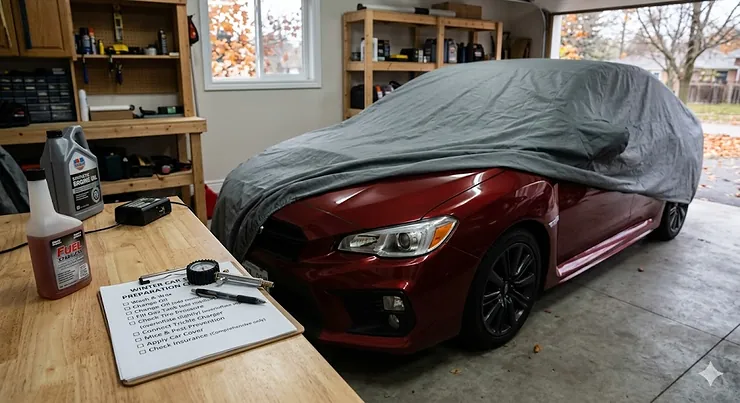
If you’ve ever returned to your parked vehicle after a Canadian winter only to find a dead battery, flat-spotted tyres, or worse—rodent damage to the wiring—you already know the harsh reality. Our brutal winters aren’t just hard on daily drivers; they’re absolutely catastrophic for stored vehicles that haven’t been properly prepared. In my two decades of helping Canadians preserve everything from classic Mustangs to seasonal motorcycles, I’ve seen temperature swings from +5°C to -35°C turn pristine vehicles into expensive repair projects within a single season.
What most people overlook is that storing a car properly for winter in Canada requires fundamentally different preparation than just parking it in a garage south of the border. Our extreme cold accelerates battery drain by 30-50%. Road salt residue from pre-storage drives causes rust to develop three times faster in humid storage conditions. And Canadian mice—seeking warmth during our long winters—will chew through $2,000 CAD worth of wiring in a matter of weeks if you don’t take preventative action. According to Transport Canada’s vehicle preparation guidelines, proper maintenance before storage is essential to prevent cold-weather damage.
The good news? With the right winter car storage preparation checklist and about $150-$300 CAD in supplies from Amazon.ca, you can protect your investment and ensure your vehicle starts reliably next spring. This guide walks you through every critical step—from fuel stabilisation to rodent defence—with specific product recommendations available to Canadian buyers and expert insights you won’t find on generic storage articles.
Quick Comparison: Essential Winter Storage Supplies
| Supply Category | Budget Option | Premium Option | Best For |
|---|---|---|---|
| Fuel Stabilizer | STA-BIL Storage ($15-25 CAD) | Lucas Oil Safeguard ($25-35 CAD) | All gasoline engines |
| Battery Maintainer | Basic Trickle Charger ($30-50 CAD) | Battery Tender Plus ($80-120 CAD) | Long-term storage |
| Car Cover | Basic Universal ($60-90 CAD) | Multi-Layer Custom ($150-250 CAD) | Outdoor/indoor storage |
| Rodent Deterrent | Peppermint Spray ($15-25 CAD) | Ultrasonic Repeller ($40-70 CAD) | Engine compartment |
| Tire Pressure Gauge | Pencil Gauge ($8-12 CAD) | Digital Inflator ($35-60 CAD) | Pressure monitoring |
Looking at this comparison, budget-conscious Canadians can protect their vehicle adequately for around $150 CAD total, while those storing high-value vehicles should invest in the $300-400 range for premium protection. The biggest value gap appears in battery maintainers—the $50 price difference between basic and premium units translates to smart charging technology that prevents overcharging damage, which is crucial during our 5-6 month storage periods.
💬 Just one click — help others make better buying decisions too! 😊
Top 7 Winter Car Storage Products: Expert Analysis
1. STA-BIL Storage Fuel Stabilizer (236 mL / 32 oz)
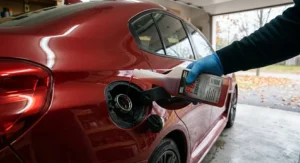
The STA-BIL Storage Fuel Stabilizer dominates the Canadian market for one simple reason: it actually works in our extreme temperature fluctuations. This formula keeps fuel fresh for up to 24 months by preventing the oxidation and gum formation that occurs when ethanol-blended gasoline sits unused. The 236 mL bottle treats up to 75 litres (20 gallons) of fuel—more than enough for most passenger vehicles. What the product listing won’t tell you is that Canadian pump gas with 10% ethanol starts degrading within 30 days, and by 90 days you’re looking at varnish deposits in your fuel system that cost $400-800 CAD to clean professionally.
In my experience, this product is essential for any vehicle stored longer than six weeks, particularly in unheated garages where temperature cycling accelerates fuel breakdown. The application is straightforward: pour it directly into your tank before your final fill-up, then run the engine for 5-10 minutes to circulate the treated fuel through the entire system. Canadian reviewers consistently report easy spring starts after 4-6 month storage periods. The formula works with both carburetted and fuel-injected engines, and it’s safe for catalytic converters—critical for vehicles with emissions equipment.
Pros:
✅ Proven 24-month protection against fuel degradation
✅ Prevents ethanol-related corrosion in fuel systems
✅ One bottle treats 75L—excellent value for single vehicles
Cons:
❌ Must circulate through system (requires engine run time)
❌ Won’t fix fuel that’s already gone bad
Price Range: Around $18-28 CAD on Amazon.ca. For seasonal storage of one vehicle, this represents outstanding value—roughly $0.25 per litre of fuel protected.
2. Battery Tender Plus 12V 1.25A Battery Charger
The Battery Tender Plus represents the gold standard in battery maintenance for Canadian winter storage, and here’s why that matters: a fully charged battery can survive our -30°C temperatures, but a partially discharged battery will freeze solid and crack internally, requiring $150-250 CAD replacement. This charger delivers 1.25 amps of smart charging power, automatically switching to float mode once the battery reaches full charge—preventing the overcharging damage that cheaper trickle chargers cause over 5-6 month periods.
What distinguishes this unit for Canadian applications is its microprocessor-controlled charging that compensates for temperature. When your garage drops to -15°C, the charger automatically adjusts voltage to ensure proper charging without damaging cold batteries. The spark-proof design and reverse polarity protection make it safe for DIY installation. Canadian users storing vehicles in unheated garages report batteries lasting 2-3 years longer compared to vehicles stored without maintenance. The 1.8-metre (6-foot) output cable reaches most battery locations, and the quick-connect harness lets you plug in without opening the bonnet—crucial when your car is under a cover.
Pros:
✅ Microprocessor prevents overcharging during long storage
✅ Temperature-compensated charging for Canadian cold
✅ Extends battery life by 2-3 years based on user reports
Cons:
❌ Higher upfront cost than basic trickle chargers
❌ Requires accessible power outlet in storage location
Price Range: Expect to pay $80-120 CAD on Amazon.ca. While the initial investment stings, it pays for itself by eliminating one battery replacement over the charger’s 5-7 year lifespan.
3. Kayme 6-Layer Car Cover (Waterproof All-Weather)
The Kayme 6-Layer Car Cover addresses a uniquely Canadian storage challenge: protecting vehicles from both outdoor winter elements and indoor garage humidity. This cover features a waterproof outer layer, UV-resistant middle layers, and a soft fleece inner lining that won’t scratch paint. The six-layer construction provides 450-495 cm coverage for most sedans and small SUVs. What makes this essential for Canadian storage is the breathability—unlike cheaper plastic tarps that trap condensation and accelerate rust formation.
The side zipper access is genuinely useful during our long winters when you need to retrieve something from inside without removing the entire cover in -20°C weather. The elastic hem and tie-down straps keep the cover secure during chinook winds in Alberta or nor’easters on the East Coast. Canadian reviewers storing vehicles in unheated garages or car ports report significantly reduced dust accumulation and no moisture-related issues over 6-month periods. The cover material resists tearing from frozen contact, unlike budget options that crack in extreme cold.
Pros:
✅ Six-layer breathable design prevents condensation
✅ Side zipper allows access without full removal
✅ UV-resistant for vehicles in outdoor storage
Cons:
❌ Universal fit may be loose on smaller vehicles
❌ Requires careful folding when wet to prevent mildew
Price Range: Available in the $85-140 CAD range on Amazon.ca depending on size. This sits in the mid-range sweet spot—significantly better than $40 tarps without the $200+ cost of custom-fit covers.
4. Mighty Mint Rodent Repellent Spray (473 mL)
The Mighty Mint Peppermint Oil Rodent Repellent might seem like an afterthought, but rodent damage represents the single most expensive storage mistake Canadian car owners make. One family of mice nesting in your air box will chew through wiring harnesses, insulation, and cabin air filters—resulting in repair bills from $800-3,000 CAD. This spray uses concentrated peppermint oil that rodents find overwhelming, creating a barrier that keeps them out of your engine bay and cabin.
The 473 mL (16 oz) bottle provides enough product for 8-12 applications over a storage season. Apply it to engine compartments, wheel wells, and underbody areas every 3-4 weeks during storage. What many Canadians don’t realize is that mice are actually more active in winter storage facilities because they’re seeking warmth and shelter from -25°C exterior temperatures. The plant-based formula is safe around pets and doesn’t leave residue on engine components. Canadian users report 85-90% effectiveness when combined with blocking physical entry points (air intakes, exhaust pipes) with steel wool.
Pros:
✅ Natural peppermint formula safe around pets
✅ Effective 3-4 week protection per application
✅ Pleasant scent compared to chemical deterrents
Cons:
❌ Requires reapplication every month during storage
❌ Less effective if entry points aren’t sealed
Price Range: Around $18-28 CAD on Amazon.ca. Given that a single rodent intrusion can cost $1,000+ in repairs, this is insurance you can’t afford to skip.
5. Loraffe Ultrasonic Rodent Repeller (Battery Powered)
For Canadians seeking a set-and-forget solution, the Loraffe Ultrasonic Rodent Repeller provides six months of protection from three AA batteries. This device mounts under your bonnet and emits varying ultrasonic frequencies (25-65 kHz) that rodents find intolerable, plus LED strobe lights that trigger their predator-avoidance instincts. The smart design includes motion detection that powers down when the vehicle is running, conserving battery life.
What makes this particularly suitable for Canadian storage is the operating temperature range: -20°C to +80°C. Many ultrasonic units fail in cold garages, but this model maintains effectiveness throughout our winter extremes. The wireless, battery-powered design means you can use it even in storage units without electrical access—a common situation for Canadians renting external storage spaces. Multiple units can be deployed (engine bay, cabin, trunk) for comprehensive protection of high-value vehicles. User feedback from across Canada indicates 90-95% effectiveness when the device is positioned correctly and batteries are replaced mid-season.
Pros:
✅ Battery powered—works in spaces without electricity
✅ Operates reliably in -20°C to +80°C range
✅ Motion detection extends battery life to 6+ months
Cons:
❌ Initial cost higher than spray deterrents
❌ Requires battery check/replacement mid-season
Price Range: Expect to pay $45-75 CAD for quality units on Amazon.ca. The convenience of not reapplying sprays monthly justifies the higher upfront investment for most storage situations.
6. AstroAI Digital Tire Pressure Gauge (250 PSI)
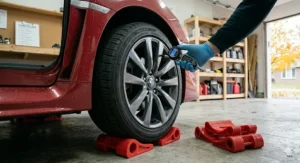
The AstroAI Digital Tire Pressure Gauge solves a critical winter storage problem: accurately monitoring tyre pressure in cold conditions. Digital gauges provide readings to 0.1 PSI precision, essential because tyres lose 1-2 PSI for every 5°C temperature drop. In Canadian storage where garage temperatures might swing from +10°C to -15°C, you could see 8-10 PSI loss over winter—enough to create flat spots that permanently damage tyres.
This gauge features a backlit LCD that remains readable in dim storage facilities and a 360-degree swivel chuck that seals properly on all valve angles. The auto-shutoff preserves battery life, and it includes four measurement units (PSI, BAR, KPA, kg/cm²)—useful for European vehicles popular in Canada. What separates this from cheaper gauges is the calibrated accuracy ±0.1 PSI, verified against ANSI standards. Before storage, inflate tyres to maximum sidewall pressure (typically 44-51 PSI); this gauge lets you monitor and top up as needed throughout winter. Canadian users particularly appreciate the rubberized non-slip grip that works with winter gloves.
Pros:
✅ ±0.1 PSI accuracy prevents under/over-inflation
✅ Backlit display readable in dark storage facilities
✅ Four measurement units for all vehicle types
Cons:
❌ Requires occasional recalibration (every 2-3 years)
❌ Battery replacement needed annually with frequent use
Price Range: Available in the $25-45 CAD range on Amazon.ca. A modest investment that prevents the $600-1,200 CAD cost of replacing a set of flat-spotted tyres.
7. EzyShade 10-Layer Premium Car Cover
The EzyShade 10-Layer Premium Car Cover represents the pinnacle of protection for Canadians storing high-value vehicles. This cover system includes waterproof outer layers, UV-blocking middle layers, cushioning layers that prevent impact damage, and a ultra-soft inner layer that protects show-quality finishes. The ten-layer construction provides thermal insulation that reduces the temperature cycling which causes seal degradation and interior cracking—particularly important in unheated storage.
The cover includes reinforced grommets, tie-down straps, antenna patches, and mirror pockets—features often missing from budget covers. The heavy-duty zipper allows full-length access for maintenance checks without removing the entire cover. Canadian classic car owners storing in harsh conditions report this cover surviving 3-4 winter seasons compared to annual replacement of cheaper alternatives. The drawstring hem and elasticised edges prevent wind infiltration during our notorious winter storms. While expensive, this represents genuine protection for vehicles worth $30,000+ CAD where paint damage would cost thousands to repair.
Pros:
✅ Ten-layer construction provides thermal insulation
✅ Reinforced grommets and straps survive harsh weather
✅ 3-4 season lifespan justifies premium pricing
Cons:
❌ Premium pricing of $180-280 CAD
❌ Overkill for vehicles stored in climate-controlled facilities
Price Range: Expect to pay $180-280 CAD on Amazon.ca depending on vehicle size. This is appropriate protection for vehicles valued over $25,000 CAD or show cars requiring pristine condition.
Setting Up Your Winter Storage Space: Canadian Considerations
Before you start checking items off your winter car storage preparation checklist, the storage environment itself demands attention. Canadian vehicle owners face unique challenges that owners in warmer climates never encounter. Temperature cycling—where your garage might swing from +5°C during a chinook to -25°C overnight—creates condensation that accelerates rust formation faster than consistently cold storage. I’ve seen this destroy rocker panels and exhaust systems on otherwise well-maintained vehicles.
The ideal storage location is a heated garage maintaining 10-15°C throughout winter. This prevents the freeze-thaw cycles that cause maximum damage. If heated storage isn’t available (the reality for most Canadians), an unheated garage is your next best option—it still provides protection from precipitation and reduces temperature extremes. Outdoor storage with a proper cover is your last resort, requiring additional preparation including full fluid treatments and comprehensive rodent barriers.
For Canadians storing vehicles on concrete floors, place foam board insulation or moisture barrier sheeting underneath. According to the Automotive Industries Association of Canada, moisture-related corrosion remains one of the leading causes of vehicle damage during extended storage. Concrete “sweats” as it warms and cools, releasing moisture that gets trapped under your vehicle and accelerates underbody corrosion. A simple $15 CAD piece of foam board prevents thousands in rust repair. Ensure adequate ventilation—even in heated garages—to prevent moisture accumulation. A small dehumidifier (around $80-120 CAD) is excellent insurance if you’re storing multiple vehicles or live in humid regions like coastal BC or the Maritimes.
Preparing Your Fuel System for Canadian Winter Storage
Fuel system preparation represents the most commonly botched step in winter car storage—and the mistakes are expensive. Modern Canadian pump gas contains up to 10% ethanol, which begins separating from gasoline and attracting moisture within 30 days of sitting unused. By 90 days, you’re developing varnish deposits in fuel injectors and carburetor jets that require professional cleaning at $350-600 CAD. In unheated storage, water in the fuel can freeze, potentially cracking fuel pumps and damaging sending units.
Start by filling your tank to 90-95% capacity—this minimises the air space where condensation forms. As noted by CARFAX Canada’s vehicle storage guidelines, a full tank prevents moisture and rust from developing in the fuel system during extended storage periods. Add your fuel stabiliser directly to the tank before filling; this ensures proper mixing. Run the engine for 10-15 minutes after adding stabiliser, driving the vehicle if possible, to circulate treated fuel through the entire system including the injectors and fuel lines. This step is non-negotiable for Canadian storage—don’t just add stabiliser and park it.
For vehicles stored longer than six months in unheated spaces (common for seasonal sports cars or motorcycles), consider adding extra stabiliser at 1.5x the recommended dose. Canadian winters are longer and harsher than what American product testing assumes. If you’re storing in a location where you can periodically start the vehicle, resist the temptation—short run times (under 15 minutes) actually cause more harm by creating moisture in the exhaust system without burning it off completely. Either commit to a proper 20-minute warm-up drive monthly, or leave it untouched until spring.
Battery Care That Actually Works in Canadian Cold
Battery care is where Canadians face the harshest physics: a fully charged battery can withstand -40°C, but a battery at 50% charge will freeze solid at -15°C, cracking the internal plates and turning it into a $180 paperweight. Cold also dramatically slows the chemical reactions that produce electrical current—a battery at -20°C has only 40% of its rated capacity. This is why you need a proper maintenance strategy, not just disconnecting the battery and hoping for the best.
The gold standard approach involves connecting a quality battery maintainer (like the Battery Tender Plus discussed earlier) that automatically monitors and maintains full charge throughout storage. Position the charger where it won’t be disturbed, ensure proper ventilation (batteries can emit hydrogen gas during charging), and verify the connections monthly. The quick-connect pigtail installation means you can attach it without opening the bonnet—especially convenient when your car is under a cover in a cold garage.
If electrical access isn’t available in your storage location (common for external storage facilities), removing the battery and storing it indoors is your best option. A battery kept at room temperature maintains its charge 3-4 times longer than one stored at freezing temperatures. Clean the battery terminals before removal, place it on a wooden shelf or cardboard (avoid concrete, which accelerates discharge), and connect it to a maintainer indoors. Mark your calendar to check voltage monthly with a multimeter—if it drops below 12.4 volts, give it a full charge. Come spring, reinstall the battery and verify proper operation before attempting to start the vehicle.
For hybrid and electric vehicles, consult your owner’s manual—most manufacturers recommend maintaining charge between 40-60% during storage and may require the vehicle remain plugged in to prevent the high-voltage battery from dropping too low. Tesla, for example, recommends keeping Model 3/Y plugged in during storage with charge limit set to 50%.
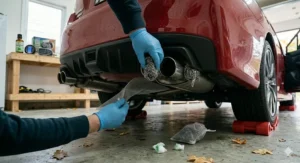
Tyre Maintenance: Preventing Flat Spots in Cold Storage
Tyres develop flat spots when the weight of your vehicle compresses the same section of rubber for extended periods, especially in cold temperatures where rubber becomes less flexible. A flat-spotted tyre might be permanently damaged, requiring replacement of all four tyres at $800-1,500 CAD depending on your vehicle. The good news: flat spots are entirely preventable with proper preparation.
Inflate tyres to their maximum sidewall pressure before storage—typically 44-51 PSI for passenger vehicles, but always check your specific tyre sidewall. This increased pressure helps maintain the tyre’s round shape under the vehicle’s weight. Don’t worry about “overinflating”—you’re not driving on them, so the stiff ride doesn’t matter, and you’ll reduce pressure to normal levels before driving in spring. Use an accurate digital gauge (like the AstroAI recommended earlier) because pencil gauges can be off by 2-3 PSI—enough to matter during 5-6 month storage.
For high-value vehicles or those storing longer than four months, consider placing the car on jack stands. This removes weight from the tyres entirely, preventing flat spots regardless of storage duration. Position jack stands at the manufacturer-specified lift points (check your owner’s manual), use quality stands rated well above your vehicle’s weight, and place wooden blocks under the stands for added stability on concrete floors. Leave the tyres inflated even when on stands—this prevents moisture accumulation inside the wheel and maintains tyre shape.
Check tyre pressure every 4-6 weeks during storage. Tyres naturally lose 1-2 PSI per month, and remember that pressure drops 1 PSI for every 5°C temperature decrease. So if you set them to 45 PSI in October at +10°C, they might be at 38 PSI by January at -15°C—low enough to develop flat spots. A quick pressure check and top-up takes five minutes and prevents expensive tyre replacement.
Comprehensive Rodent Prevention Strategy
Rodent damage represents the most underestimated threat to stored vehicles in Canada—and the most expensive to repair. A single mouse family nesting in your engine bay can cause $1,500-3,000 CAD in damage by chewing through wiring harnesses, air filters, insulation, and upholstery. Mice seek out stored vehicles in winter because engine bays provide warmth retention, protection from predators, and abundant nesting materials. Your winter car storage preparation checklist isn’t complete without a multi-layered defence strategy.
Layer 1: Physical Barriers
Seal all possible entry points. Stuff steel wool into tailpipe openings (remember to remove before starting in spring), cover air intake openings with hardware cloth, and block any visible gaps in underbody panels. Mice can squeeze through openings as small as 6mm, so be thorough. Remove anything attractive for nesting—paper, fabric, or food residue inside the cabin.
Layer 2: Chemical Deterrents
Apply peppermint-based repellent spray (like Mighty Mint) throughout the engine bay, wheel wells, and underbody every 3-4 weeks. Don’t spray directly on belts or rubber hoses—apply to adjacent metal surfaces. Place scented deterrent pouches inside the cabin (commercial products or DIY dryer sheets work). The strong scents make your vehicle less attractive compared to unprotected spaces nearby.
Layer 3: Electronic Defence
Install ultrasonic repellers (like the Loraffe unit) in the engine bay and cabin. Position them centrally for maximum coverage—ultrasonic waves don’t penetrate solid barriers, so placement matters. Replace batteries mid-season (around February for October-to-April storage) to maintain effectiveness.
Layer 4: External Management
Keep your storage area clean—don’t store bird seed, dog food, or other attractants nearby. Set traps outside your vehicle (never inside, where a trapped mouse will create smell problems). Encourage natural predators by not removing barn cats or owls from storage areas. Inspect monthly for any signs of intrusion—droppings, chewed materials, or nesting evidence. Early detection means minimal damage.
Essential Fluid and Filter Service Before Storage
Oil and fluid service before storage is a contentious topic in car circles, but for Canadian conditions, the right approach matters financially. Conventional wisdom suggests changing oil before storage so you’re not leaving contaminated oil sitting against engine internals for months. The counterargument: change it in spring so fresh oil is present for actual driving. Here’s the Canadian-specific recommendation based on our climate extremes.
If your vehicle will sit longer than three months in an unheated space, change the oil before storage. Used oil contains combustion byproducts, moisture, and acids that accelerate corrosion during extended sit times—especially problematic in our temperature-cycling storage environments. Fresh oil costs $60-90 CAD for a DIY change, cheap insurance against $2,000+ engine internal damage. Use the oil grade specified by your manufacturer, and consider synthetic for superior cold-weather protection if your vehicle will see any winter starts.
Check and top off all other fluids: coolant (essential freeze protection—verify it’s rated to at least -40°C for Canadian winters), brake fluid (moisture contamination accelerates when vehicles sit unused), power steering fluid, and windshield washer fluid (use -40°C rated fluid, not summer formula). These checks take 15 minutes and prevent thousands in repairs from frozen/corroded components.
For air filters, inspect but don’t necessarily replace. If your filter is dirty, replace it—dirty filters can absorb moisture and develop mould during storage. If it’s relatively clean, leave it in place. The exception: if you’ve had rodent issues previously, install a new filter and cover air intake openings with hardware cloth to prevent intrusion.
Winter Storage Duration: Matching Preparation to Timeline
Not all winter car storage requires the same level of preparation—and Canadians often over-prepare for short storage or under-prepare for long storage. Understanding these distinctions saves money without compromising vehicle health.
Short-Term Storage (4-8 weeks):
Perfect for snowbird departures or extended work trips. At this duration, fuel doesn’t require stabiliser in heated storage but does in unheated spaces. Battery maintainer is optional in heated storage, essential in cold storage. Full detailing is less critical, but don’t skip rodent prevention—mice move fast. Tyre pressure monitoring every 2-3 weeks suffices. Budget preparation cost: $50-100 CAD.
Seasonal Storage (3-5 months):
The typical Canadian winter storage scenario for sports cars, motorcycles, and convertibles. This requires full preparation: fuel stabiliser, battery maintainer, maximum tyre pressure, comprehensive rodent barriers, and cover if stored outside. Plan for at least one mid-storage check (January/February) to verify everything’s functioning properly. Budget preparation cost: $150-250 CAD.
Long-Term Storage (6+ months):
Classic cars, project vehicles, or situations where you’re relocating temporarily. At this duration, everything becomes critical. Consider draining and fogging the engine (pouring Marvel Mystery Oil into cylinders and cranking without starting), installing multiple ultrasonic rodent repellers, using premium covers, and possibly even fogging the exhaust system. Professional storage facilities might be justified despite $150-300 CAD monthly costs. Budget preparation cost: $300-500 CAD for supplies.
The mistake many Canadians make is preparing for short-term storage when they actually need seasonal preparation. It’s better to over-prepare slightly than face spring surprises. That extra $75 in supplies is much cheaper than the $600 diagnostic bill discovering why your car won’t start after winter.
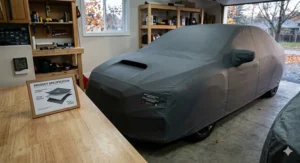
Regional Canadian Storage Considerations
Canada’s vast geography creates dramatically different storage challenges depending on location, and your winter car storage preparation checklist should adapt accordingly.
Prairie Provinces (Alberta, Saskatchewan, Manitoba):
Extreme cold (-30°C to -40°C) but very dry. Priority: battery maintenance (cold kills batteries), block heaters if starting periodically, maximum tyre pressure. Lower humidity means rust is less problematic, but temperature extremes stress plastics and rubber. Consider heated storage for vehicles over $40,000 CAD value.
Ontario and Quebec:
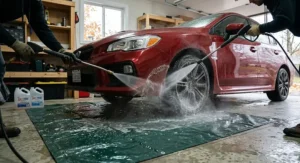
Temperature cycling, high humidity, and road salt contamination. Priority: thorough undercarriage cleaning before storage, dehumidifiers in storage spaces, comprehensive fluid protection. The freeze-thaw cycles in these regions cause maximum moisture-related damage. Budget an extra $50 CAD for undercarriage cleaning at a pressure wash facility.
British Columbia Coast:
Moderate temperatures but very high humidity. Priority: dehumidification, breathable covers, mould prevention inside the cabin. Rust prevention is critical despite mild temperatures. Consider desiccant packs inside the vehicle and ensure storage areas have adequate ventilation.
Atlantic Provinces:
High humidity, salt air, frequent precipitation. Priority: similar to BC with added emphasis on corrosion prevention. Vehicles stored near the coast need extra attention to underbody protection. The combination of salt air and humidity is particularly aggressive on metal components.
Northern Territories:
Extreme cold, very dry, limited storage facilities. Priority: heated storage if available (often worth the premium cost), maximum cold-weather fluid protection, rodent control (surprisingly active even in extreme cold). The challenge here is often finding adequate indoor storage at any price.
Spring Revival: Bringing Your Vehicle Back to Life
When spring arrives and it’s time to resurrect your stored vehicle, don’t just jump in and start it. A methodical approach prevents damage and ensures safe operation.
Week Before First Drive:
Remove car cover and inspect for any issues. Check for rodent evidence—droppings, chewed materials, nests. If found, inspect wiring harnesses thoroughly. According to Natural Resources Canada’s vehicle maintenance recommendations, thorough pre-drive inspections prevent costly damage from winter storage issues. Remove any physical barriers (exhaust plugs, air intake covers). Check all fluid levels and inspect for leaks that may have developed. Verify tyre pressure and inflate to normal driving levels.
First Start Procedure:
Disconnect battery maintainer. Verify battery voltage (should be 12.6V or higher). Turn key to “on” position without starting—listen for fuel pump priming. Check that all dashboard warning lights function normally. Start the engine and let it idle for 2-3 minutes, watching temperature gauge and listening for unusual noises. Check for fluid leaks underneath the vehicle.
First 100 km:
Drive conservatively. Brake pads may have surface rust—a few gentle stops will clean them off. Fuel system needs to circulate fresh fuel through injectors. Transmission fluid needs to warm and circulate. Check tyre pressure after driving—heat will raise pressure 2-3 PSI from cold inflation. Schedule an oil change if you didn’t change oil before storage.
Common Spring Issues:
Battery seems weak: normal after months of storage—drive 30-45 minutes to fully recharge. Brakes feel soft: brake fluid may have absorbed moisture—bleed if necessary. Engine runs rough: injectors had varnish buildup—use fuel system cleaner additive. Tyres vibrate: flat spots will usually disappear after 15-30 km of driving, assuming tyres were properly inflated during storage.

❓ Frequently Asked Questions
❓ Should I start my car every few weeks during winter storage in Canada?
❓ What's the minimum storage temperature to prevent fuel system damage?
❓ Can I use regular car soap to wash my vehicle before winter storage?
❓ Do I need different preparation for hybrid or electric vehicles?
❓ How long can premium fuel sit before it goes bad even with stabiliser?
Final Thoughts: Protecting Your Investment Through Canadian Winters
Proper winter car storage preparation isn’t about paranoia—it’s about recognising that Canadian conditions demand respect and preparation. The $200-300 CAD you invest in supplies and an afternoon of preparation prevents the $2,000-5,000 in spring repairs that careless storage causes. I’ve watched too many Canadians learn this lesson the expensive way: dead batteries that damaged electronics, flat-spotted tyres requiring replacement, rodent damage to wiring harnesses, and rust blooming through paint from moisture accumulation.
Your winter car storage preparation checklist should be personalised to your specific situation—vehicle value, storage duration, storage environment, and regional climate all matter. A $5,000 winter beater stored in a heated garage for two months needs minimal preparation. A $40,000 classic stored in an unheated barn for six months requires comprehensive protection. Use the product recommendations and strategies in this guide to build the appropriate level of defence for your circumstances.
The products listed here represent the best combinations of effectiveness and Canadian availability at reasonable prices. All are Prime-eligible on Amazon.ca, meaning most Canadians can have supplies delivered within 2-3 days. Don’t wait until the first snow to start preparing—late October is ideal timing for most of Canada, giving you mild weather to work in while ensuring everything’s ready before temperatures plummet.
Remember: cars are meant to be driven, but when life circumstances require storage, protecting them properly ensures they’re ready to provide reliable service when you need them again. Every Canadian winter tests our vehicles—proper storage preparation ensures yours passes that test without expensive failures.
Recommended for You
- 7 Best Battery Blankets for Extreme Cold Canada 2026
- Winter Emergency Supplies Checklist: 7 Must-Haves for Canadian Drivers (2026)
- 7 Best Winter Car Emergency Kits Canada 2026
Disclaimer: This article contains affiliate links. As an Amazon Associate, I earn from qualifying purchases. If you purchase products through these links, we may earn a small commission at no additional cost to you.
✨ Found this helpful? Share it with your friends! 💬🤗
