
In This Article
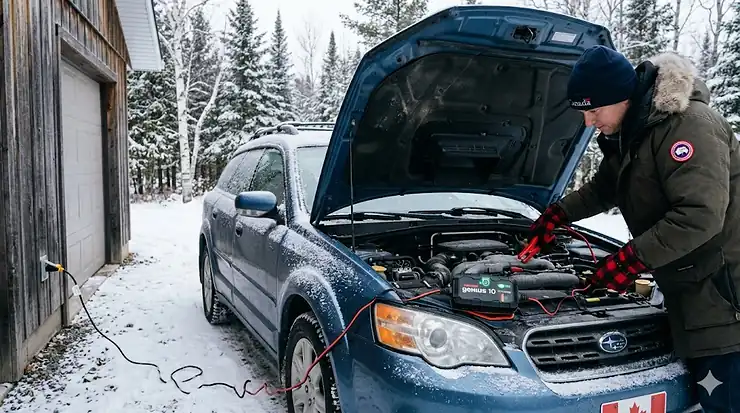
A battery charger for Canadian winter is not the same animal as the charger your American cousin uses in Arizona. When a Calgary cold snap pushes the mercury to -25°C, a standard lead-acid battery can lose around a third of its cranking power, and a charger without real temperature compensation will either undercharge it or, worse, cook it. That distinction — built-in thermal sensing versus a basic on/off trickle — is the line between a battery that starts your truck in January and one that leaves you calling roadside assistance from a parking lot in Saskatoon.
This guide focuses on smart chargers and maintainers built around multi-stage charging algorithms, automatic desulfation, and genuine temperature compensation, the features that matter most once the snow flies. We looked at units sold on Amazon.ca, paying attention to which models actually ship to Canadian addresses, how they’re priced in CAD, and how they hold up against the realities of garages, driveways, and unheated sheds across the country. Whether you’re maintaining a daily driver, a snowmobile, or a boat tucked away for the season, there’s a charger below sized for the job.
Quick Comparison Table
| Charger | Amps | Best For | Price Range (CAD) | Amazon.ca |
|---|---|---|---|---|
| NOCO GENIUS5 | 5A | All-around daily driver | $90–$115 | In stock |
| NOCO GENIUS10 | 10A | Larger batteries, faster recovery | $130–$160 | In stock |
| CTEK CT5 Time to Go | 5A | Cold-climate reliability | $170–$200 | In stock |
| Battery Tender Plus | 1.25A | Motorcycles, seasonal storage | $60–$80 | In stock |
| Schumacher SC1281 | 6A | Budget + emergency jump start | $100–$130 | In stock |
| BLACK+DECKER BC15BD | 15A | Bench charging, multiple vehicles | $80–$105 | In stock |
| NOCO GENIUS2 | 2A | Budget powersport maintainer | $45–$65 | In stock |
Looking at the table, amperage alone doesn’t tell the whole story for a Canadian winter — the NOCO GENIUS5 and CTEK CT5 sit close in price but the CTEK leans harder into cold-weather engineering, which matters more in Thunder Bay than in Vancouver. Budget shoppers shouldn’t dismiss the GENIUS2 or Battery Tender Plus outright, since low amperage is actually a feature for small powersport batteries rather than a drawback. The SC1281 and BC15BD earn their spot for households juggling more than one vehicle, where a built-in boost or engine-start function saves a second purchase.
💬 Just one click — help others make better buying decisions too! 😊
✨ Don’t Miss These Exclusive Deals!
🔍 Take your winter battery prep to the next level with these carefully selected chargers. Click on any highlighted item to check current pricing and availability on Amazon.ca. These tools will help you keep every battery in the driveway ready for the cold, all season long!
Top 7 Battery Chargers for Canadian Winter: Expert Analysis
1. NOCO GENIUS5
The GENIUS5 is a 5-amp smart charger built for 6V and 12V lead-acid and lithium batteries, and its integrated thermal sensor reads the ambient temperature and adjusts voltage on the fly. What that means in a Canadian garage: on a -15°C morning the charger pushes a slightly higher voltage to compensate for the cold, instead of blindly applying a summer charge profile that would leave the battery undercharged. What most buyers overlook about this model is that its desulfation mode runs automatically in the background, so a battery left dormant over a long prairie winter has a real shot at recovery rather than an immediate trip to Canadian Tire. With over 20,000 customer ratings averaging 4.6 out of 5 stars on Amazon, the GENIUS5 has one of the deepest review histories of any charger in this category, and the sentiment consistently points to reliability over years of seasonal use rather than a single winter.
✅ Compact and genuinely portable
✅ Works on lead-acid and lithium-ion
✅ Strong track record across thousands of Canadian winters
❌ 5A is slow for larger truck batteries
❌ No engine-start function
Around $90–$115 CAD — the GENIUS5 is the safe, well-reviewed default for most Canadian drivers with one or two vehicles.
2. NOCO GENIUS10
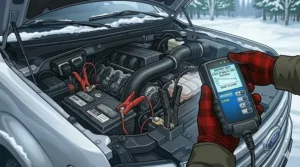
The GENIUS10 is essentially the GENIUS5’s bigger sibling, doubling the output to 10 amps while keeping the same temperature-compensated, multi-stage charging algorithm. In practice, that extra amperage cuts charging time roughly in half on a deeply discharged battery — useful if you’re trying to revive a truck battery before a Monday morning commute rather than letting it trickle overnight. For a family in suburban Calgary running an SUV, a pickup, and a snowblower battery, the GENIUS10 is the unit that can realistically keep up with multiple vehicles without monopolizing the garage outlet for two days straight. Reviewers on Amazon.ca consistently rate it around 4.6 stars, with feedback skewing toward owners who use it on larger AGM batteries in trucks and RVs.
✅ Faster recovery on large or deeply discharged batteries
✅ Same cold-weather thermal compensation as the GENIUS5
✅ Suited to RV, truck, and marine batteries
❌ Bulkier than the 5A model
❌ Overkill for small powersport batteries
Around $130–$160 CAD, it’s worth the upgrade if your household runs more than one larger vehicle through winter.
3. CTEK CT5 Time to Go
CTEK is Swedish-engineered, and the CT5 Time to Go carries that cold-climate pedigree directly into its spec sheet: a built-in temperature sensor for accurate charging in extreme heat or cold, paired with a countdown timer that tells you exactly when the battery will be ready. The reconditioning (“RECOND”) mode is what stands out for Canadian buyers specifically — it’s designed to recover batteries that have been stratified or deeply discharged after sitting in an unheated garage for weeks, a scenario that’s almost a rite of passage in a Canadian winter. In my experience researching cold-weather chargers, CTEK’s pricing premium is consistently justified by its 5-year warranty and the fact that European OEMs use rebranded CTEK units as factory-recommended maintainers, a strong signal of long-term reliability.
✅ Genuinely engineered for extreme cold and heat
✅ Countdown timer removes the guesswork
✅ 5-year warranty backs long-term confidence
❌ Higher price point than NOCO equivalents
❌ Replacement clamps and accessories cost extra
Around $170–$200 CAD — the premium pick for anyone storing a classic car, motorcycle, or boat through a long Canadian off-season.
4. Battery Tender Plus 021-0128-CA
The Battery Tender Plus has been a staple for motorcycle and powersport owners for years, delivering 1.25 amps through a 4-step charging program (initialization, bulk charge, absorption, and float). The “-CA” designation on this listing specifically reflects the Canadian-market version, sold with the correct plug and Canadian compliance labelling. What that low amperage means in practice for a Canadian rider: a motorcycle, ATV, or snowmobile battery left connected from October through April won’t overcharge, because the unit settles into float mode and simply maintains voltage rather than continuously pumping current into a battery that’s already topped up. It carries a notably long 10-year manufacturer’s warranty, among the longest in this category.
✅ Industry-leading 10-year warranty
✅ Safe for indefinite long-term connection
✅ Compact footprint for powersport storage
❌ Too slow for car or truck batteries
❌ No digital display, just LED status
Around $60–$80 CAD, it’s the go-to for anyone storing a motorcycle, ATV, or boat battery for the season.
5. Schumacher SC1281
The SC1281 packs a 6-amp charger, a 30-amp boost, and a 100-amp engine starter into one unit, plus a built-in battery and alternator tester. The desulfation mode kicks in automatically once the unit’s microprocessor detects a sulfated battery, and the digital display shows charge percentage rather than a vague light, useful when you’re trying to decide whether a winter-weak battery needs another hour or a full replacement. For a Canadian buyer juggling a car, a truck, and the occasional dead battery emergency, the engine-start function is the practical differentiator: most pure maintainers can’t get you moving on a -20°C morning, but the SC1281 can.
✅ Doubles as an emergency engine starter
✅ Built-in alternator and battery tester
✅ Works across standard, AGM, gel, and deep-cycle types
❌ Heavier and bulkier than dedicated maintainers
❌ Not rated for lithium batteries
Around $100–$130 CAD — best suited to a household that wants one device covering both maintenance and emergencies.
6. BLACK+DECKER BC15BD
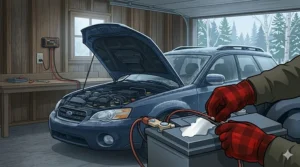
The BC15BD is a bench-style 15-amp charger with a 40-amp engine start and a patented alternator check that evaluates battery voltage under load, a feature that effectively diagnoses whether a weak start is the battery’s fault or the alternator’s. Its three-stage high-frequency charging (fast charge, top-off, trickle) automatically adjusts as the battery approaches full, and the cord-and-clamp storage built into the housing keeps things tidy in a garage that’s already crowded with snow tires and shovels. For Canadian buyers, the appeal here is versatility across vehicle types: it’s equally at home maintaining a snowmobile, jump-starting a sedan, or keeping an RV battery topped up between trips.
✅ 15A output charges faster than most maintainers
✅ Alternator check adds real diagnostic value
✅ Bench format suits a busy multi-vehicle garage
❌ Larger footprint, less suited to permanent connection
❌ ETL/CEC certified rather than CSA-specific marking
Around $80–$105 CAD — a strong mid-range pick for anyone who wants charging speed and a basic diagnostic tool in one box.
7. NOCO GENIUS2
The GENIUS2 is NOCO’s budget-tier 2-amp smart charger, carrying the same temperature-compensated, multi-stage algorithm as its larger siblings but scaled down for smaller batteries like those in snowmobiles, lawn tractors, and motorcycles. What most first-time buyers miss is that lower amperage isn’t a compromise here — it’s the correct match for small battery capacities, since pushing 10 amps into a 4-amp-hour powersport battery would risk overheating rather than speeding things up safely. With over 18,000 Amazon reviews averaging 4.6 stars, it has nearly as strong a track record as its bigger siblings, just at a price point that suits a second or third vehicle in the fleet.
✅ Affordable entry point into NOCO’s GENIUS line
✅ Correctly sized for small powersport batteries
✅ Same desulfation and temperature compensation tech
❌ Too slow for car or truck batteries
❌ Limited cable length for tight installations
Around $45–$65 CAD — ideal as a second charger for a snowmobile, lawn tractor, or motorcycle parked for winter.
Practical Usage Guide: Winterizing Your Battery and Charger
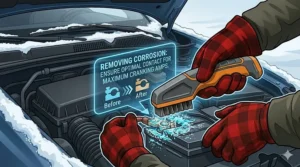
Before the first real cold snap hits, disconnect and inspect battery terminals for corrosion, since a poor connection can mimic a dead battery even when the charger is doing its job correctly. If a vehicle, boat, or powersport machine will sit unused for more than a few weeks, connect a maintainer rather than relying on a single full charge, because lead-acid batteries self-discharge faster in temperature swings between a heated garage and a cold driveway. Store the charger itself somewhere dry; condensation on the unit’s electronics is a common, avoidable cause of premature failure in Canadian basements and unheated sheds. A common mistake during the first month of ownership is leaving a high-amperage charger like the SC1281 or BC15BD on a small powersport battery — match the charger’s output to the battery’s size, and when in doubt, the lower amperage option is the safer one. Finally, label each charger’s cable if you’re running more than one vehicle through winter storage, since mixing up clamps between a car battery and a motorcycle battery is an easy and entirely preventable error.
Real-World Scenarios: Matching the Charger to Your Canadian Life
A Toronto condo dweller with a single commuter car that sits in an unheated underground garage five days a week is best served by the NOCO GENIUS5: it’s compact, handles the freeze-thaw cycle of underground parking, and doesn’t demand garage space they don’t have. A Winnipeg family running a truck, an SUV, and a snowblower through a brutal prairie winter will get more practical value from the GENIUS10 or the Schumacher SC1281, since both handle larger batteries faster and the SC1281’s engine-start function covers emergencies. A weekend rider in Ottawa storing a motorcycle from October to April is the textbook Battery Tender Plus customer — low amperage, indefinite safe connection, and a warranty that outlasts the bike’s typical ownership cycle. And a Vancouver Island boat owner dealing with milder but still damp winters benefits most from the CTEK CT5’s reconditioning mode, which is built specifically for batteries that sit stratified after long storage in a marine environment.
✨ Don’t Miss These Exclusive Deals!
🔍 Whichever scenario matches your driveway, check current pricing and Amazon.ca availability before the next cold snap. A $100 charger is a lot cheaper than a tow truck at -25°C.
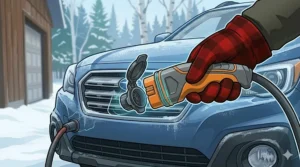
How to Choose a Battery Charger for Canadian Winter
- Match amperage to battery size. A small powersport battery wants 1–2 amps; a full-size truck battery is better served by 6–10 amps for reasonable recovery times.
- Confirm temperature compensation. Without it, a charger applies the same voltage regardless of ambient conditions, which risks undercharging in deep cold.
- Check for automatic desulfation. Batteries left dormant through a Canadian winter are far more prone to sulfation than those used daily.
- Look at the warranty length. Anything from 3 to 10 years signals manufacturer confidence; shorter warranties are a yellow flag.
- Verify Amazon.ca availability and the plug type. Some U.S.-only listings don’t ship north of the border, or arrive without the correct Canadian-rated cord.
- Decide if you need an engine-start feature. It adds bulk and cost but turns a maintenance device into an emergency tool.
Smart Charger vs Trickle Charger: Float Mode and the Multi-Stage Algorithm
A basic trickle charger applies a constant low current regardless of the battery’s actual state, which can overcharge a battery that’s already full — a real risk over a long Canadian storage season. A modern smart charger instead runs a multi-stage charging algorithm: bulk charge to bring the battery up quickly, absorption to top it off gently, and finally float mode, where the charger only supplies the trickle of current needed to offset natural self-discharge. The practical difference shows up months later, when a trickle-charged battery left all winter is more likely to be damaged from overcharging than one maintained on float mode by a smart charger like the NOCO or CTEK units above.
| Feature | Basic Trickle Charger | Smart Multi-Stage Charger | Best For |
|---|---|---|---|
| Overcharge risk | Higher | Low (auto float mode) | Long-term storage |
| Temperature compensation | Rare | Common in mid/premium models | Canadian winters |
| Desulfation | Not available | Often included | Dormant batteries |
| Typical price (CAD) | $25–$45 | $60–$200 | Depends on battery size |
The table makes the trade-off clear: a basic trickle charger costs less upfront, but the lack of float mode and temperature compensation makes it a riskier choice for anything left connected through a Canadian winter. For a battery that’s used weekly, the gap matters less; for a snowmobile or boat battery sitting untouched for months, paying more for a true smart charger is the cheaper option in the long run once you factor in the cost of a prematurely dead battery.
Multi-Stage Charging Algorithm and Desulfation Mode Explained
A multi-stage charging algorithm isn’t a marketing term — it’s the sequence of bulk, absorption, and float phases that protects a battery from both undercharging and overcharging. Desulfation mode specifically targets the lead sulfate crystals that build up on battery plates when a battery sits at low charge for extended periods, which is exactly what happens to a seasonal vehicle parked through a Canadian winter. The chargers above that include automatic desulfation, including the NOCO GENIUS series, CTEK CT5, and Schumacher SC1281, use pulsed or specialized charging patterns to break down those crystals gradually, sometimes restoring usable capacity to a battery that would otherwise be scrapped. It’s worth noting this isn’t a guaranteed fix; a battery with too much physical degradation won’t fully recover regardless of how good the charger is.
Temperature Compensation: Why It Matters More in Canada
Lead-acid batteries lose around 35% of their cranking power at 0°C and as much as 60% at -17°C, according to cold-weather research summarized by automotive maintenance sources. A charger with real temperature compensation adjusts its output voltage to account for that change, applying a higher charge voltage in extreme cold and a lower one in summer heat to avoid damaging the battery either way. Without this feature, a charger calibrated for a mild day will undercharge a battery sitting in a -20°C garage, leaving it weaker than the display might suggest. This is the single feature worth prioritizing if you’re choosing between two otherwise similar chargers for use anywhere outside of Vancouver’s relatively mild coastal winters.
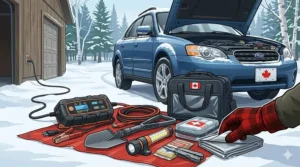
Common Mistakes When Buying a Battery Charger for Canadian Winter
Choosing amperage based on price rather than battery size is the most frequent error, leading either to painfully slow charging or a risk of overheating a small battery. Skipping the warranty comparison is another, since a $40 price difference often buys several extra years of coverage on a device that lives outdoors or in a cold garage. Buyers also frequently overlook whether a listing actually ships to Canada, only to discover at checkout that a tempting U.S. price doesn’t apply once duties and cross-border shipping are added. Ignoring the certification mark is a safety mistake specific to Canada — a charger lacking a CSA, cUL, or cETL mark may not meet Canadian electrical safety requirements, regardless of how well-reviewed it is on a U.S. site. Finally, assuming a single charger can serve every vehicle in the household leads to either an underpowered unit straining on a truck battery or an oversized one risking a small powersport battery.
Canadian Regulations and Safety Standards
Electrical products sold for use in Canada are expected to carry a recognized national certification mark such as CSA, cUL, or cETL, and products without one of these marks may pose an electric shock, burn, or fire hazard according to Health Canada guidance. Battery chargers specifically fall under CSA standard C22.2 No. 107.2, the dedicated Canadian standard covering this product category, distinct from the broader appliance and EV-charging standards CSA also maintains. Every charger listed above carries a recognized mark, but it’s worth checking the product label yourself on arrival, since counterfeit or grey-market units occasionally slip through third-party marketplace listings. Provincial electrical safety authorities, rather than a single federal body, generally enforce these requirements at the point of sale and installation.
Long-Term Cost and Maintenance in Canada
A $60 Battery Tender Plus that prevents one premature battery replacement easily pays for itself, since a mid-range AGM battery in Canada typically runs well over $150 CAD installed. Factoring in electricity costs, a smart maintainer left connected through a four-month Canadian winter draws only a small trickle of current during float mode, amounting to a negligible addition to a household power bill. The real long-term value comes from extended battery lifespan: a battery properly maintained through repeated Canadian winters can often last several years longer than one left to discharge and recharge from empty each spring, and that difference, multiplied across two or three vehicles in a household, adds up to real savings in CAD over a decade of ownership.
Frequently Asked Questions
❓ Can I leave a smart battery charger connected all winter in Canada?
❓ Does a battery charger ship to remote or northern Canadian addresses?
❓ What amperage charger do I need for a car battery in winter?
❓ Can a battery charger fix a battery damaged by sulfation?
❓ Is a CSA-certified battery charger required in Canada?
Conclusion
Choosing a battery charger for Canadian winter comes down to matching amperage to your battery, confirming genuine temperature compensation, and deciding whether desulfation or an engine-start function earns its place in your garage. The NOCO GENIUS5 remains the best all-around pick for most single-vehicle households, the CTEK CT5 is worth the premium for anyone storing a vehicle through a long off-season, and the Battery Tender Plus continues to be the standard for motorcycle and powersport owners. Whatever you choose, the real return on investment is a battery that starts reliably at -25°C instead of one more dead-battery morning in a Canadian driveway.
✨ Don’t Miss These Exclusive Deals!
🔍 Take your winter battery prep to the next level with these carefully selected chargers. Click on any highlighted item to check current pricing and availability on Amazon.ca. These tools will help you keep every vehicle in your driveway ready for the cold, all season long!
Recommended for You
- NOCO vs Stanley Jump Starter Cold Weather: 7 Best in Canada 2026
- 7 Best Portable Jump Starter -40C Rated for Canada 2026
- 7 Best Jump Starters for Canadian Winter 2026 – Survive the Cold
Disclaimer: This article contains affiliate links. As an Amazon Associate, I earn from qualifying purchases. If you purchase products through these links, we may earn a small commission at no additional cost to you.
✨ Found this helpful? Share it with your friends! 💬🤗
