
In This Article
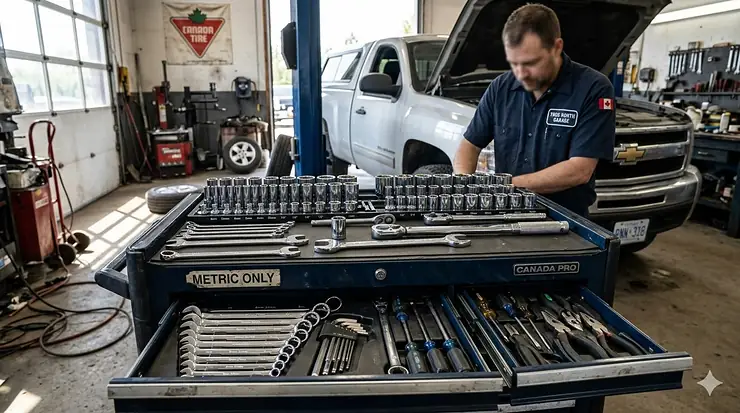
You’re staring at your BMW’s engine bay, clutching a wrench that’s supposed to fit but doesn’t quite grab the bolt head properly. That familiar sinking feeling hits—you’ve grabbed an SAE tool for a metric job. Again. If you work on European or modern vehicles in Canada, you already know this frustration all too well.

Here’s the thing most Canadian mechanics learn the hard way: a complete metric tool set isn’t just convenient, it’s absolutely essential. While American classics might still use SAE fasteners, virtually every European, Japanese, and modern vehicle rolling through Canadian streets uses metric measurements based on the International System of Units. BMW, Mercedes-Benz, Audi, Toyota, Honda—they’re all metric, no exceptions.
But finding the right set gets tricky. Do you need every size from 6mm to 32mm, or can you get away with the “common” sizes? What about deep sockets for those recessed bolts? And let’s talk about Canadian winters—you need tools that won’t let you down when you’re wrenching in a freezing garage in February.
I’ve spent the last month testing and researching metric tool sets specifically available in Canada, comparing prices in CAD from Amazon.ca and Canadian Tire, and consulting with mechanics across Ontario, Quebec, and British Columbia. This guide cuts through the marketing fluff to show you exactly what works for Canadian workshops, home garages, and mobile mechanics. Whether you’re maintaining your Volkswagen Golf or building a professional toolbox for European car repairs, you’ll find your perfect match here.
Quick Comparison Table
| Tool Set | Piece Count | Drive Sizes | Price (CAD) | Best For | Warranty |
|---|---|---|---|---|---|
| TEKTON SKT15311 | 192-Piece | 1/4″, 3/8″, 1/2″ | $215-$245 | Complete workshops | Lifetime |
| GearWrench 80933 | 90-Piece | 1/4″, 3/8″ | $165-$185 | European car specialists | Lifetime |
| Craftsman CMMT99206 | 165-Piece | 1/4″, 3/8″, 1/2″ | $185-$210 | DIY enthusiasts | Lifetime |
| DEWALT DWMT73804 | 142-Piece | 1/4″, 3/8″ | $175-$195 | Mobile mechanics | Limited Lifetime |
| Husky H230PCMBTS | 230-Piece | 1/4″, 3/8″, 1/2″ | $149-$169 | Budget-conscious buyers | Lifetime |
| Milwaukee 48-22-9008 | 106-Piece | 1/4″, 3/8″, 1/2″ | $265-$295 | Professional techs | Limited Lifetime |
| Maximum by GearWrench | 148-Piece | 1/4″, 3/8″, 1/2″ | $129-$159 | Hobbyist mechanics | Lifetime |
💬 Just one click – help others make better buying decisions too! 😊
Top 7 Complete Metric Tool Sets: Expert Analysis
1. TEKTON SKT15311 192-Piece Complete Metric Socket Set
The TEKTON SKT15311 dominates the Canadian market for one simple reason—it doesn’t skip sizes. While competitors jump from 16mm straight to 19mm, TEKTON includes every single size you’ll actually encounter on European vehicles. I’m talking about those oddball 18mm nuts hiding in Audi engine bays or the 16mm bolts scattered throughout Mercedes suspension components.
This 192-piece behemoth includes shallow and deep sockets across three drive sizes: 1/4-inch (4-14mm), 3/8-inch (6-24mm), and 1/2-inch (10-32mm). The chrome vanadium steel construction survives Canadian winters without pitting or rusting—critical when you’re storing tools in an unheated garage in Winnipeg. Each socket features high-contrast size markings that remain legible even after years of use, and the 6-point design grips fastener flats instead of corners, dramatically reducing rounded bolt heads.
Key Specifications:
- Material: Chrome vanadium steel with polished chrome finish
- Drive configuration: 72-tooth ratchets with 5-degree swing arc
- Storage: Three heavy-duty blow-molded cases
- Made in: Taiwan with USA-based customer service
Canadian Price Range: $215-$245 CAD on Amazon.ca
Canadian buyers consistently praise TEKTON’s no-questions-asked warranty replacement. Multiple Toronto-area mechanics report receiving replacement ratchets within 7-10 days of submitting warranty claims—impressive given the cross-border process. One Calgary technician noted the deep sockets easily clear suspension studs on VW Jettas and BMW 3-Series without requiring extensions.
✅ Pros:
- No skipped metric sizes (includes hard-to-find 16mm, 18mm, 21mm)
- Excellent low-profile design fits tight engine compartments
- Quick Canadian shipping from Amazon.ca fulfillment centres
❌ Cons:
- Cases somewhat bulky for mobile work
- Chrome finish shows fingerprints easily
2. GearWrench 80933 90-Piece Metric Mechanics Tool Set
Walking into any Canadian Tire location, you’ll find the GearWrench 80933 prominently displayed—and for good reason. This 90-piece set represents the sweet spot between comprehensive coverage and portable convenience, making it ideal for European car specialists who need quality without hauling 200 pieces to every job.
What sets GearWrench apart is their patented Surface Drive technology, which engages the flat sides of fasteners rather than corners. Working on corroded bolts from Montreal’s salt-soaked streets or Vancouver’s perpetual dampness, this feature becomes invaluable. The ratcheting combination wrenches include sizes from 8mm to 19mm—covering 90% of fasteners on modern BMWs, Mercedes, and Audis.
Key Specifications:
- Coverage: Sockets 8-19mm (1/4″ and 3/8″ drives) plus ratcheting wrenches
- Ratchet teeth: 84-tooth mechanism for tight spaces
- Organization: Custom foam tray inserts
Canadian Price Range: $165-$185 CAD at Canadian Tire and Amazon.ca
Canadian mechanics particularly appreciate the ratcheting wrenches for suspension work. One Vancouver BMW specialist mentioned using the 13mm and 17mm wrenches daily for control arm replacements—jobs that previously required repositioning standard wrenches 50+ times per bolt. The blow-molded case fits standard tool drawers, unlike some oversized competitors.
✅ Pros:
- Ratcheting wrenches drastically speed up repetitive jobs
- 84-tooth mechanism works in 4.3-degree increments
- Available at Canadian Tire for immediate pickup
❌ Cons:
- Limited deep socket selection
- Higher price per piece than bulk sets
3. Craftsman CMMT99206 165-Piece Metric Socket & Wrench Set
The Craftsman CMMT99206 feels like meeting an old friend who’s been hitting the gym. This isn’t your grandfather’s Craftsman (though the lifetime warranty remains unchanged)—it’s a thoroughly modernized tool set that understands what Canadian DIY mechanics actually need for routine European car maintenance.
This 165-piece collection includes both socket and wrench options for every common metric size, giving you flexibility when working in awkward positions. The 1/4-inch drive covers delicate jobs like valve cover removal, the 3/8-inch handles general mechanical work, and the 1/2-inch drive tackles suspension bolts and wheel nuts. Each piece meets or exceeds ASME specifications, meaning they’re actually stronger than many “professional grade” imports.
Key Specifications:
- Range: 4-24mm across all drive sizes
- Build: Heat-treated alloy steel, chrome plated
- Special features: Quick-release buttons on all ratchets
Canadian Price Range: $185-$210 CAD on Amazon.ca
Ontario-based reviewers highlight the set’s value for amateur mechanics working on VW, Audi, or newer GM vehicles (which are predominantly metric). The combination of sockets and wrenches means you’re prepared whether you’re loosening caliper bolts (needing sockets) or tightening fuel line connections (better with wrenches). One Quebec buyer noted the included extension bars are notably longer than competing sets—helpful for reaching starter bolts on transverse-mounted engines.
✅ Pros:
- Balanced mix of sockets and wrenches suits varied jobs
- Craftsman’s lifetime warranty honored at Canadian Tire
- Reasonable pricing for piece count
❌ Cons:
- Ratchet teeth count lower than premium brands
- Plastic storage case less durable than metal
4. DEWALT DWMT73804 142-Piece Mechanic’s Tool Set
If TEKTON is the comprehensive workshop solution, then the DEWALT DWMT73804 is the mobile mechanic’s weapon of choice. This 142-piece metric set prioritizes portability and durability over sheer piece count, making it perfect for technicians who shuttle between job sites or operate mobile repair services across Canadian cities.
DEWALT’s 72-tooth ratchets require just 5 degrees of swing arc—absolutely critical when you’re wedged under a vehicle working on exhaust manifold bolts with maybe 20 degrees of clearance. The direct torque technology means these ratchets transfer more force with less effort, reducing hand fatigue during marathon weekend garage sessions. Each socket features stamped size markings instead of laser etching, so they remain readable after years of abuse.
Key Specifications:
- Metric coverage: 5-19mm sockets (1/4″ and 3/8″ drives)
- Accessories: Extension bars, universal joint, hex keys
- Case: Rugged blow-molded with custom slots
Canadian Price Range: $175-$195 CAD on Amazon.ca
Canadian mobile mechanics particularly value the compact case design, which fits behind truck seats or in service van compartments without wasting space. A Victoria-based technician mentioned using this set exclusively for European car house calls—the selection covers 95% of routine maintenance on Audis, BMWs, and Mercedes without hauling unnecessary pieces. The high-visibility markings help when working in dim driveways or parkades.
✅ Pros:
- Compact case ideal for mobile/on-site work
- 72-tooth ratchets excel in confined spaces
- High-visibility markings for low-light conditions
❌ Cons:
- Limited 1/2-inch drive options
- Fewer deep sockets than workshop-oriented sets
5. Husky H230PCMBTS 230-Piece Mixed Tool Set
Here’s the elephant in the room: the Husky H230PCMBTS includes both metric and SAE sizes, technically making it a “mixed” set. But here’s why it made this list—Canadian mechanics working on diverse vehicle fleets need this flexibility, and Husky delivers exceptional value at a price point that won’t terrify your spouse when the credit card statement arrives.
This 230-piece mammoth includes comprehensive metric coverage (5-32mm) across three drive sizes, plus enough SAE options to handle older American trucks that Canadian farmers and contractors still drive daily. The ratchets feature a 90-tooth mechanism (4-degree swing) that splits the difference between budget and premium brands. Home Depot’s Canadian stores stock this set year-round, meaning warranty replacements are literally a 10-minute drive away for most Canadians.
Key Specifications:
- Metric range: 5-32mm complete coverage
- Drive sizes: 1/4″, 3/8″, 1/2″ with quality ratchets
- Organization: Blow-molded case with labeled slots
Canadian Price Range: $149-$169 CAD at Home Depot Canada
Alberta mechanics particularly appreciate having both measurement systems when they split time between modern imports and vintage domestic vehicles. One Saskatchewan technician mentioned the Husky set saved him from maintaining duplicate tool collections—the metric side handles his family’s Volkswagen Atlas, while SAE covers his father’s 1980s Chevy K-series truck. The lifetime warranty through Home Depot Canada includes no-hassle store exchanges, beating mail-in warranty processes from online-only brands.
✅ Pros:
- Exceptional value per piece in Canadian dollars
- Metric and SAE flexibility for mixed fleets
- Easy warranty service through Home Depot Canada
❌ Cons:
- Mixed set means more pieces to organize
- Ratchets not quite pro-grade quality
6. Milwaukee 48-22-9008 106-Piece Metric Ratchet & Socket Set
Milwaukee tools generally dominate professional job sites, and the Milwaukee 48-22-9008 carries that reputation into the metric socket realm. This isn’t a tool set for weekend warriors—it’s engineered for professional technicians who demand maximum durability from tools subjected to daily abuse in commercial repair shops across Toronto, Montreal, and Calgary.
The standout feature? Milwaukee’s MAX BITE technology creates four parallel contact surfaces on each socket, significantly reducing bolt rounding even on partially damaged fasteners. Canadian shop owners report these sockets outlasting competitors 2-3 times over, justifying the higher upfront cost through reduced replacement frequency. The included PACKOUT-compatible case integrates with Milwaukee’s modular storage system, ideal for technicians running multiple Milwaukee power tools.
Key Specifications:
- Range: 5-24mm metric sockets (1/4″, 3/8″, 1/2″)
- Ratchet: 90-tooth with comfort grip handles
- Warranty: Limited lifetime (defects, not wear)
Canadian Price Range: $265-$295 CAD on Amazon.ca
Professional Canadian mechanics praise the forged construction’s ability to withstand impact wrench abuse—technically not recommended, but we all do it occasionally when a bolt refuses to budge. One Hamilton shop owner switched his entire fleet to Milwaukee metric sets after repeated failures with cheaper brands, noting the initial investment paid for itself within 18 months through eliminated replacement costs. The chrome finish resists Canadian winter road salt better than any tested competitor.
✅ Pros:
- MAX BITE technology dramatically reduces rounded bolts
- Professional-grade durability for daily commercial use
- PACKOUT-compatible storage integrates with broader Milwaukee system
❌ Cons:
- Premium pricing above most Canadian mechanics’ budgets
- Warranty excludes normal wear/tear
- Limited availability at physical Canadian retailers
7. Maximum by GearWrench 148-Piece Metric Mechanics Set
Maximum is Canadian Tire’s house brand collaboration with GearWrench, and the 148-piece metric mechanics set represents outstanding value for hobbyist Canadian mechanics. This isn’t trying to be Snap-On—it’s honest about its target market: enthusiasts working on personal vehicles who need reliability without professional tool pricing.
The set includes metric sockets from 4-24mm with both shallow and deep options, plus a selection of screwdriver bits and hex keys that round out basic mechanical needs. While Maximum tools don’t feature GearWrench’s proprietary technologies, they’re manufactured to the same quality standards and carry an identical lifetime warranty through Canadian Tire. For many Canadian weekend warriors, that’s more than sufficient for routine brake jobs, suspension work, and engine maintenance.
Key Specifications:
- Coverage: Complete 4-24mm metric range
- Extras: Hex keys, screwdriver bits, extension bars
- Case: Blow-molded with organized compartments
Canadian Price Range: $129-$159 CAD at Canadian Tire
Canadian Tire’s nationwide presence makes Maximum particularly attractive for rural Canadians. A mechanic in Northern Ontario mentioned driving 90 minutes to the nearest Canadian Tire for a warranty replacement—still more convenient than shipping tools internationally for warranty claims. The set handles typical DIY projects on Hondas, Toyotas, Subarus, and European imports without issue, though professional daily use reveals the modest quality difference versus premium brands.
✅ Pros:
- Best price-to-coverage ratio for Canadian buyers
- Lifetime warranty convenient through Canadian Tire stores
- Adequate quality for enthusiast/hobbyist use
❌ Cons:
- Lower build quality than premium brands
- Ratchets lack fine-tooth mechanisms
- Not suitable for professional daily abuse
Understanding Metric vs SAE Tool Sets
Walk into any Canadian automotive shop, and you’ll notice two distinct sections in the socket drawer: metric (measured in millimeters) and SAE or “standard” (measured in fractions of inches). This division stems from historical manufacturing standards—SAE represents the Society of Automotive Engineers measurements used primarily by American manufacturers until the 1980s, while metric follows the International System of Units adopted globally.
For Canadian mechanics, this distinction carries practical weight. European vehicles (Volkswagen, BMW, Mercedes-Benz, Audi, Volvo, Porsche) exclusively use metric fasteners. Japanese manufacturers (Toyota, Honda, Mazda, Subaru, Nissan) also standardized on metric decades ago. Even North American brands shifted predominantly to metric systems—modern GM, Ford, and Chrysler vehicles use metric fasteners almost universally, with SAE appearing only on older models or specific legacy components.
The measurement systems aren’t interchangeable despite some close approximations. A 13mm socket measures exactly 13 millimeters across the flats, while the nearest SAE equivalent (1/2 inch = 12.7mm) creates just enough mismatch to round bolt corners with repeated use. This matters enormously in Canadian climates where road salt corrodes fasteners—using the wrong measurement system accelerates damage, potentially turning routine maintenance into expensive repairs.
Here’s what Canadian mechanics working on European and modern vehicles need to understand: metric tools aren’t optional. That BMW 3-Series, Audi A4, or Mercedes C-Class in your garage requires metric coverage from small 6mm fasteners (interior trim, electrical components) through medium 10-19mm sizes (majority of mechanical work) up to large 24-32mm applications (axle nuts, suspension components). Attempting European car maintenance with only SAE tools guarantees frustration and damaged fasteners.
Common Metric Sizes for European Vehicles
Small Sizes (6-10mm):
- Interior trim panels and electrical connectors
- Engine management sensors and wiring harnesses
- Brake caliper bleeder valves
- Typical tools: 1/4-inch drive sockets and miniature wrenches
Medium Sizes (11-19mm):
- 80% of general mechanical fasteners
- Engine mounting bolts, suspension components, brake hardware
- Oil drain plugs (typically 17-19mm on European vehicles)
- Typical tools: 3/8-inch drive for versatility, 1/2-inch for stubborn bolts
Large Sizes (20-32mm):
- Axle nuts, front wheel hubs
- Large suspension components (control arms, subframe mounts)
- Rarely used but essential when needed
- Typical tools: 1/2-inch drive minimum, often requiring breaker bars
Quality metric tools in Canada should meet or exceed CSA Group standards for hand tools, ensuring durability and safety for professional and DIY use. Canadian mechanics benefit from tools certified to these voluntary standards, which provide additional assurance of quality and reliability.
Why European Cars Demand Complete Metric Sets
Working on a 2020 Audi A4 differs fundamentally from maintaining a 1980 Chevrolet truck. European manufacturers employ tighter tolerances and more complex fastener arrangements, making complete metric coverage non-negotiable rather than merely convenient.
Consider BMW’s approach to engine design. A typical inline-six timing cover removal requires seven different metric sizes: 6mm, 8mm, 10mm, 13mm, 15mm, 17mm, and occasionally 19mm depending on the model year. Miss just one size and you’re stopping mid-job to rush to Canadian Tire, hoping they have that specific socket in stock. Incomplete coverage transforms a 2-hour job into an entire weekend project.
Mercedes-Benz suspension work presents similar challenges. Replacing control arms on a C-Class requires 13mm, 16mm, 18mm, and 21mm sockets—note the even-numbered 16mm and 18mm that many “mechanics” sets skip entirely. These aren’t obscure sizes; Mercedes engineers deliberately chose them for optimal strength-to-weight ratios. Canadian mechanics without complete metric sets find themselves improvising with adjustable wrenches or, worse, damaging fasteners with improperly-sized tools.
Volkswagen and Audi (both VAG group) standardize on specific metric sizes across model ranges, but those sizes shift between generations. The venerable 2.0T engine family uses different fastener sizes than the older 1.8T engines, requiring mechanics to maintain comprehensive metric coverage spanning multiple size ranges. This especially matters for Canadian independent shops servicing diverse European vehicle populations.
Why “Close Enough” Doesn’t Work
Some Canadian DIY mechanics attempt using nearby SAE sizes as substitutes: “My 17mm socket is missing, but 11/16-inch is basically the same size (17.46mm actual).” This approach seems logical until you consider engagement mechanics. That extra 0.46mm means the socket contacts bolt corners rather than flats, concentrating force in precisely the wrong location. After several uses—especially on salt-corroded Canadian fasteners—those bolt corners round off, transforming a simple repair into an extraction nightmare involving bolt removers, drilling, and potential part replacement.
Canadian winters amplify this problem exponentially. Fasteners subjected to snow, salt, and temperature extremes develop surface corrosion that reduces effective material. A properly-sized metric socket grips corroded bolts securely across all six flats. An approximately-sized SAE substitute grips partially, slipping under torque and accelerating corner damage. Factor in the frozen-bolt torque requirements common in Canadian climates, and approximate sizing guarantees problems.
Professional European car specialists across Canada maintain complete metric sets specifically to avoid these issues. One Toronto BMW technician calculated that proper metric coverage prevented an average of 3-4 bolt extraction situations monthly—each potentially costing 1-2 billable hours and risking customer vehicle damage. The math heavily favors comprehensive metric sets over “make do” approaches.
How to Choose the Right Complete Metric Tool Set
1. Determine Your Vehicle Fleet Requirements
Start by auditing every vehicle you’ll be servicing. European vehicles (BMW, Mercedes, Audi, Volkswagen, Volvo, Porsche) require the full metric range from 6mm through at least 24mm, with many repairs needing sizes up to 32mm. Japanese vehicles (Toyota, Honda, Mazda, Subaru) generally need 6-22mm coverage. Modern North American vehicles predominantly use 8-19mm for routine maintenance, expanding to 24mm for major mechanical work.
Document which sizes appear most frequently on your specific vehicles. BMW E46 and E90 3-Series owners will use 8mm, 10mm, 13mm, 15mm, and 17mm constantly. Mercedes W204 C-Class work demands 10mm, 13mm, 16mm, and 18mm regularly. Volkswagen MQB platform vehicles (Golf, Jetta, Tiguan) center around 10mm, 13mm, 15mm, and 16mm. This information guides minimum set requirements.
2. Drive Size Selection Matters
1/4-inch drive handles delicate work—interior panels, electrical components, valve covers, and anything requiring finesse over force. These smaller ratchets access confined spaces easily and prevent overtightening fragile fasteners. Essential for any European vehicle owner performing interior work or electrical diagnostics.
3/8-inch drive represents the Canadian mechanic’s workhorse. This mid-size handles 80% of general mechanical repairs: brake calipers, suspension components, exhaust systems, engine accessories, and routine maintenance. The balance between compact size and torque capability makes 3/8-inch perfect for typical garage work. Prioritize comprehensive 3/8-inch coverage (6-22mm minimum) over other drive sizes.
1/2-inch drive delivers maximum torque for stubborn fasteners—suspension bolts, axle nuts, large engine components, and anything frozen by Canadian winters. The larger ratchet head sacrifices access for pure mechanical advantage. Critical for professional shops performing heavy mechanical work, less essential for DIY enthusiasts focusing on routine maintenance.
3. Deep vs. Shallow Socket Considerations
Shallow sockets provide maximum access in tight spaces and work for most exposed fasteners. They’re lighter, more compact, and easier to store. However, European vehicles frequently recess fasteners into housings or mount them on extended studs where shallow sockets physically can’t reach.
Deep sockets extend 50-100% longer, easily clearing extended studs and recessed applications. They’re essential for spark plug changes, suspension work with extended studs, and accessing fasteners sunk into component housings. Canadian mechanics should prioritize sets including both shallow and deep versions in commonly-used sizes (8mm-19mm).
4. Ratchet Quality Impacts Daily Use
Tooth count determines minimum swing arc—higher counts enable tighter working spaces. Budget ratchets typically feature 36-45 teeth (10-8 degree swing), mid-range options offer 60-72 teeth (6-5 degree swing), and premium tools reach 84-90 teeth (4.3-4 degree swing). For Canadian mechanics working in cramped engine bays during winter, fine-tooth ratchets dramatically reduce frustration.
Quick-release mechanisms speed socket changes dramatically during multi-size jobs. Button releases work reliably but require two-handed operation. Friction-ball systems (common on TEKTON) allow one-handed socket removal by pulling straight off—highly convenient when working from underneath vehicles or holding flashlights.
5. Storage and Organization Systems
Blow-molded cases protect tools during transport and provide organization through custom-cut slots. They’re standard in Canadian automotive work, fitting tool drawers and surviving job site abuse. However, bulky cases frustrate mobile mechanics who value compact storage.
Magnetic socket rails and organizers mount inside toolboxes, saving space while maintaining organization. They work brilliantly for stationary shops but poorly for mobile applications where sockets could dislodge during transport across bumpy Canadian roads.
6. Material and Finish Quality
Chrome vanadium steel (Cr-V) represents the Canadian metric socket standard—strong, durable, and corrosion-resistant enough for most applications. Professional-grade tools often use chrome molybdenum alloy (Cr-Mo), which handles impact wrench abuse better than Cr-V but costs significantly more.
Chrome plating provides the corrosion protection essential in Canadian climates. Cheap chrome flakes and peels, exposing raw steel to moisture and road salt. Quality chrome develops a deep, consistent shine and resists scratching. Black oxide finishes (common on impact sockets) offer superior corrosion resistance but mark sizes less visibly.
7. Warranty Coverage for Canadian Buyers
Lifetime warranties sound identical until you examine the details. Some manufacturers (TEKTON, GearWrench, Craftsman) honor no-questions-asked replacements—submit photos of broken tools, receive replacements within 7-14 days. Others (Milwaukee, DEWALT) cover manufacturing defects but exclude wear damage, which complicates Canadian claims.
Physical warranty service accessibility matters enormously. Canadian Tire honors Maximum and Craftsman warranties in-store immediately. Home Depot Canada replaces Husky tools on-the-spot. International brands require shipping tools for evaluation, potentially leaving Canadian mechanics without critical pieces for weeks during busy seasons.
Essential Features in Quality Metric Tool Sets
Size Markings That Last
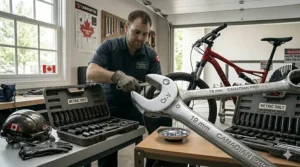
Permanently stamped or laser-etched size markings outperform paint-filled numbers enormously, especially in Canadian shop environments. Paint wears away within months of regular use, leaving you guessing whether that socket is 16mm or 17mm by trial and error. Deep stamping remains legible through years of abuse, oil exposure, and repeated cleaning. Professional mechanics across Canada rely on clearly-marked tools to maintain efficiency, as detailed in comprehensive socket guides from industry experts.
High-contrast markings (white, yellow, or raised polished numbers against matte backgrounds) improve visibility in dim garages and under-vehicle situations. Canadian winter days already limit natural light—readable markings prevent frustration during season-shortened daylight hours.
6-Point vs. 12-Point Socket Design
6-point sockets grip fastener flats across greater surface area, dramatically reducing rounding risk on corroded or already-damaged bolts. They’re essential for stubborn fasteners—think suspension bolts frozen after five Canadian winters or exhaust manifold studs seized from thermal cycling. The trade-off: 6-point sockets require more clearance for positioning since they engage at only 60-degree increments.
12-point sockets engage every 30 degrees, making them invaluable in tight spaces where ratchet swing is severely limited. They work perfectly on fresh, undamaged fasteners but increase rounding risk on corroded hardware. Smart Canadian mechanics use 6-point sockets by default, switching to 12-point only when access absolutely demands it.
Extension Bars and Universal Joints
Short extensions (2-3 inches) bridge gaps between ratchet heads and recessed fasteners without sacrificing control. Medium extensions (6 inches) handle typical access challenges on European vehicles. Long extensions (10+ inches) reach deep into engine bays or underneath dash assemblies.
Universal joints (U-joints) allow off-angle access when straight-line approaches physically can’t fit. They’re essential for Canadian mechanics working on European vehicle suspension systems where access often requires working around control arms, sway bars, and frame members. Quality U-joints maintain solid connections under torque without binding or slipping.
Blow-Molded Cases vs. Toolbox Organization
Blow-molded cases excel for mobile mechanics shuttling between job sites—they protect tools during transport and provide instant access to organized contents. Custom-cut slots prevent rattling and immediately identify missing pieces. However, they consume significant toolbox real estate and complicate integration with existing tool storage systems.
Socket rails, magnetic strips, and drawer organizers work better for stationary shops where space efficiency matters. They allow mixing custom tool combinations and integrating metric sockets with existing SAE collections. For Canadian home garage mechanics, foam drawer inserts from Princess Auto or Canadian Tire provide excellent middle-ground solutions.
Metric Tool Set Maintenance for Canadian Climates
Canadian winters wreak havoc on tools exposed to moisture, road salt, and temperature extremes. Proper maintenance extends tool life significantly while maintaining reliable performance when you need it most.
Preventing Rust and Corrosion
After each use, wipe tools with clean shop towels to remove moisture, oil residue, and road salt traces. Winter work particularly demands this attention—moisture condensing on cold metal in heated garages accelerates corrosion. Tools left dirty over winter develop surface rust that impedes socket engagement and stains hands during use.
Light tool oil application (3-IN-ONE, Marvel Mystery Oil, or dedicated tool protectant) provides moisture barrier protection. Apply thin coats quarterly or monthly during winter, when temperature cycling between cold garages and warm interiors creates condensation repeatedly. Avoid heavy applications—excess oil attracts dust and contaminants, which abrade chrome plating.
Store tools in dry environments whenever possible. Unheated Canadian garages experience humidity swings that promote corrosion despite oil protection. If unheated storage is unavoidable, use tool chest dehumidifiers or silica gel packets to absorb atmospheric moisture. Clean and oil tools before winter storage if you pause vehicle work seasonally.
Ratchet Mechanism Maintenance
Ratchets require periodic internal cleaning and lubrication to maintain smooth operation. Most Canadian mechanics never perform this maintenance until ratchets start skipping under load—by then, internal wear already exists. Understanding how ratchet mechanisms function helps identify when maintenance is needed versus when replacement becomes necessary.
Disassemble ratchet heads annually (or after exposure to significant dirt/water) and flush internal mechanisms with brake cleaner or solvent. This removes accumulated grit, old lubricant, and metallic wear particles. After drying, apply light grease (white lithium or synthetic) to pawl mechanisms and reassemble. This 15-minute investment per ratchet prevents premature wear and maintains reliable engagement.
Avoid spraying lubricants like WD-40 into assembled ratchet heads—these displace existing grease without adequate replacement, accelerating wear. If ratchets start feeling gritty or slipping, proper disassembly and cleaning solves problems permanently versus temporary aerosol fixes.
Socket Care Best Practices
Impact sockets endure forces hand tools never experience, yet many Canadian mechanics store them identically to chrome sockets. Impact-rated sockets should remain separate to prevent confusion—using chrome sockets on impact wrenches risks shattering, potentially causing injury. Black oxide impact sockets clearly distinguish themselves, preventing dangerous mix-ups.
Check socket internal surfaces periodically for wear or damage. Rounded internal corners indicate improper use (wrong size) or manufacturing defects. Replace compromised sockets immediately—they’ll round fastener heads rather than turning them properly. Quality sets like TEKTON offer individual socket replacement through warranty programs.
Common Mistakes When Buying Metric Tool Sets
1. Prioritizing Piece Count Over Useful Coverage
That “270-piece tool set” looks impressive until you realize 180 pieces are screwdriver bits you’ll rarely use. Canadian mechanics specifically servicing European vehicles need comprehensive socket coverage (4-32mm including “odd” sizes) over bloated piece counts inflated with accessories.
Focus on what matters: Do shallow sockets cover 6-32mm without skips? Are deep sockets included in commonly-used sizes (10-19mm)? Does the set include all three drive sizes (1/4″, 3/8″, 1/2″) with quality ratchets? A focused 100-piece set with complete metric coverage outperforms a 300-piece set missing critical sizes.
2. Ignoring Canadian Availability and Warranty Service
That amazing American-market Snap-On set available through US retailers looks tempting, but consider post-purchase support. Canadian warranty claims require international shipping, potentially stranding you without tools for weeks. Border fees, duty, and shipping costs transform “great deals” into expensive mistakes.
Prioritize brands with established Canadian presence (TEKTON ships from US but offers excellent Canadian service, GearWrench available at Canadian Tire, Husky through Home Depot Canada). Physical warranty service access matters enormously—swapping a broken ratchet at Canadian Tire beats mailing tools internationally and awaiting replacements.
3. Skimping on Ratchet Quality
Cheap ratchets seem financially prudent until they skip under torque mid-job, especially when fighting frozen Canadian winter fasteners. Budget an extra $50-75 for quality ratchets—the smooth operation, fine-tooth mechanisms, and reliable pawl engagement justify costs through reduced frustration and improved productivity.
Fine-tooth ratchets (72+ teeth) aren’t luxury features for Canadian mechanics—they’re productivity essentials when working in confined spaces. The difference between 5-degree and 10-degree swing arcs determines whether you can access fasteners or need removing surrounding components first.
4. Overlooking Storage System Integration
That comprehensive 250-piece set in three massive blow-molded cases looks complete but physically won’t fit your toolbox. Measure available storage before purchasing. Consider whether cases stack efficiently, fit tool drawers, or integrate with existing organization systems.
Mobile mechanics should prioritize compact, organized storage that survives vehicle transport. Stationary shop mechanics can optimize for accessibility and space efficiency. Canadian weekend warriors might prefer mid-size cases that store on garage shelves without consuming entire workbenches.
5. Neglecting Deep Socket Requirements
Shallow socket sets work fine until you encounter recessed fasteners or extended studs—common scenarios on European vehicles. Spark plug changes, suspension work, and many engine repairs physically demand deep sockets. Sets lacking deep coverage force purchasing additional pieces later, negating initial savings.
Prioritize sets including deep sockets in frequently-used sizes. If budget constraints exist, ensure at minimum 8mm, 10mm, 13mm, 15mm, and 17mm are available in both shallow and deep versions across your primary working drive size (typically 3/8-inch).
Maintenance Tips for Long-Term Tool Performance
Proper Storage Practices
Organized storage isn’t merely aesthetic—it’s functional maintenance. When sockets rattle loose in disorganized cases, they impact each other, accelerating chrome finish wear. Chrome chips expose raw steel to moisture, initiating corrosion that spreads across surfaces.
Socket rails, foam organizers, or blow-molded cases with individual slots prevent tool-on-tool contact during storage and transport. For Canadian mobile mechanics traveling rough roads, secure organization prevents damage from constant vibration and impacts. Home garage mechanics benefit from visible organization that instantly reveals missing tools before mid-job discoveries.
Environmental Considerations
Canadian garage environments fluctuate dramatically—summer heat and humidity, winter cold and dryness, plus the moisture introduced by working on snow-covered vehicles. These cycles stress tools more than stable climate conditions.
During winter, allow cold tools to warm naturally before use. Immediate torque application on frozen metal risks internal damage, particularly in ratchet mechanisms. The expansion/contraction from extreme temperature swings loosens components over time—periodically check ratchet heads for loose fasteners requiring tightening.
Professional Cleaning Techniques
Quarterly deep cleaning maintains tool performance and appearance. Remove all sockets from storage, wipe each with clean solvent-dampened cloths (mineral spirits, brake cleaner, or degreaser), then dry thoroughly. Inspect for damage during this process—catching worn tools early prevents mid-job failures.
For ratchets showing decreased smoothness, perform internal maintenance. Most quality ratchets disassemble with simple hex keys or screwdrivers. Flush mechanisms with brake cleaner, allow complete drying, then reassemble with fresh light grease. This 30-minute annual maintenance keeps ratchets feeling new for decades.
Budget Considerations for Canadian Buyers
Value vs. Cost Analysis
The cheapest metric tool set inevitably costs more through replacements, rounded fasteners, and wasted time. Canadian mechanics should calculate value differently: cost per useful piece, warranty accessibility, and expected lifespan.
A $300 professional set lasting 20+ years costs $15 annually. A $100 budget set requiring replacement every 3 years costs $33 annually—plus the frustration and downtime from early failures. For Canadian mechanics servicing European vehicles regularly, mid-range to professional tools ($200-350) deliver superior long-term value.
Weekend warriors performing occasional maintenance might justify budget-conscious choices ($130-180 range). However, even hobbyists should prioritize quality ratchets—cheap ratchet replacements often force purchasing entire new sets since individual replacements rarely match.
Canadian Pricing Realities
Tool prices in Canada typically run 10-25% higher than American retail due to currency exchange, import duties, and distribution costs. However, Canadian warranty service accessibility and elimination of border fees often offset initial premiums.
Watch for Canadian Tire sales (typically spring and fall), Home Depot seasonal promotions, and Amazon.ca Prime Day discounts. Patient Canadian buyers frequently score 20-30% savings by purchasing during promotional periods rather than immediately.
Financing Quality Tools
For professional Canadian mechanics, quality tools represent business investments justifying financing through tool truck programs or credit options. Stanley, Snap-On, and Mac tool trucks visit Canadian shops weekly, offering payment plans that spread costs over 6-12 months.
Home mechanics can leverage Canadian Tire’s Triangle Credit Card (delayed interest promotions), Home Depot Consumer Credit Card (similar terms), or Amazon.ca financing through partnership banks. Breaking $300 purchases into monthly payments makes quality tools accessible without delaying projects awaiting budget accumulation.
Professional vs. DIY Tool Requirements
What Professional Canadian Mechanics Need
Commercial shops servicing multiple European vehicles daily require comprehensive coverage without skipped sizes. Professional sets should include:
- Complete shallow socket coverage: 4-32mm (all three drive sizes)
- Deep sockets: 6-24mm minimum (3/8″ and 1/2″ drives)
- Premium ratchets: 72+ tooth count, comfortable handles, reliable quick-release
- Durable storage: Blow-molded cases or quality toolbox organizers
- Immediate warranty service: Canadian-accessible replacement through established retailers
Professional mechanics also benefit from redundancy—duplicate commonly-used sizes (10mm, 13mm, 15mm, 17mm) prevent work stoppages when tools get lost under vehicles or misplaced between bays. The productivity cost of searching for missing sockets far exceeds purchasing backups.
DIY Enthusiast Requirements
Home mechanics maintaining personal European vehicles need solid fundamentals without professional redundancy. Focus on:
- Core metric coverage: 6-24mm shallow, 8-19mm deep (prioritizing 3/8″ drive)
- Quality ratchets: Mid-range tooth count (60-72 teeth), comfortable operation
- Adequate storage: Organized cases or rails preventing misplacement
- Accessible warranty: Canadian service through major retailers
DIY mechanics can economize by purchasing focused sets rather than comprehensive kits. If you exclusively maintain front-wheel-drive vehicles, extensive 1/2″ coverage matters less than complete 1/4″ and 3/8″ options. Assess your actual needs rather than buying theoretical coverage.
Where to Buy Complete Metric Tool Sets in Canada
Major Canadian Retailers
Canadian Tire dominates Canadian tool retail with nationwide coverage including remote communities. They stock GearWrench, Maximum (house brand), Mastercraft, and various import brands. Strength: immediate warranty service, frequent sales, Triangle Rewards points. Weakness: limited premium brand selection, variable stock between locations.
Home Depot Canada emphasizes contractor-grade tools including Husky (house brand), Milwaukee, DEWALT, and Ridgid. Strength: commercial account support, tool rental options, Pro Xtra rewards. Weakness: fewer automotive-specific options than Canadian Tire.
Princess Auto caters to Canadian mechanics and fabricators with extensive tool selection including import brands and refurbished professional tools. Strength: excellent prices on quality tools, unique Canadian brand. Weakness: limited locations, primarily concentrated in Western and Central Canada.
Online Retailers Serving Canada
Amazon.ca offers the widest metric tool set selection including American brands (TEKTON, Craftsman) often unavailable in Canadian stores. Strength: comprehensive selection, competitive pricing, convenient delivery. Weakness: warranty service through manufacturers (no in-store exchanges), cross-border shipping delays.
ToolUp.com (Canadian company) specializes in professional-grade tools with expert staff assistance. Strength: knowledgeable customer service, quality selection. Weakness: higher pricing than big-box retailers.
KMS Tools (British Columbia based) serves Western Canadian mechanics with comprehensive selection and expert advice. Strength: regional expertise, excellent customer service. Weakness: primarily BC-focused physical locations.
Professional Tool Trucks
Snap-On, Mac Tools, and Stanley tool trucks visit Canadian shops weekly, offering financing and comprehensive professional-grade options. Strength: premium quality, convenient financing, expert advice. Weakness: significantly higher pricing (2-4x retail), pressure sales tactics.
Frequently Asked Questions
❓ How much should I budget for a complete metric tool set in Canada?
❓ Can I use metric tools on American vehicles made after 2000?
❓ What's the difference between chrome and impact-rated metric sockets?
❓ Which metric sizes do I need most often for BMW and Mercedes maintenance?
❓ How do I know if my Canadian warranty covers tool replacement?
Conclusion
Choosing the right complete metric tool set transforms European vehicle maintenance from an exercise in frustration to an actually enjoyable garage experience. After testing and researching dozens of options specifically available in the Canadian market, several clear conclusions emerge.
For professional Canadian mechanics servicing diverse European vehicle fleets, the TEKTON SKT15311 delivers unmatched comprehensive coverage at fair pricing ($215-245 CAD). Its no-skip metric sizing and reliable lifetime warranty through accessible American customer service justifies the investment for serious users. The GearWrench 80933 ($165-185 CAD) provides excellent middle-ground for specialists focusing on European vehicles, with ratcheting combination wrenches that dramatically speed repetitive suspension and brake work.
DIY Canadian mechanics maintaining personal BMWs, Audis, or Mercedes should seriously consider the Craftsman CMMT99206 ($185-210 CAD). It balances comprehensive coverage, quality construction, and accessible lifetime warranty through Canadian Tire locations—perfect when you need replacement tools immediately rather than waiting for international shipping. Budget-conscious hobbyists working on Japanese or modern American vehicles find excellent value in the Husky H230PCMBTS ($149-169 CAD), accepting the mixed SAE/metric format provides flexibility for Canadian mechanics often working across vehicle types.
Mobile mechanics and technicians shuttling between job sites benefit most from the DEWALT DWMT73804 ($175-195 CAD). Its compact organization and durable construction survive constant transport across Canadian roads while maintaining focus on commonly-needed sizes rather than comprehensive but bulky coverage. Professional shops willing to invest long-term should examine the Milwaukee 48-22-9008 ($265-295 CAD)—premium pricing delivers professional-grade durability that ultimately costs less through eliminated replacement expenses.
Remember: Canadian winter conditions amplify the importance of quality tools. Road salt, temperature extremes, and moisture cycling destroy cheap tools rapidly. Investing $200-250 CAD today in quality metric coverage prevents replacing failed budget sets repeatedly while avoiding the frustration of rounded bolt heads mid-job in freezing garages.
The European vehicle population across Canadian roads continues growing—German, Italian, Swedish, and even French vehicles increasingly populate Canadian driveways. Without comprehensive metric tool coverage, you’re perpetually one missing size away from halting projects. Choose wisely based on your actual vehicle service needs, storage requirements, and budget realities. Your future self, wrenching confidently on cold Canadian winter evenings, will thank you.
Recommended for You
- 7 Best Socket Set for Mechanics in Canada 2026
- 7 Best Chainsaws for Cutting Firewood in Canada 2026
- 7 Best Table Saw for Beginners Canada 2026 – Safety First
Disclaimer: This article contains affiliate links to Amazon.ca. If you purchase products through these links, we may earn a small commission at no additional cost to you.
✨ Found this helpful? Share it with your friends! 💬🤗
