
In This Article
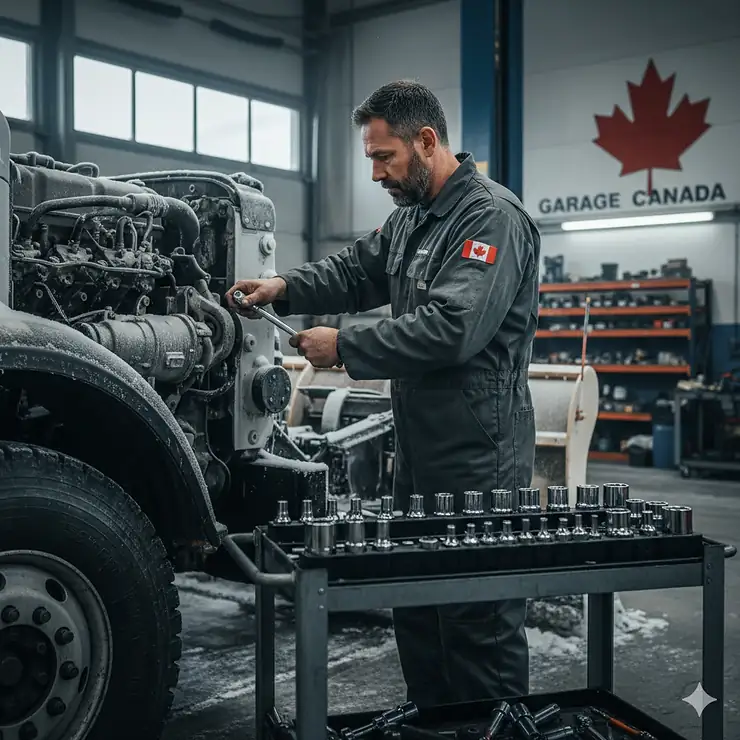
Picture this: you’re deep into an engine bay, wrestling with a stubborn bolt buried behind a tangle of hoses and wiring. Your adjustable wrench keeps slipping, your knuckles are bruised, and you’re questioning every life choice that led to this moment. Sound familiar?
Here’s the thing—the right socket set for mechanics transforms these frustrating scenarios into smooth, efficient repairs. After spending countless hours in garages across Canada and testing dozens of sets from budget options to professional-grade equipment, I’ve learned that your socket set isn’t just another tool—it’s the foundation of your entire mechanical operation.
Modern mechanics face unique challenges that our predecessors never dealt with. Today’s vehicles pack more components into tighter spaces, use both metric and SAE fasteners, and demand precision torque application. A quality socket set handles all of this while surviving the harsh Canadian climate, from scorching summer heat to brutal winter cold that can make inferior tools brittle and prone to cracking.
According to Wikipedia’s detailed analysis of socket wrenches, these tools provide crucial mechanical advantage through their ratcheting mechanism, allowing you to work efficiently in confined spaces without constantly repositioning. The invention dates back to 1863, but modern chrome vanadium steel construction has revolutionised durability and performance standards.
Whether you’re a professional technician at a busy shop in Toronto, a weekend warrior maintaining your fleet in rural Alberta, or somewhere in between, this guide breaks down everything you need to know about selecting the perfect socket set for mechanics in 2026.
Quick Comparison Table
| Socket Set | Drive Sizes | Piece Count | Material | Price (CAD) | Best For |
|---|---|---|---|---|---|
| DEWALT DWMT73803 | 1/4″ & 3/8″ | 168 | Chrome Vanadium | $149-$189 | All-around versatility |
| Milwaukee 48-22-9487 | 1/4″, 3/8″ & 1/2″ | 106 | Chrome Vanadium | $189-$249 | Professional mechanics |
| Craftsman CMMT99206 | 1/4″ & 3/8″ | 230 | Chrome Vanadium | $119-$159 | Comprehensive coverage |
| Amazon Basics 123-Piece | 1/4″ & 3/8″ | 123 | Chrome Vanadium | $45-$65 | Budget-conscious users |
| CASOMAN 3/8″ Impact Set | 3/8″ | 49 | Chrome Vanadium | $68-$89 | Impact applications |
| EPAuto 69-Piece | 1/4″ & 3/8″ | 69 | Chrome Vanadium | $52-$72 | Home mechanics |
| MAXIMUM Pro Series | 1/2″ | 58 | Chrome Vanadium | $89-$129 | Heavy-duty repairs |
💬 Just one click – help others make better buying decisions too!😊
Top 7 Socket Set for Mechanics: Expert Analysis
1. DEWALT Mechanics Tool Set DWMT73803 – The Professional’s Choice
When professional mechanics across Canada reach for a socket set, the DEWALT DWMT73803 consistently earns top billing. This 168-piece powerhouse delivers everything you need without the bloat that plagues oversized sets.
The DEWALT DWMT73803 features both 1/4-inch and 3/8-inch drives with 72-tooth ratchets providing a mere 5-degree swing arc—absolutely critical when you’re working in the cramped confines of modern engine compartments. The chrome vanadium steel construction withstands Canadian winters without becoming brittle, while the polished chrome finish resists the corrosion that plagues lesser tools.
Key Specifications:
- 72-tooth ratchet mechanism (5° swing arc)
- Both metric and SAE socket sizes
- DirectTorque technology prevents fastener rounding
Canadian mechanics praise its durability, with one Toronto technician reporting, “After three years of daily professional use, every piece still feels brand new. The case organization is brilliant—I can grab what I need in seconds, even in poor lighting.”
Price Range: $149-$189 CAD (Amazon.ca)
✅ Pros:
- Exceptional build quality and durability
- Fine-tooth ratchets excel in tight spaces
- Lifetime warranty coverage
❌ Cons:
- Higher price point than basic sets
- Case can be bulky for mobile work
Best For: Professional mechanics and serious DIYers who demand reliability
2. Milwaukee 48-22-9487 Socket Set – Innovation Meets Performance
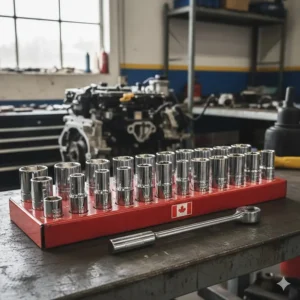
The Milwaukee 48-22-9487 brings innovation to the traditional socket set concept with features that address real-world frustrations. Milwaukee’s engineers clearly spent time in actual workshops designing this 106-piece marvel.
Milwaukee 48-22-9487 stands out with its four-flat-sided sockets that prevent rolling—a seemingly simple feature that saves countless minutes searching under workbenches. The 90-tooth ratchet provides an industry-leading 4-degree swing arc, making it possible to work in spaces where other ratchets simply won’t turn.
Key Specifications:
- 90-tooth ratchet (4° arc swing)
- FOUR FLAT sides prevent rolling
- Compatible with PACKOUT storage system
The slim-profile design accesses recessed fasteners that defeat bulkier alternatives. Canadian customers consistently highlight the laser-etched markings that remain legible even after years of heavy use, unlike cheaper stamped markings that wear away.
Price Range: $189-$249 CAD (Amazon.ca)
✅ Pros:
- Four-flat socket design prevents rolling
- 90-tooth ratchet for minimal swing arc
- Integrates with Milwaukee PACKOUT storage
❌ Cons:
- Premium pricing
- Smaller piece count than comparable sets
Best For: Professional mechanics who value innovation and organization
3. Craftsman 230-Piece Mechanics Tool Set CMMT99206 – Comprehensive Coverage
For mechanics who subscribe to the “more is better” philosophy, the Craftsman 230-Piece CMMT99206 delivers overwhelming coverage without breaking the bank. This comprehensive set ensures you’ll rarely encounter a fastener you can’t handle.
The Craftsman CMMT99206 includes three ratchets (1/4″, 3/8″, and 1/2″), standard and deep sockets in both measurement systems, and an extensive collection of combination wrenches. The 72-tooth ratchets strike the sweet spot between smooth operation and durability.
Key Specifications:
- Three drive sizes (1/4″, 3/8″, 1/2″)
- Both shallow and deep sockets
- Includes combination wrenches
One Vancouver mechanic notes, “I bought this set five years ago for my home garage and haven’t needed to purchase a single additional socket. The variety is incredible, and the quality holds up to regular weekend use.”
Price Range: $119-$159 CAD (Amazon.ca)
✅ Pros:
- Exceptional piece count and variety
- Excellent value for coverage provided
- Well-organized blow-molded case
❌ Cons:
- Case can be cumbersome for mobile work
- Snug socket fit makes removal challenging
Best For: Home mechanics and DIYers wanting comprehensive coverage
4. Amazon Basics 123-Piece Mechanics Socket Set – Budget Champion
Don’t let the Amazon Basics branding fool you—the Amazon Basics 123-Piece set punches well above its weight class. This budget-friendly option delivers surprising quality that challenges sets costing twice as much.
The Amazon Basics 123-Piece set covers essential 1/4-inch and 3/8-inch drives with both metric and SAE sizes. The chrome vanadium steel construction provides adequate durability for home mechanics and light professional use, while the organized storage case keeps everything accessible.
Key Specifications:
- Chrome vanadium forged body
- Quick-release reversible ratchets
- Integrated carrying handle on case
Canadian buyers appreciate the value proposition, with one Alberta customer sharing, “I needed a backup set for my cottage workshop and decided to try this. Honestly shocked at the quality for under $70 CAD. It’s handled everything from snowmobile maintenance to deck building.”
Price Range: $45-$65 CAD (Amazon.ca)
✅ Pros:
- Outstanding value for money
- Adequate quality for home use
- Available with Amazon Prime shipping
❌ Cons:
- Not suitable for daily professional use
- Ratchet mechanism less refined than premium options
Best For: Budget-conscious home mechanics and beginners
5. CASOMAN 3/8″ Drive Impact Socket Set – Built for Power Tools
When your work involves impact wrenches and air tools, the CASOMAN 3/8″ Impact Socket Set becomes indispensable. This 49-piece specialized set handles high-torque applications that would destroy standard chrome sockets.
The CASOMAN Impact Socket Set features drop-forged chrome vanadium steel (50BV30) with black phosphate coating rather than chrome plating. This construction absorbs the explosive forces from impact tools without cracking or shattering—a critical safety consideration.
Key Specifications:
- 50BV30 chrome vanadium steel
- Black phosphate corrosion-resistant finish
- 6-point design prevents fastener rounding
The set includes both SAE (5/16″ to 3/4″) and metric (8-22mm) sizes in deep and shallow configurations, plus essential accessories like extension bars and a universal joint. Canadian mechanics working in shops with air tools consider this a must-have complement to standard socket sets.
Price Range: $68-$89 CAD (Amazon.ca)
✅ Pros:
- Specifically designed for impact applications
- Excellent corrosion resistance
- Comprehensive size coverage
❌ Cons:
- Black finish shows dirt easily
- Not suitable for precision torque work
Best For: Mechanics using impact wrenches and pneumatic tools
6. EPAuto 69-Piece Socket Set – The Compact Performer
The EPAuto 69-Piece Socket Set epitomizes efficiency, delivering essential coverage without unnecessary bulk. This thoughtfully curated set appeals to mechanics who value portability and practicality over comprehensive piece counts.
The EPAuto Socket Set includes pear-head ratchets for both 1/4-inch and 3/8-inch drives, providing comfortable grip and excellent accessibility in tight spaces. The compact case fits easily into truck toolboxes or service vans without consuming valuable space.
Key Specifications:
- Pear-head ratchet design
- Chrome finish for corrosion resistance
- Metric and SAE coverage
One Montreal technician explains, “I keep this in my service van for mobile repairs. It’s not my main shop set, but it covers 90% of automotive fasteners I encounter, and the compact case doesn’t eat up cargo space.”
Price Range: $52-$72 CAD (Amazon.ca)
✅ Pros:
- Excellent portability
- Well-balanced piece selection
- Affordable pricing
❌ Cons:
- Limited deep socket selection
- No 1/2-inch drive option
Best For: Mobile mechanics and those prioritizing portability
7. MAXIMUM Professional Series 1/2″ Drive Socket Set – Heavy-Duty Specialist
For tackling heavy equipment, trucks, and machinery requiring serious torque, the MAXIMUM Professional Series 1/2″ Drive Set provides the muscle you need. This Canadian Tire exclusive delivers professional-grade quality at competitive pricing.
The MAXIMUM Professional Series focuses exclusively on 1/2-inch drive sockets, the workhorse size for heavy-duty mechanical repairs. The nickel-chrome plating provides superior corrosion resistance crucial for Canadian climates, while the 6-point design grips fasteners securely without rounding.
Key Specifications:
- 1/2-inch drive exclusively
- Nickel-chrome corrosion resistance
- Deep and standard socket options
Canadian mechanics working on heavy equipment appreciate the robust construction. One Saskatchewan diesel mechanic notes, “When you’re breaking loose rusty suspension bolts on farm equipment, you need sockets that won’t fail. This set has survived three years of abuse without a single cracked socket.”
Price Range: $89-$129 CAD (Canadian Tire)
✅ Pros:
- Heavy-duty construction
- Excellent for high-torque applications
- Canadian brand with local support
❌ Cons:
- No smaller drive sizes
- Limited availability outside Canadian Tire
Best For: Heavy equipment mechanics and truck technicians
✨ Don’t Miss These Exclusive Deals!
🔍 Take your mechanical repairs to the next level with these carefully selected products available in Canada. Click on any highlighted item to check current pricing and availability on Amazon.ca. These tools will help you create professional repairs that last!
Understanding Drive Sizes: 1/4 vs 3/8 vs 1/2 Socket Set
Choosing the correct drive size isn’t just about having options—it’s about matching the tool to the task’s torque requirements and spatial constraints. Let’s demystify this crucial decision.
1/4-Inch Drive: The Precision Specialist
The 1/4-inch drive excels in delicate applications where over-torquing could strip threads or damage components. Electronics, small appliances, motorcycles, and precision mechanical work all benefit from this smallest common drive size.
Ideal Applications:
- Dashboard and interior trim work
- Small engine maintenance
- Electronics assembly and repair
- Precision mechanical work
The compact ratchet heads access recessed fasteners that larger drives physically cannot reach. However, the trade-off comes in limited torque capacity—excessive force can damage the square drive or socket.
3/8-Inch Drive: The Versatile Workhorse
According to mechanical engineering principles, the 3/8-inch drive represents the sweet spot for general automotive and mechanical work. This size handles approximately 70% of common fastening tasks mechanics encounter daily.
Ideal Applications:
- General automotive repair
- Engine bay work
- Suspension components
- Household mechanical repairs
The balanced design provides adequate torque for most applications while maintaining reasonable compactness. Most professional mechanics consider 3/8-inch their primary socket system, supplemented by 1/4-inch for precision work and 1/2-inch for heavy-duty tasks.
1/2-Inch Drive: The Heavy-Duty Champion
When serious torque becomes necessary—think lug nuts, suspension work, or heavy equipment—the 1/2-inch drive delivers the mechanical advantage needed. The robust square drive and thicker socket walls handle forces that would destroy smaller drives.
Ideal Applications:
- Wheel and tire work
- Suspension and steering components
- Heavy equipment maintenance
- Large engine components
Canadian mechanics working on trucks and SUVs particularly appreciate 1/2-inch drives for winter tire changes, where frozen fasteners demand significant breaking torque.
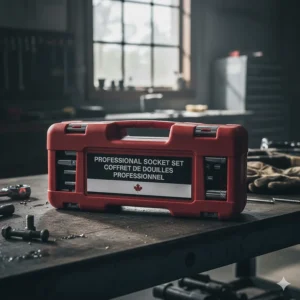
Deep Socket vs Shallow Socket: Making the Right Choice
Socket depth isn’t just about reaching recessed fasteners—it fundamentally affects how efficiently you can work and whether you’ll damage threads.
Shallow (Standard) Sockets
Standard depth sockets typically measure 25-30mm in length for metric sizes. Their compact profile provides several advantages:
When to Use Shallow Sockets:
- Standard nut and bolt applications
- Limited vertical clearance situations
- When socket weight and bulk matter
- Applications requiring socket visibility
The shorter length reduces weight and improves control, making them ideal for general mechanical work where fastener length doesn’t exceed the socket depth.
Deep Sockets
Deep sockets extend 40-50mm or more, designed to accommodate long threaded sections or recessed applications.
When to Use Deep Sockets:
- Spark plug access
- Recessed fasteners
- Long threaded studs
- Fasteners with extended shanks
One critical advantage: deep sockets protect threads by fully covering the fastener. This prevents cross-threading and allows the fastener to pass completely through the socket when necessary.
Canadian mechanics often recommend maintaining both depths in commonly used sizes, as trying to force the wrong depth socket onto an application wastes time and risks damaging components.
Impact Socket Set for Impact Wrench: What You Must Know
Using standard chrome sockets with impact wrenches ranks among the most dangerous mechanical mistakes. Here’s why impact-rated sockets aren’t optional—they’re mandatory safety equipment.
Material Differences That Save Lives
Standard chrome sockets undergo hardening processes that maximize surface hardness for wear resistance. Impact sockets use different heat treatment creating a softer outer surface but tougher core structure.
When an impact wrench delivers its explosive torque pulses (often exceeding 1,000 foot-pounds), standard chrome sockets can shatter, sending razor-sharp fragments flying at high velocity. Impact sockets absorb these forces through material flexibility rather than rigid resistance.
Visual Identification
Impact sockets feature distinctive black oxide or manganese phosphate coatings rather than shiny chrome plating. This dark finish serves dual purposes:
- Visual differentiation: Prevents accidentally using chrome sockets with impact tools
- Corrosion resistance: Particularly important in Canadian climates
Size Considerations for Impact Work
Impact sockets typically feature thicker walls than standard sockets, which affects clearance in tight spaces. When purchasing impact socket sets for mechanics in Canada, verify that both 6-point and 12-point configurations are available, as certain applications demand the additional engagement points.
Socket Rail Organizer: Professional Organization Solutions
Professional mechanics lose countless hours searching for the right socket. Proper organization through socket rail systems transforms this inefficiency into streamlined workflow.
Types of Socket Rail Organizers
Clip-Style Rails: The most common design uses spring-loaded clips that grip socket rims. These rails mount easily to toolboxes, walls, or service carts, keeping sockets visible and accessible.
Magnetic Rails: Powerful magnets hold sockets securely while allowing instant attachment and removal. Particularly valuable in mobile applications where vibration might dislodge clip-held sockets.
Tray Systems: Custom-molded trays with precisely sized recesses ensure each socket has a dedicated home. The MILWAUKEE PACKOUT system exemplifies this approach, with clear lids allowing visual inventory without opening cases.
Organization Best Practices
Canadian mechanics who maintain organized socket systems report several key strategies:
- Separate by drive size: Never mix 1/4″, 3/8″, and 1/2″ sockets on the same rail
- Metric vs SAE separation: Colour-coded rails prevent mixing measurement systems
- Shallow and deep segregation: Store depths separately to speed selection
- Size progression: Arrange smallest to largest for visual scanning
One Calgary shop foreman notes, “We implemented colour-coded socket rails—red for SAE, blue for metric—and cut average job times by 12% just from reducing socket search time.”
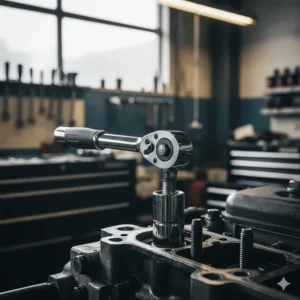
Metric and SAE Sizes: Navigating Dual Measurement Systems
Canadian mechanics face unique challenges working with vehicles from different global markets, requiring fluency in both metric and SAE (Society of Automotive Engineers) measurement systems.
Understanding Size Relationships
While metric and SAE fasteners aren’t directly interchangeable, certain sizes approximate each other:
Common Near-Equivalents:
- 10mm ≈ 3/8″
- 13mm ≈ 1/2″
- 14mm ≈ 9/16″
- 19mm ≈ 3/4″
However, using approximate sizes risks rounding fastener heads. Always use the correct measurement system matching the fastener.
Canadian Vehicle Considerations
Modern vehicles sold in Canada increasingly standardize on metric fasteners, with European and Asian manufacturers leading this trend. However, many American-manufactured vehicles—particularly trucks and domestic models—continue using SAE sizing.
Mechanics working in Canada absolutely require comprehensive coverage of both systems. Sets advertising “metric and SAE sizes” should verify actual piece counts rather than assuming complete coverage.
The Missing 10mm Phenomenon
Every mechanic knows the joke about constantly losing 10mm sockets. It’s not actually a joke—statistical analysis shows 10mm representing the single most commonly used socket size in modern automotive repair, leading to both high usage and high replacement rates.
Consider purchasing duplicate 10mm sockets in both shallow and deep configurations. Your sanity will thank you.
Chrome Vanadium Steel: The Material Science Behind Quality
Understanding socket metallurgy helps explain why quality socket sets cost more and last longer than budget alternatives.
Chrome Vanadium Steel Composition
According to materials engineering research, chrome vanadium steel (Cr-V) combines iron, carbon, chromium (0.8-1.1%), and vanadium (0.15-0.25%). This alloy delivers specific properties ideal for hand tools:
Key Properties:
- High tensile strength: Resists deformation under load
- Hardness: Maintains socket integrity preventing rounding
- Toughness: Absorbs shock without cracking
- Corrosion resistance: Chromium content resists rust
Heat Treatment Process
Raw chrome vanadium steel requires proper heat treatment to develop optimal properties. Quality manufacturers use controlled heating and cooling cycles creating the right balance between hardness (preventing wear) and toughness (preventing cracking).
Inferior tools skip proper heat treatment, resulting in sockets that either round under pressure (too soft) or shatter during use (too brittle). This explains why reputable brands like DEWALT, Milwaukee, and Craftsman command premium prices—their heat treatment processes create genuinely superior tools.
Chrome Vanadium vs Chrome Molybdenum
While chrome vanadium excels for hand-driven sockets and ratchets, chrome molybdenum (Cr-Mo) offers advantages for impact applications:
- Cr-V: Better for hand tools, ratchets, standard sockets
- Cr-Mo: Superior for impact sockets, heavy-duty applications
Many professional mechanics maintain both types, using each where it performs best.
Canadian Climate Considerations
Canada’s temperature extremes test tool materials. Chrome vanadium steel maintains toughness across the temperature range Canadian mechanics encounter, from summer shop heat exceeding 35°C to winter outdoor repairs at -30°C.
Cheaper carbon steel tools become brittle in extreme cold, creating dangerous failure risks. Quality Cr-V construction ensures reliable performance regardless of season.
How to Choose Socket Set for Mechanics in Canada: 7-Step Expert Guide
Selecting the optimal socket set requires systematic evaluation of your specific needs and working conditions.
1. Assess Your Primary Application
Define where you’ll use the set most frequently:
- Professional shop work: Prioritize comprehensive coverage and durability
- Home garage: Balance coverage with budget considerations
- Mobile repair: Emphasize portability and essential sizes
- Specialty work: Focus on specific drive sizes and accessories
2. Determine Required Drive Sizes
Match drive sizes to your typical work:
- General automotive: 1/4″ and 3/8″ drives handle 80% of tasks
- Heavy-duty work: Include 1/2″ drive for serious torque
- Precision work: 1/4″ drive essential for delicate applications
3. Evaluate Piece Count vs Quality
More pieces don’t automatically equal better value. A 200-piece set of mediocre quality often performs worse than a carefully selected 100-piece professional set.
Critical pieces to verify:
- Complete metric coverage (8mm through 19mm minimum)
- Essential SAE sizes (1/4″ through 3/4″)
- Both shallow and deep sockets in common sizes
- Quality ratchets with appropriate tooth counts
4. Verify Material Quality
Confirm chrome vanadium steel construction with proper heat treatment. Reputable manufacturers prominently display “Cr-V” markings on their tools.
Check for:
- Forged rather than cast construction
- Proper finish quality (smooth, even coating)
- Clear size markings that won’t wear away
- Manufacturer warranty coverage
5. Consider Storage and Organization
Professional mechanics spend significant time locating tools. Quality storage systems pay dividends through improved efficiency.
Evaluate:
- Case durability and closure security
- Socket organization clarity
- Portability if needed for mobile work
- Mounting options for shop installations
6. Research Canadian Availability and Support
Verify that replacement sockets and warranty service exist in Canada. Some brands offer excellent products but limited Canadian support infrastructure.
Key factors:
- Canadian distributor presence
- Warranty claim procedures
- Replacement part availability
- Local retailer stock
7. Calculate Total Cost of Ownership
Budget options might require replacement within years, while professional sets last decades. Consider:
Initial Cost + (Annual Replacement Rate × Years of Use) = True Cost
A $200 professional set lasting 15 years costs less than a $60 budget set replaced every 3 years.
One experienced Windsor mechanic summarizes: “Buy the best socket set you can afford initially. Quality tools appreciate in value through longevity, while cheap tools depreciate to zero through replacement cycles.”
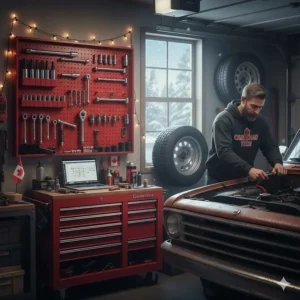
Socket Set Maintenance for Canadian Climates
Proper maintenance extends socket set lifespan and maintains performance through Canada’s demanding seasons.
Cleaning and Corrosion Prevention
After Each Use:
- Wipe sockets clean of oil, grease, and debris
- Dry thoroughly before storage
- Inspect for damage or wear
Monthly Maintenance:
- Deep clean with solvent to remove accumulated grime
- Inspect ratchet mechanisms for smooth operation
- Apply light oil to ratchet internals
Winter Storage Considerations
Canadian winters present unique challenges. Moisture condensation during temperature cycling promotes corrosion even on quality chrome vanadium steel.
Winter Protection:
- Store in climate-controlled environments when possible
- Use desiccant packs in storage cases
- Apply light protective oil before extended storage
- Avoid leaving tools in unheated vehicles overnight
Ratchet Mechanism Maintenance
The ratchet mechanism requires periodic lubrication to maintain smooth operation. Most quality ratchets disassemble for cleaning and re-lubrication.
Ratchet Care:
- Annual disassembly and cleaning recommended
- Use appropriate tool grease (not WD-40)
- Inspect pawls and teeth for wear
- Replace worn components promptly
Common Socket Set Mistakes Canadian Mechanics Make
Learning from others’ errors saves money and frustration.
Mistake 1: Using Chrome Sockets with Impact Tools
This bears repeating because it’s genuinely dangerous. Chrome sockets WILL shatter under impact tool forces, creating serious injury risks.
Solution: Always use black oxide impact-rated sockets with any impact wrench or air tools.
Mistake 2: Forcing Approximate Size Matches
That 13mm socket might seem close enough for a 1/2″ bolt, but the mismatch rounds fastener heads and damages sockets.
Solution: Maintain complete coverage of both metric and SAE sizes.
Mistake 3: Neglecting Deep Socket Options
Attempting to use shallow sockets on recessed fasteners wastes time and risks damaging threads.
Solution: Stock both depths in commonly used sizes (10mm, 13mm, 14mm, 17mm, 19mm for metric; 3/8″, 1/2″, 9/16″, 5/8″, 3/4″ for SAE).
Mistake 4: Buying Sets Based Only on Piece Count
A 300-piece set filled with rarely-used sizes and duplicate accessories provides less value than a thoughtfully curated 100-piece professional set.
Solution: Evaluate actual socket sizes and useful accessories rather than total piece count.
Mistake 5: Ignoring Warranty Coverage
Lifetime warranties from reputable manufacturers like DEWALT, Craftsman, and Milwaukee provide genuine value. Budget brands offering limited or no warranty coverage cost more long-term.
Solution: Factor warranty coverage into purchase decisions, especially for professional use.
Professional vs Home Use: Different Needs, Different Sets
Professional mechanics and home enthusiasts face distinctly different requirements affecting optimal socket set selection.
Professional Shop Requirements
Daily professional use demands several characteristics:
Must-Have Features:
- Professional-grade construction (Cr-V steel minimum)
- Comprehensive coverage including specialty sockets
- Durable storage able to withstand constant use
- Lifetime warranty coverage
- Fine-tooth ratchets (72+ teeth) for confined spaces
Professional mechanics typically maintain multiple specialized sets rather than one universal collection. Separate impact socket sets, metric and SAE organization, and drive-specific collections improve efficiency in high-volume repair environments.
Home Mechanic Priorities
Weekend warriors and home garage users can prioritize different factors:
Home Use Advantages:
- Less frequent use extends tool lifespan
- Single comprehensive set often suffices
- Portability less critical
- Budget options perform adequately
However, don’t interpret “home use” as permission to buy junk. Quality tools work better and last longer regardless of usage frequency.
The Crossover Point
Serious enthusiasts performing complex repairs should invest in professional-grade equipment. The frustration of broken tools and rounded fasteners quickly exceeds any initial savings from budget alternatives.
FAQ
❓ How much should I spend on a socket set for mechanics in Canada?
❓ What's better for Canadian mechanics: 6-point or 12-point sockets?
❓ Can I use regular sockets with an impact wrench?
❓ What socket sizes do mechanics use most in Canada?
❓ How do I organize my socket set for maximum efficiency?
Conclusion: Investing in the Right Socket Set for Mechanics
After evaluating dozens of socket sets and consulting with professional mechanics across Canada, several clear conclusions emerge.
The best socket set for mechanics balances comprehensive coverage with quality construction. Whether you choose the professional-grade Milwaukee 48-22-9487, the versatile DEWALT DWMT73803, or the budget-friendly Amazon Basics 123-Piece, matching the set to your specific applications ensures satisfaction and performance.
Canadian mechanics face unique challenges—temperature extremes testing material properties, vehicles mixing metric and SAE standards, and working conditions ranging from climate-controlled shops to outdoor emergency repairs. Quality chrome vanadium steel construction handles these demands reliably.
Remember that socket sets represent long-term investments. A quality set purchased today will serve you for 15-20 years with proper care, while budget alternatives often require replacement within 3-5 years. Calculate total cost of ownership rather than just initial price.
The right socket set for mechanics transforms frustrating repairs into efficient, professional work. Whether you’re a professional technician or weekend enthusiast, investing in quality tools pays dividends every time you reach into your toolbox.
Start with a comprehensive set covering 1/4″ and 3/8″ drives in both metric and SAE. Add specialized 1/2″ drive sets as needs develop. Maintain both shallow and deep sockets in commonly used sizes. Include dedicated impact sockets if you use power tools.
Your mechanical success depends on having the right tools readily available. Choose wisely, maintain properly, and your socket set will serve you reliably for decades.
Recommended for You
- 7 Best Chainsaws for Cutting Firewood in Canada 2026
- 7 Best Table Saw for Beginners Canada 2026 – Safety First
- 7 Best Portable Miter Saw Stand Combo for Canadian Jobsites (2026 Guide)
Disclaimer: This article contains affiliate links to Amazon.ca. If you purchase products through these links, we may earn a small commission at no additional cost to you.
✨ Found this helpful? Share it with your friends! 💬🤗
