
In This Article
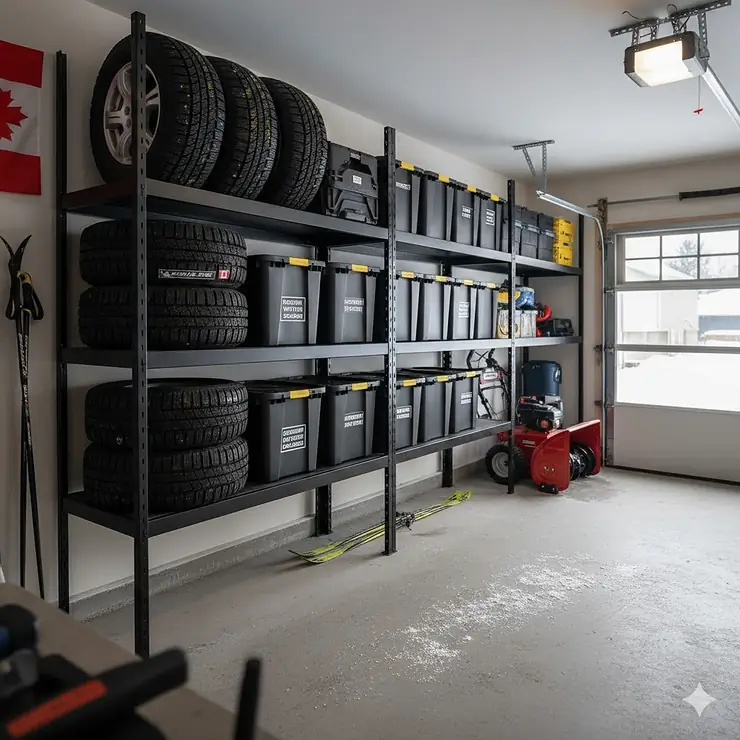
Is your garage floor a minefield of storage bins, tools, and seasonal equipment? You’re not alone. Most Canadian homeowners lose nearly 30% of their usable garage space simply because they’re storing everything on the ground. Heavy duty garage wall shelving changes that equation entirely.
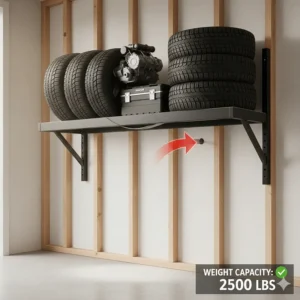
Wall-mounted shelving isn’t just about freeing up floor space—it’s about reclaiming your weekends. Instead of digging through piles every time you need a drill or winter tire, imagine having everything visible, accessible, and properly organized. Whether you’re dealing with Toronto’s humid summers or Calgary’s freezing winters, the right garage wall shelving system needs to withstand Canadian weather extremes while holding hundreds of pounds safely.
This guide examines seven heavy duty garage wall shelving systems currently available on Amazon.ca, comparing their weight capacity, installation requirements, and value for Canadian buyers. We’ve analyzed customer feedback from coast to coast, verified pricing in CAD, and identified which systems deliver the best performance for different storage needs and budgets.
Quick Comparison Table
| Product | Dimensions | Weight Capacity | Price Range (CAD) | Best For |
|---|---|---|---|---|
| FLEXIMOUNTS 2x6ft Classic | 24″ x 72″ | 600 lbs (2-pack) | $180-$220 | Maximum storage space |
| Jusgym 4-Pack 2x3ft | 24″ x 72″ | 1,000 lbs total | $250-$320 | Heavy-duty industrial use |
| YIFRO 4-Pack System | 24″ x 36″ | 1,000 lbs total | $190-$240 | Budget-conscious buyers |
| StoreYourBoard 2x4ft | 24″ x 48″ | 400 lbs (2-pack) | $160-$200 | Mid-range option |
| FLEXIMOUNTS 2x4ft Pro | 24″ x 48″ | 660 lbs (2-pack) | $210-$260 | Professional workshops |
| Ultrawall 23.5″ System | 23.5″ x 12″ | 260 lbs (4-pack) | $120-$160 | Smaller garages |
| Amenitlif 1x6ft Pack | 12″ x 72″ | 600 lbs (2-pack) | $170-$210 | Narrow wall spaces |
💬 Just one click – help others make better buying decisions too! 😊
Top 7 Heavy Duty Garage Wall Shelving: Expert Analysis
1. FLEXIMOUNTS 2-Pack 2x6ft Classic Series Wall Shelving
When you need serious storage capacity, the FLEXIMOUNTS 2x6ft Classic Series stands as one of the most reliable wall mounted metal shelves 600 lbs systems available in Canada. Each 2×6-foot shelf provides a massive 72 inches of length, giving you room for large storage bins, automotive parts, or seasonal equipment.
Key Specifications:
- Total weight capacity: 600 lbs (two shelves combined)
- Dimensions: 24″ D x 72″ W per shelf
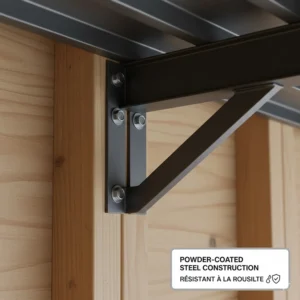
- Heavy-gauge steel construction with powder coating
- Compatible with 16″, 18″, or 24″ stud spacing
The mesh design allows air circulation, preventing moisture buildup—crucial for Canadian garages where temperature fluctuations can cause condensation. Installation requires mounting to wood studs, but the included template and bubble level make the process straightforward for one person.
Canadian buyers consistently praise this system’s stability. One Toronto customer mentioned storing four winters’ worth of tires without any sagging. The powder-coated finish resists rust, important in regions where road salt gets tracked into garages during winter months.
Price: Typically $180-$220 CAD on Amazon.ca
✅ Pros:
- Massive 72″ length accommodates large items
- 600 lbs total capacity handles heavy loads
- Rust-resistant powder coating
❌ Cons:
- Cannot mount on metal walls
- Requires precise stud alignment
2. Jusgym 4-Pack Heavy Duty Garage Wall Shelving (2x3ft)
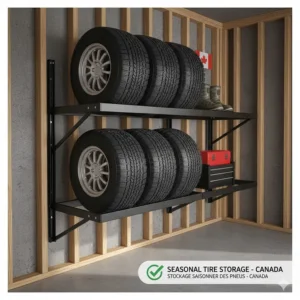
The Jusgym 4-Pack delivers impressive 1,000-pound total capacity across four shelves, making it ideal for commercial grade wall shelves applications. Each 2×3-foot bracket supports up to 250 lbs independently, constructed from premium steel with reinforced square tube supports.
Key Specifications:
- 250 lbs per bracket (1,000 lbs total)
- Modular grid design (24″ x 72″ when assembled)
- Adjustable spacing for various stud layouts
- Includes multiple hooks for hanging tools
What sets this system apart is the adjustable bracket design that adapts to any wood stud spacing. Unlike fixed-spacing shelves, you’re not stuck if your garage has non-standard stud distances. The seamless welded mesh prevents smaller items from slipping through while maintaining airflow.
Vancouver customers report excellent performance in damp garage conditions, with no rust appearing even after two years. The included hooks underneath each shelf add versatility for hanging garden tools, extension cords, or bike accessories.
Price: $250-$320 CAD on Amazon.ca
✅ Pros:
- Exceptional 1,000 lbs total capacity
- Adapts to irregular stud spacing
- Built-in hooks expand functionality
❌ Cons:
- Higher initial investment
- Installation takes longer due to four separate units
3. YIFRO 4-Pack Heavy Duty Garage Wall Shelving
For budget-conscious Canadians who refuse to compromise on quality, the YIFRO 4-Pack offers tremendous value. These industrial wall shelf brackets deliver 1,000 lbs total capacity at a competitive price point, featuring stamped and folded steel construction with high-temperature powder coating.
Key Specifications:
- 250 lbs capacity per bracket
- 2×3-foot individual brackets (24″ x 36″)
- Includes metal hooks for additional storage
- Full steel construction
The architectural frame design distributes weight evenly across mounting points, reducing stress on wall studs. This weight capacity wall shelving system comes with all necessary hardware, though Canadian buyers should verify their wall type before installation—it’s designed for wood studs, trusses, or concrete walls, but not metal walls.
Calgary users appreciate how the hooks accommodate winter equipment like snow shovels and ice scrapers. The black powder coating hides scuffs better than lighter colours, maintaining a cleaner appearance over time.
Price: $190-$240 CAD on Amazon.ca
✅ Pros:
- Excellent value at under $250
- Full 1,000 lbs capacity
- Multiple hooks included
❌ Cons:
- Slightly shallower depth than competitors
- Assembly instructions could be clearer
4. StoreYourBoard Heavy Duty Garage Shelf 2x4ft
The StoreYourBoard system targets mid-range buyers seeking reliable performance without premium pricing. This adjustable garage shelving unit features heavy-duty steel construction with a hammered gray finish that resists fingerprints and minor scratches.
Key Specifications:
- 200 lbs per shelf (400 lbs total for 2-pack)
- 2×4-foot dimensions (24″ x 48″)
- Reinforced square tube frame
- Includes 6 small hooks and 2 large hooks per unit
Each shelf measures 48 inches long, ideal for garages with limited wall space. The reinforced frame prevents sagging even when loaded to capacity with automotive supplies or storage bins. Installation hardware includes lag bolts for secure wood stud mounting.
Montreal customers highlight the ease of installation—one reviewer completed the setup solo in under 45 minutes. The hooks underneath prove especially useful for hanging bikes, ladders, or cleaning supplies, maximizing vertical storage.
Price: $160-$200 CAD on Amazon.ca
✅ Pros:
- Perfect size for smaller garages
- Quick installation process
- Attractive hammered finish
❌ Cons:
- Lower total capacity than 4-pack options
- 48″ length limits larger item storage
5. FLEXIMOUNTS 2-Pack 2x4ft Pro Series
When professional-grade performance matters, the FLEXIMOUNTS Pro Series delivers with 660 lbs total capacity and reinforced brace guardrails. This heavy load storage system features upgraded construction compared to the Classic series, with additional safety elements for demanding applications.
Key Specifications:
- 330 lbs per shelf (660 lbs total)
- 24″ x 48″ dimensions
- Brace guardrail system
- Heavy-gauge steel with velcro strap design
The guardrail system prevents items from sliding off the back edge—particularly valuable when storing boxes or bins on upper shelves. The velcro strap design keeps brackets stable during installation and prevents bending over time.
Edmonton customers working in home workshops praise this system’s ability to handle power tools, paint cans, and lumber without flexing. The black powder coating withstands garage temperature swings from summer heat to winter cold without chipping.
Price: $210-$260 CAD on Amazon.ca
✅ Pros:
- Professional-grade 660 lbs capacity
- Safety guardrails included
- Superior stability under heavy loads
❌ Cons:
- Higher price than standard versions
- Requires careful alignment during installation
6. Ultrawall 4-Pack Metal Shelf Rack (23.5″ x 12″)
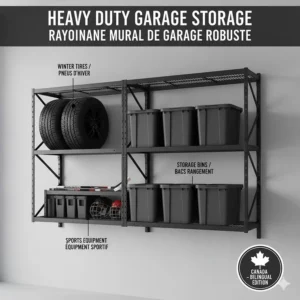
Compact garages need smart solutions, and the Ultrawall 4-Pack delivers with space-efficient reinforced garage shelves. These 23.5-inch shelves fit areas where full-depth units won’t work, perfect for organizing above workbenches or in narrow spaces.
Key Specifications:
- 65 lbs per shelf (260 lbs total for 4-pack)
- 23.5″ x 12″ dimensions
- Powder-coated steel construction
- Safe edge design prevents items from falling
The shallow 12-inch depth works brilliantly for cleaning supplies, spray paint, or small tool storage. Three support posts provide stability despite the compact size, and the tight mesh prevents smaller items from slipping through.
Ottawa customers use these shelves in laundry rooms and basement workshops, appreciating the versatility. The white powder-coated option brightens darker garage corners, while the black version maintains a professional appearance.
Price: $120-$160 CAD on Amazon.ca
✅ Pros:
- Budget-friendly 4-pack option
- Ideal for tight spaces
- Clean, finished appearance
❌ Cons:
- Lower weight capacity limits heavy item storage
- Shallow depth unsuitable for large bins
7. Amenitlif 2-Pack 1x6ft Garage Shelving
For maximizing linear wall space with minimal depth, the Amenitlif 1x6ft system provides 72 inches of storage in a 12-inch-deep profile. This configuration suits garages where you need long shelving runs without protruding far from the wall.
Key Specifications:
- 300 lbs per shelf (600 lbs total)
- 12″ x 72″ dimensions
- Metal rack construction
- Suitable for multiple room types
The narrow 12-inch depth keeps walkways clear while the 72-inch length accommodates numerous items. Canadian buyers report excellent performance storing paint cans, automotive fluids, and pantry overflow from kitchens.
Winnipeg customers appreciate how these shelves don’t interfere with parked vehicles, maintaining full garage functionality. The organization potential for small to medium items makes this ideal for systematic storage.
Price: $170-$210 CAD on Amazon.ca
✅ Pros:
- Maximum length with minimal depth
- 600 lbs capacity matches larger systems
- Maintains floor space clearance
❌ Cons:
- Narrow depth limits bin size options
- Less suitable for bulky equipment
✨ Don’t Miss These Exclusive Deals!
🔍 Take your garage organization to the next level with these carefully selected products available in Canada. Click on any highlighted item to check current pricing and availability on Amazon.ca. These tools will help you create authentic organization your family will love!
What Is Heavy Duty Garage Wall Shelving?
Heavy duty garage wall shelving refers to robust storage systems designed to maximize vertical space while supporting substantial weight loads—typically from 250 to over 1,000 pounds total capacity. Unlike basic residential shelving, these industrial-strength systems feature reinforced steel construction, secure wall-stud mounting, and mesh or solid deck surfaces engineered for garage environments.
According to the Canadian Centre for Occupational Health and Safety (CCOHS), proper garage storage plays a crucial role in workplace safety. Their guidelines emphasize placing heavy items on shelves at waist height, identifying weight limits on shelving, and ensuring clear aisles for safe movement—principles equally important for residential garages. The advent of modern adjustable shelving systems traces back to 1947, when engineer Demetrius Comino invented the slotted angle steel construction system (Wikipedia), revolutionizing flexible storage solutions.
Heavy duty wall shelving differs from freestanding units by mounting directly to wall studs, freeing floor space for vehicles and workspace. The weight capacity depends on factors including steel gauge thickness, bracket design, proper stud mounting, and load distribution across multiple shelves.
Understanding Weight Capacity Ratings for Wall Shelving
Weight capacity specifications can confuse buyers, especially when manufacturers list different figures. Here’s what you need to know about those numbers.
Total vs. Per-Shelf Capacity
When a system advertises “1,000 lbs capacity,” determine whether that’s total (distributed across all included shelves) or per-shelf maximum. The Jusgym 4-Pack’s 1,000 lbs total means 250 lbs per individual bracket, while the FLEXIMOUNTS 2x6ft’s 600 lbs total divides to 300 lbs per shelf.
Testing vs. Rated Capacity
Reputable manufacturers test shelves at higher weights than rated capacities. FLEXIMOUNTS, for example, tests their 200-lb rated shelves at 400 lbs—a 2:1 safety factor. This engineering margin accounts for dynamic loads (adding/removing items) and installation variations.
Load Distribution Matters
Concentrated weight in one spot stresses shelves differently than evenly distributed loads. Placing a single 200-lb item in the centre creates more flex than spreading 200 lbs across the entire shelf. Position heavier items toward mounting brackets for optimal stability.
Stud Mounting Requirements
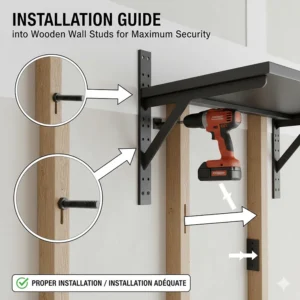
All weight capacity ratings assume proper installation into wall studs. Drywall anchors or hollow wall mounting drastically reduces safe capacity—potentially to under 50 lbs total. Canadian building codes require secure mounting for any shelf system exceeding 50 lbs capacity.
Environmental Factors
Temperature swings affect metal shelving. Extreme cold makes some steels brittle, while heat can soften powder coatings. Quality systems use steel grades and coatings tested for -40°C to +40°C ranges—critical for Canadian garages without climate control.
Understanding these factors helps you select shelving that truly meets your needs rather than overpaying for capacity you’ll never use or, worse, under-buying and risking safety issues.
Installation Requirements and Safety Considerations
Proper installation determines whether your heavy duty garage wall shelving performs safely for years or becomes a hazard. Canadian building practices require specific approaches for different wall types.
Locating Wall Studs
Most Canadian residential garages use 16-inch or 24-inch stud spacing. Electronic stud finders work well on drywall, but garages with direct board-on-stud construction need manual tapping methods or magnet-based finders that locate screws. Mark all studs along your planned shelf location before starting.
Wall Type Compatibility
Wood stud walls accept most shelving systems with appropriate lag screws. Concrete or CMU block walls require masonry anchors or expansion bolts—check your shelf system’s included hardware matches your wall type. Metal stud walls demand specialized toggle bolts; many systems explicitly state “not for metal walls.”
Height Placement Strategy
Position shelves based on usage frequency and item weight. Heavy items (paint cans, toolboxes) belong on lower shelves at waist height for safe lifting. Lighter, less-used items can occupy upper shelves. Leave 4-6 inches between shelf height and stored items for easy access.
Load Testing After Installation
Before loading shelves to capacity, test with 50% of rated weight for 24 hours. Check all mounting points for movement, listen for unusual sounds, and verify brackets remain firmly attached. Gradually increase load if initial testing succeeds.
Seismic Considerations
While less critical in most Canadian regions than earthquake-prone areas, securing shelves against wall movement protects against accidental bumps or structural settling. Some systems include additional bracket stabilizers; others benefit from L-brackets at shelf ends.
Clearance Requirements
Maintain at least 36 inches clearance in front of shelves for safe access—wider if you’ll use ladders or step stools. Overhead shelves should clear door swing paths and vehicle heights if storing items above parked cars.
CCOHS recommends never overloading shelves beyond manufacturer specifications and clearly labeling weight limits where multiple people access storage areas. Their garage safety guidelines emphasize organized storage as injury prevention, not just convenience.
Materials and Construction: What Makes Shelving “Heavy Duty”
The difference between standard and heavy duty garage wall shelving comes down to materials, engineering, and manufacturing quality. Here’s what separates industrial-strength systems from basic retail shelves.
Steel Gauge Thickness
Heavy duty shelving uses 14-gauge to 18-gauge steel for structural components—thicker than the 20-22 gauge found in light-duty systems. Lower gauge numbers mean thicker, stronger steel. A 14-gauge bracket can handle concentrated loads that would bend 20-gauge metal.
Powder Coating vs. Paint
Quality powder coating provides superior rust resistance compared to standard paint. The electrostatic application creates a uniform, durable finish that withstands chips, scratches, and moisture exposure. Look for high-temperature powder coating (specified by manufacturers like FLEXIMOUNTS and Jusgym) that won’t soften or discolor in hot summer garages.
Welded vs. Bolted Construction
Welded mesh decking creates stronger, more rigid surfaces than bolted assemblies. Continuous welds distribute weight more effectively and eliminate weak points where bolts might loosen over time. The Jusgym system’s “seamless welded mesh” design exemplifies this approach.
Bracket Engineering
Heavy duty brackets use reinforced square tube supports rather than simple angle iron. The box construction resists twisting under uneven loads. Some systems (like FLEXIMOUNTS Pro) add diagonal bracing for extra rigidity, while others use architectural frame designs that transfer weight across multiple mounting points.
Hardware Quality
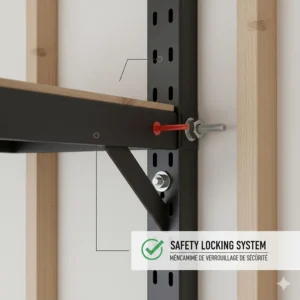
Included lag screws should be hardened steel, not soft metal that strips easily. Quality systems provide appropriate screw lengths for standard wall constructions (typically 3-4 inches to penetrate studs adequately) plus backup hardware for different installation scenarios.
Mesh vs. Solid Decking
Wire mesh shelving promotes air circulation and visibility while reducing weight. Solid steel deck shelving handles smaller items better and provides higher local load capacity. The choice depends on what you’re storing—mesh works well for bins and larger items, solid decking suits small parts and liquids.
Understanding these construction differences explains why comparable-looking shelves carry different price tags. The engineering behind weight capacity isn’t visible in product photos but determines long-term performance and safety.
Comparing Heavy Duty Shelving to Traditional Garage Storage
| Feature | Heavy Duty Wall Shelving | Freestanding Units | Overhead Ceiling Racks |
|---|---|---|---|
| Floor Space Used | None (wall-mounted) | Significant footprint | None (ceiling-mounted) |
| Installation Complexity | Moderate (stud mounting) | Minimal (assemble & place) | High (ceiling joist location) |
| Weight Capacity | 250-500 lbs per shelf | 300-1,000 lbs per unit | 400-750 lbs total |
| Accessibility | Excellent (eye level) | Excellent (ground level) | Poor (requires ladder) |
| Typical Price (CAD) | $120-$320 | $150-$400 | $200-$500 |
| Best For | Frequently used items | Tools, equipment | Seasonal storage |
Benefits of Wall-Mounted Storage vs. Floor Units
Choosing between wall-mounted and freestanding storage involves trade-offs between space efficiency, accessibility, and installation requirements. Each approach suits different garage layouts and storage needs.
Maximizing Usable Floor Space
Wall-mounted systems preserve floor area for vehicles, workbenches, or movement. In a typical two-car garage (20′ x 20′), four wall-mounted shelves (2′ x 6′) provide 48 square feet of storage while occupying zero floor space. Equivalent freestanding units would consume approximately 32 square feet of floor area.
Vertical Space Utilization
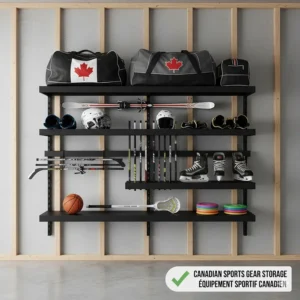
Most garages have 8-9 foot ceilings with only 3-4 feet used effectively when items pile on the floor. Wall shelving exploits that wasted vertical space, with many systems stackable to ceiling height. Position frequently accessed items at comfortable reach heights while storing occasional-use items higher.
Stability and Safety
Properly installed wall shelves don’t tip like freestanding units might if bumped or unevenly loaded. This matters particularly in active garages where kids or pets move around. Wall mounting also eliminates the “domino effect” where one falling shelf can topple adjacent units.
Moisture Protection
Elevating storage off garage floors protects against water intrusion from door thresholds, heavy rain, or spring flooding—common issues in Canadian garages during snow melt season. Wall shelves keep items safe from puddles and reduce humidity exposure for stored materials.
Customization Flexibility
Wall systems allow precise height positioning to accommodate specific items. Need space for 5-gallon paint buckets? Mount shelves with 13-inch clearance. Storing flat items like camping chairs? Place shelves 24 inches apart. Freestanding units have fixed shelf positions limiting customization.
Long-Term Value
Quality wall shelving often outlasts freestanding units because wall mounting distributes stress across studs rather than concentrating it on unit legs. The FLEXIMOUNTS systems, for instance, carry lifetime warranties when properly installed—freestanding units typically warrant 1-3 years.
The main wall-mounting disadvantage is permanence—freestanding units move easily while wall shelves require reinstallation. However, for long-term garage organization, the space savings and stability of heavy duty wall shelving typically outweigh mobility advantages.
How to Choose Heavy Duty Garage Wall Shelving in Canada
Selecting the right shelving system requires evaluating your specific needs against available options. Follow this decision framework:
1. Measure Your Available Wall Space
Identify clear wall sections free from electrical panels, door swings, or windows. Measure both length and height, accounting for obstructions like outlets or light switches. Standard Canadian garage studs space at 16 or 24 inches—verify your spacing as it affects bracket compatibility.
2. Calculate Your Weight Requirements
List items you’ll store and estimate their combined weight. Remember that seasonal rotation means summer sports gear replaces winter equipment—plan for your heaviest anticipated load. Add 20% safety margin to your calculated total.
3. Determine Ideal Shelf Dimensions
Match shelf sizes to your storage items. Large storage bins need deep shelves (24″ depth), while paint cans and spray bottles work well on 12″ shelves. Longer shelves (72″) accommodate more items but require multiple stud mounting points.
4. Consider Your Wall Construction
Verify whether you have wood studs, concrete, or metal framing. Most systems work best with wood studs—if you have concrete or metal walls, choose systems specifically rated for those applications or plan for additional mounting hardware.
5. Evaluate Installation Capability
Honestly assess your DIY skills and available tools. Some systems require precise leveling and pre-drilling, while others use simplified templates. If you’re uncomfortable with power tools, consider professional installation (typically $150-$300 CAD for a complete garage system).
6. Factor in Future Expansion
Modular systems allow adding shelves later as storage needs evolve. If you might expand your organization system, choose brands with readily available components. FLEXIMOUNTS and Jusgym products remain in production with consistent specifications.
7. Budget for Complete Setup
Besides shelf costs, budget for proper mounting hardware (if not included), storage bins to organize items, and potentially a stud finder or level if you don’t own them. Quality systems cost $150-$320 CAD but last decades with proper installation.
8. Read Canadian Customer Reviews
Look specifically for reviews from Canadian buyers addressing winter performance, rust resistance, and shipping experiences. Temperature extremes and humidity affect garage storage differently across provinces—BC coastal garages face different conditions than Prairie installations.
This systematic approach ensures you select shelving that genuinely fits your garage, storage needs, and budget rather than purchasing based solely on price or appearance.
Price Range Analysis: Budget to Premium Options
| Category | Price Range (CAD) | Weight Capacity | Best Value Example |
|---|---|---|---|
| Budget-Friendly | $120-$180 | 260-400 lbs | YIFRO 4-Pack |
| Mid-Range | $180-$250 | 500-600 lbs | FLEXIMOUNTS Classic |
| Premium | $250-$320+ | 660-1,000+ lbs | Jusgym 4-Pack Pro |
Maintenance and Long-Term Care Tips
Proper maintenance extends shelf lifespan and maintains safe weight capacity over years of use. Canadian garage environments present specific challenges requiring attention.
Annual Inspection Schedule
Inspect all mounting hardware each spring after winter temperature cycling. Check for loosened lag screws—thermal expansion and contraction can work fasteners loose over months. Tighten any connections showing movement, but don’t over-torque as this can strip threads.
Cleaning and Rust Prevention
Wipe shelves quarterly with a damp cloth to remove dust and debris. For powder-coated steel, avoid abrasive cleaners that scratch the protective finish. If you notice coating chips or scratches exposing bare metal, apply touch-up paint or clear sealant to prevent rust formation.
Load Distribution Practices
Rotate heavy items periodically to prevent stress concentration in specific spots. If you always place your heaviest toolbox in the same location, the shelf may develop permanent deflection. Distributing weight across the entire shelf surface promotes even wear.
Addressing Moisture Issues
Garages in humid climates like coastal BC or areas with freeze-thaw cycles may develop moisture problems. If you notice condensation on shelves, improve ventilation or use a dehumidifier. Remove any standing water immediately and check nearby items for mold or mildew.
Seasonal Adjustments
As you rotate seasonal items (winter tires to summer sports gear), take opportunity to reassess load distribution. Spring cleaning provides perfect timing to reorganize and verify shelf integrity before loading summer equipment.
Hardware Replacement
If mounting brackets show signs of bending, replace the entire unit rather than attempting repairs. Similarly, if lag screws won’t tighten properly (indicating stripped stud threads), relocate the shelf to different studs. Never use the same screw holes for remounting.
Documentation for Warranty Claims
Keep installation photos and purchase receipts for warranty purposes. Many manufacturers require proof of proper installation for warranty service. Documenting initial setup helps if questions arise later about load capacity or appropriate use.
Following these maintenance practices ensures your heavy duty garage wall shelving delivers reliable service for decades. The minimal time investment protects both your storage investment and the items depending on stable, safe shelving.
Common Installation Mistakes to Avoid
Even quality shelving systems fail when installed incorrectly. These common errors cause most wall shelf problems:
Skipping Stud Location Verification
Never assume stud spacing or rely solely on drywall surface indicators. Use a quality stud finder and physically verify with pilot holes before drilling lag screw holes. Mounting even one bracket to drywall instead of solid wood undermines entire shelf stability.
Insufficient Screw Penetration
Lag screws must penetrate wall studs at least 1.5 inches for reliable support. In a typical garage with 5/8″ drywall over 1.5″ actual-dimension studs, your screws need 3+ inches total length. Shorter screws create mounting points that feel solid initially but fail under sustained loads.
Ignoring Level Requirements
A shelf tilted even 2-3 degrees encourages items to slide toward one end, concentrating weight irregularly. Use a quality bubble level and double-check before final tightening. Some installers find laser levels worth the investment for multiple shelf installations.
Overloading During Installation
Don’t use shelf surfaces as step stools or work platforms during installation—they’re not fully supported yet. Wait until all mounting hardware is completely tightened and tested before placing significant weight on any shelf.
Mounting to Ceiling Rather Than Walls
Some buyers confuse wall shelving with overhead ceiling racks, attempting to mount wall-designed systems to ceiling joists. These systems engineer load paths differently—don’t improvise alternative mounting methods.
Ignoring Manufacturer Limitations
When instructions specify “wood studs only” or provide specific weight limits, respect those parameters. Attempting creative workarounds with drywall anchors or different materials voids warranties and creates safety hazards.
Neglecting Future Access Needs
Consider what sits behind or below shelves before installation. Don’t block electrical panels, wall outlets, or water shutoffs with shelving—building codes require unobstructed access. Leave adequate clearance for retrieving stored items comfortably.
These mistakes account for the majority of shelf failures and customer complaints. Following manufacturer instructions precisely and verifying each step prevents issues that undermine even the best shelving systems.
Environmental Considerations for Canadian Garages
Canadian garages experience extreme environmental conditions that affect storage system performance and longevity.
Temperature Cycling Effects
Garages in Winnipeg might see -40°C winters and +35°C summers—a 75-degree temperature swing. This cycling causes metal expansion/contraction that can loosen mounting hardware over time. Quality powder coatings prevent paint cracking that occurs with temperature stress on inferior finishes.
Humidity and Condensation
Coastal regions face high humidity, while areas with significant snow accumulation deal with wet springs. Both create condensation on cold metal surfaces. Wire mesh shelving allows air circulation that helps minimize moisture accumulation compared to solid shelving.
Salt and Chemical Exposure
Winter road salt tracked into garages accelerates metal corrosion. If you notice white crusty deposits on garage floors, your shelving faces corrosion risk. Choose powder-coated systems over painted ones—the coating provides superior chemical resistance.
Seasonal Weight Variations
Winter storage (snow tires, winter sports gear, salt bags) often weighs more than summer equipment. Ensure your weight capacity planning accounts for heaviest seasonal loads. A system adequate for summer camping gear might struggle with four studded winter tires.
Freeze-Thaw Impact on Walls
Unheated garages in climates with freeze-thaw cycles experience wall movement as frost heaves affect foundations. This subtle shifting can stress shelf mounting points. Spring inspections should check for any indication that brackets have shifted or loosened.
Ventilation Requirements
Proper garage ventilation protects both stored items and shelving systems. If you store petroleum products, paint, or chemicals, building codes may require specific ventilation. Position shelves to maintain air circulation patterns rather than blocking vents.
Understanding these environmental factors helps select appropriate shelving systems and maintenance schedules for your specific Canadian region. What works perfectly in Vancouver might require modifications in Edmonton or Halifax.
Organizational Strategies for Maximum Efficiency
Having excellent shelving means little without smart organization. These strategies optimize your heavy duty garage wall shelving investment:
Zone-Based Storage
Group items by category and frequency of use. Create automotive zones (oil, fluids, tools), seasonal zones (holiday decorations, sports equipment), and project zones (painting supplies, hardware). This reduces search time and keeps related items together.
Front-to-Back Rotation
Store frequently accessed items at shelf fronts with occasional-use items behind. This “grocery store” approach puts daily tools within easy reach while utilizing full shelf depth for comprehensive storage.
Height-Based Accessibility
Eye-level shelves (4-5 feet high) hold most-used items. Lower shelves accommodate heavy items for safe lifting. Upper shelves work for lightweight, seldom-used items. Never place heavy objects above head height—retrieval becomes dangerous.
Container Standardization
Invest in uniform storage containers that stack efficiently and maximize shelf space. Clear bins allow content visibility without opening. Label all containers prominently—even clear ones benefit from labels identifying specific contents.
Seasonal Rotation System
As seasons change, rotate items forward or backward on shelves. Summer sports gear moves forward in spring while winter equipment shifts back. This maintains accessibility for current-season items without requiring shelf reorganization.
Vertical Dividers
Use bookend-style dividers to separate categories on long shelves. This prevents items from sliding together and maintains visual organization. Some shelving systems include hooks perfect for hanging divider solutions.
Load Distribution Awareness
Heavier items belong near mounting brackets for optimal weight distribution. Lighter items can occupy mid-span sections. This engineering principle prevents shelf sagging and maximizes capacity safely.
These organizational approaches transform basic shelving into highly functional storage systems. The initial setup time investment pays dividends in reduced search time and maintained organization over years of use.
✨ Ready to Transform Your Garage?
🎯 These wall-mounted shelving solutions represent the best heavy duty options currently available to Canadian buyers. Each system offers proven performance at different price points and capacity levels. Compare features, verify your wall type compatibility, and select the system matching your storage requirements. Your organized garage awaits—start building better storage today!
Frequently Asked Questions
❓ What is the strongest heavy duty garage wall shelving available in Canada?
❓ How much weight can wall mounted metal shelves 600 lbs actually hold?
❓ Do I need special tools to install adjustable garage shelving unit systems?
❓ Are industrial wall shelf brackets suitable for unheated Canadian garages?
❓ What's the difference between reinforced garage shelves and standard shelving?
Conclusion: Building Your Perfect Storage Solution
Heavy duty garage wall shelving transforms cluttered Canadian garages into organized, functional spaces where everything has its place and finding tools takes seconds instead of minutes. The seven systems reviewed represent the strongest options currently available through Amazon.ca, each serving different storage needs and budgets.
For maximum capacity and professional-grade construction, the Jusgym 4-Pack delivers unmatched 1,000-lb total capacity ideal for workshops and serious DIY enthusiasts. Mid-range buyers find excellent value in the FLEXIMOUNTS Classic Series, balancing capacity and cost effectively. Budget-conscious Canadians can achieve substantial organization with the YIFRO system without sacrificing safety or quality.
Installation quality matters as much as product selection. Taking time to locate studs accurately, mount shelves level, and distribute loads properly ensures decades of reliable service. Canadian garage environments demand rust-resistant finishes and hardware that withstands temperature extremes—the systems recommended here meet those requirements through quality materials and engineering.
Remember that the best storage system fits your specific needs rather than simply offering maximum capacity or lowest price. Assess your wall space, calculate weight requirements honestly, and choose dimensions that accommodate your items comfortably. The investment you make today in quality heavy duty garage wall shelving pays returns in time saved, improved safety, and preserved floor space for years ahead.
Your garage can become the organized, efficient space you’ve imagined. Select the right shelving, install it properly, and maintain it consistently. The transformation from chaos to order starts with one well-chosen shelf system.
Recommended for You
- 7 Best Garage Wall Track Systems Canada 2026 (Expert Tested)
- 7 Best Overhead Garage Storage Racks Canada 2026
- 7 Best Metal Storage Cabinet Garage Canada 2026
✨ Found this helpful? Share it with your friends! 💬🤗
