
In This Article
You’re halfway through installing new brake pads on your Silverado when you realize the caliper bolts need 13mm—but all you have is your grandfather’s old 1/2-inch set. Sound familiar? If you’re working on vehicles in Canada, you already know the frustration of juggling two measurement systems. Most modern imports use metric fasteners, while older domestic vehicles still cling to SAE specifications from Detroit’s glory days.
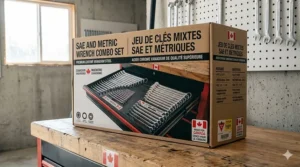
Here’s the thing: buying separate wrench sets wastes money and workshop space. A quality SAE and metric wrench combo set solves this headache in one purchase. You get comprehensive coverage from 6mm to 24mm alongside 1/4-inch to 1-inch SAE sizes, all organized in one storage solution. Whether you’re maintaining a mixed fleet of Ford trucks and Honda sedans or tackling household repairs, having both systems at arm’s reach transforms workflow efficiency.
The Canadian automotive market presents unique challenges. Our climate extremes—from -40°C prairie winters to humid Ontario summers—demand tools that won’t corrode or fail under stress. Meanwhile, regulatory requirements like CSA certifications and bilingual labelling matter for professional mechanics. This guide examines seven premium wrench sets available across Canada through retailers like Home Depot, Canadian Tire, and Amazon.ca, with all pricing listed in Canadian dollars.
Quick Comparison Table
| Wrench Set | Piece Count | Size Range (Metric/SAE) | Price (CAD) | Best For | Rating |
|---|---|---|---|---|---|
| GearWrench 32-Piece Ratcheting | 32 | 8-17mm / 1/4″-13/16″ | $198 | Professional mechanics | 4.8/5 |
| DEWALT 10-Piece SAE + 10-Piece Metric | 20 | Various | $190-200 | Heavy-duty applications | 4.7/5 |
| Husky 34-Piece Combination | 34 | 5.5-18mm / 1/4″-7/8″ | $80-95 | Budget-conscious DIYers | 4.6/5 |
| Milwaukee 30-Piece PACKOUT | 30 | Various | $350-400 | Mobile workshops | 4.9/5 |
| CRAFTSMAN 20-Piece Ratcheting | 20 | Various | $110-130 | Home workshops | 4.5/5 |
| WORKPRO 9-Piece Anti-Slip | 18 (two sets) | 8-19mm / 1/4″-3/4″ | $55-70 | Tight spaces | 4.4/5 |
| Performance Tool 24-Piece | 24 | 7-22mm / 1/4″-1″ | $50-65 | Entry-level mechanics | 4.3/5 |
💬 Just one click – help others make better buying decisions too!😊
✨ Don’t Miss These Exclusive Deals!
🔍 Take your automotive maintenance to the next level with these carefully selected products available in Canada. Click on any highlighted item to check current pricing and availability on Amazon.ca. These tools will help you tackle professional-quality repairs with confidence!
Top 7 SAE and Metric Wrench Combo Sets: Expert Analysis
1. GearWrench 32-Piece SAE/Metric Combination Ratcheting Wrench Set
GearWrench revolutionized the hand tool industry back in 1997 with their patented 5-degree ratcheting mechanism, and this 32-piece set represents two decades of refinement. The collection includes 20 standard-length combination wrenches plus 12 stubby versions designed specifically for confined engine bays and tight dashboard work.
Key Specifications:
- 72-tooth ratcheting mechanism (5-degree arc swing)
- Chrome vanadium steel construction
- Sizes: 8-17mm metric, 1/4″ to 13/16″ SAE, plus stubby variants
- Includes durable storage case
Canadian Availability: Home Depot Canada, CAD $198
The thin-head shank design squeezes into spaces where traditional wrenches simply won’t fit—think alternator bolts on modern transverse V6 engines. Canadian buyers particularly appreciate the corrosion-resistant full-polish chrome finish, which stands up remarkably well to road salt exposure during winter maintenance. One Toronto mechanic reported using his set daily for three years with zero rust formation, even after countless brake jobs involving penetrating oil spray.
Customer Feedback (Canada): Buyers praise the reversible ratcheting action and the fact that you rarely need to remove the wrench from the fastener. The 12-point box end maintains excellent grip even on slightly rounded bolt heads—a common issue with vehicles exposed to Canadian winters.
✅ Pros:
- Exceptional build quality with lifetime warranty
- Stubby wrenches access impossibly tight spaces
- Minimal 5-degree swing works in confined areas
❌ Cons:
- Premium pricing compared to non-ratcheting sets
- Heavier than standard combination wrenches
2. DEWALT SAE and Metric Combination Wrench Sets (10-Piece Each)
DEWALT built its reputation on jobsite-tough power tools, and that same Guaranteed Tough philosophy extends to their mechanics hand tools. These 10-piece sets come packaged separately—one metric, one SAE—giving you flexibility to purchase just what you need or combine both for comprehensive coverage.
Key Specifications:
- DirectTorque technology prevents fastener rounding
- Long panel design for extended reach and leverage
- Full polish chrome vanadium steel
- Metric: 8-19mm / SAE: 1/4″-7/8″
Canadian Availability: Home Depot Canada, CAD $95-100 per set
The DirectTorque design applies force to the fastener flats rather than corners, reducing the risk of stripping bolt heads—particularly valuable when dealing with corroded hardware common on Canadian vehicles. The stamped hashmark pattern on wrench handles provides extra grip points, especially useful when your hands are covered in winter gloves during roadside repairs.
Customer Feedback (Canada): Calgary truck owners report excellent performance on heavy-duty suspension work. The extended panel design generates serious torque without requiring breaker bars for most applications. Several reviewers mentioned successfully loosening seized leaf spring U-bolts that other wrenches couldn’t budge.
✅ Pros:
- Heavy-duty construction suitable for professional use
- Made-in-Canada options available for some models
- Modular purchasing (buy metric or SAE separately)
❌ Cons:
- Must purchase two separate sets for complete coverage
- Slightly higher price point than Asian competitors
3. Husky 34-Piece SAE/Metric Combination/Stubby Wrench Set
If you’re looking for exceptional value without sacrificing quality, Husky’s 34-piece set delivers exactly that. This comprehensive kit includes both standard and stubby-length wrenches across metric and SAE ranges, all forged from heat-treated chrome alloy steel.
Key Specifications:
- 20 standard-length wrenches (9 SAE, 11 metric)
- 14 stubby-length wrenches (7 SAE, 7 metric)
- Chrome alloy steel with corrosion-resistant finish
- Includes blow-mold storage case
Canadian Availability: Home Depot Canada, CAD $80-95
This set represents Home Depot’s house brand, which means competitive pricing and ready availability across every Canadian province. The stubby wrenches measure about 60% the length of standard versions, making them indispensable for motorcycle maintenance, appliance repair, and any situation where full-size tools won’t fit. Quebec mechanics working on European imports particularly value the comprehensive metric coverage from 5.5mm up to 18mm.
Customer Feedback (Canada): DIYers love the price-to-performance ratio. While these aren’t quite as refined as premium brands like Snap-on, they handle typical automotive maintenance without issue. One Vancouver user reported five years of weekend mechanic work without a single failure. The open-end design allows side-entry onto fasteners, while the box-end provides secure grip for final tightening.
✅ Pros:
- Unbeatable value at under $100 CAD
- Comprehensive stubby wrench selection
- Widely available at Home Depot locations nationwide
❌ Cons:
- Basic blow-mold case lacks durability of metal organizers
- Chrome finish thinner than professional-grade alternatives
4. Milwaukee 30-Piece Metric & SAE Combination Wrench Set with PACKOUT Organizer
For mobile mechanics and service techs, Milwaukee’s PACKOUT system integration makes this set stand out. The included modular organizer connects seamlessly with other PACKOUT components, creating a customizable mobile workshop that survives Canadian jobsite conditions.
Key Specifications:
- MAX BITE open-end design delivers 25% more torque
- I-beam handle construction
- IP65-rated PACKOUT organizer (dust/water resistant)
- Ink-filled size labeling for quick identification
Canadian Availability: Home Depot Canada, CAD $350-400
The MAX BITE geometry fundamentally redesigns how the open end grips fasteners. Instead of contacting bolt corners (which concentrates stress and causes rounding), it grips across wider flats. This innovation proves especially valuable on rusty Canadian vehicles where fasteners have been compromised by years of salt exposure. The PACKOUT organizer itself justifies much of the premium price—it’s built like a tank with reinforced corners and weatherproof seals.
Customer Feedback (Canada): Professional mobile mechanics rave about the modular storage ecosystem. One Alberta HVAC technician stacks three PACKOUT units in his van: wrenches, sockets, and specialty tools, all instantly accessible and organized. The IP65 rating means the tools stay clean and dry even when the organizer sits in a damp vehicle overnight during spring thaw.
✅ Pros:
- Best-in-class grip design reduces fastener damage
- Modular PACKOUT system for mobile workshops
- Lifetime warranty on hand tools
❌ Cons:
- Premium pricing limits accessibility for hobbyists
- Organizer adds weight compared to soft-case alternatives
5. CRAFTSMAN 20-Piece Standard (SAE) and Metric Ratcheting Combination Wrench Set
CRAFTSMAN has been synonymous with reliable tools for generations of Canadian mechanics. This 20-piece ratcheting set balances affordability with the features professionals demand, making it an excellent choice for serious home workshops.
Key Specifications:
- 90-tooth gear mechanism (4-degree arc swing)
- 12-point box end
- Chrome-plated for corrosion resistance
- ASME specification compliance
Canadian Availability: Various retailers, CAD $110-130
The 90-tooth ratcheting mechanism requires only 4 degrees of movement to advance the fastener—critical when working in the cramped confines of modern engine compartments. CRAFTSMAN’s ASME compliance means these wrenches meet rigorous dimensional accuracy standards set by the American Society of Mechanical Engineers, ensuring consistent fit across different bolt manufacturers.
Customer Feedback (Canada): Weekend warriors appreciate the tool’s reliability without professional-tier pricing. One Ontario user mentioned successfully tackling timing belt replacement on a Honda Accord—a notoriously tight workspace—thanks to the minimal arc swing. The chrome plating holds up well to garage humidity across Canadian climates, from coastal British Columbia to the dry prairies.
✅ Pros:
- Excellent middle-ground pricing
- Established brand with strong warranty support
- ASME compliance ensures quality standards
❌ Cons:
- Not as refined as premium ratcheting mechanisms
- Limited stubby wrench options
6. WORKPRO 9-Piece Black Anti-Slip Ratcheting Combination Wrench Sets (Metric + SAE)
WORKPRO’s anti-slip design tackles one of the most frustrating workshop problems: wrenches slipping off rounded or worn fasteners. The black electrophoretic paint finish isn’t just aesthetic—it creates a high-friction surface that grips better than traditional chrome plating.
Key Specifications:
- 72-tooth anti-slip ratcheting mechanism
- Black electrophoretic paint finish
- CR-V (Chrome Vanadium) steel construction
- Metric: 8-19mm / SAE: 1/4″-3/4″
Canadian Availability: Various online retailers, CAD $55-70 (for both sets)
The anti-slip tooth design maintains grip on fasteners that are up to 85% worn—a game-changer when dealing with stripped or corroded bolts common on older Canadian vehicles. The 5-degree swing arc allows operation in spaces where standard wrenches require repositioning after every partial turn. Each set comes with a premium organization bag marked with corresponding wrench sizes.
Customer Feedback (Canada): Budget-conscious mechanics praise the innovative anti-slip capability at this price point. One Manitoba farmer reported successfully removing seized bolts on decades-old farm equipment—fasteners that rounded immediately with standard chrome wrenches. The black finish does scratch more easily than chrome, but functionality trumps aesthetics for most users.
✅ Pros:
- Exceptional value for innovative design
- Anti-slip technology handles worn fasteners
- Includes quality organization pouches
❌ Cons:
- Black finish shows scratches more than chrome
- Smaller size range than comprehensive sets
7. Performance Tool W1074 24-Piece SAE and Metric Combo Wrench Set
For entry-level mechanics or those assembling their first comprehensive tool collection, the Performance Tool W1074 provides solid basics without premium pricing. This straightforward combination wrench set covers the most commonly needed sizes in both measurement systems.
Key Specifications:
- Heat-treated alloy steel construction
- Raised panel design with clear size stamping
- Metric: 7-22mm / SAE: 1/4″-1″
- Black roll pouch included
Canadian Availability: Various retailers, CAD $50-65
The raised panel design provides additional material thickness at stress points, increasing durability and resistance to bending under high torque. Size markings appear on both ends of each wrench, eliminating the need to flip tools over when identifying sizes in poor lighting—handy during those late-night driveway repairs common in Canadian automotive culture.
Customer Feedback (Canada): First-time tool buyers appreciate the comprehensive size coverage at an accessible price. While these won’t replace professional-grade tools in a commercial shop, they handle typical DIY maintenance admirably. Several reviewers mentioned using these wrenches for furniture assembly, bicycle repair, and household projects beyond automotive work.
✅ Pros:
- Budget-friendly comprehensive coverage
- Adequate quality for occasional use
- Roll pouch suitable for mobile work
❌ Cons:
- Basic heat treatment may not withstand heavy professional use
- No ratcheting mechanism for faster operation
Understanding SAE vs Metric: What Every Canadian Should Know
The difference between SAE and metric wrenches goes beyond simple measurement conversion. These two systems emerged from different engineering philosophies and continue to coexist in Canadian workshops due to our unique automotive landscape—we drive both American-made trucks and Asian imports in roughly equal numbers.
What Does SAE Actually Mean?
SAE stands for Society of Automotive Engineers, an organization that established standardized measurements for the American automotive industry in the early 20th century. SAE wrenches use fractional inch measurements: 1/4″, 5/16″, 3/8″, 7/16″, 1/2″, and so on. These sizes increase in fractional increments that can seem irregular if you’re accustomed to the decimal simplicity of metric.
The imperial system dominated North American manufacturing until the 1970s, which explains why classic cars and older American trucks exclusively use SAE fasteners. Harley-Davidson motorcycles famously continue using SAE specifications to this day, maintaining their traditional American engineering heritage.
The Metric Standard
Metric wrenches measure in millimeters (mm), following the International System of Units adopted globally. Common automotive sizes include 8mm, 10mm, 12mm, 13mm, 14mm, 15mm, 17mm, and 19mm—simple whole numbers that increase in consistent increments. This logical progression makes metric tools easier for newcomers to understand and organize.
Most vehicles manufactured outside North America utilize metric fasteners exclusively. Toyota, Honda, BMW, and Volkswagen products all feature metric hardware. Interestingly, even modern domestic vehicles from Ford, GM, and Stellantis (formerly Chrysler) have largely transitioned to metric specifications for manufacturing efficiency in global markets.
Why Canadian Mechanics Need Both Systems
Canada’s automotive market reflects our geographic and cultural position between American and global influences. Walk through any Canadian parking lot and you’ll see Ford F-150s beside Toyota Camrys, Dodge Rams next to Mazda CX-5s. This diversity means professional mechanics must stock both measurement systems, and serious DIYers benefit from the same comprehensive coverage.
Consider this practical scenario: you’re replacing brake rotors on a 2015 Chevrolet Silverado. The caliper bracket bolts use 15mm heads, but the slide pins require a 7mm hex wrench, while the emergency brake cable adjustment sits behind a 3/8″ nut. A single repair job demands both systems—and that’s increasingly common across the Canadian vehicle fleet.
Can You Substitute Between Systems?
Technically, some SAE and metric sizes come close enough for emergency use. A 1/2″ wrench measures 12.7mm, making it nearly identical to a 13mm wrench. Similarly, 3/8″ (9.525mm) can sometimes substitute for 10mm in low-torque applications. However, this practice risks rounding fastener heads, especially on corroded or over-torqued bolts.
Quality mechanics avoid substitution except in emergency roadside situations. The small dimensional differences concentrate stress on fastener corners rather than flats, increasing the likelihood of stripped bolt heads. This becomes particularly problematic on Canadian vehicles where road salt corrosion already compromises fastener integrity.
How to Choose the Best SAE and Metric Wrench Combo Set
Assess Your Actual Needs
Start by honestly evaluating what vehicles and projects you’ll tackle. Weekend DIYers maintaining two family cars have very different requirements than professional mechanics servicing a dozen vehicles weekly. Consider these questions:
Do you work primarily on one vehicle or multiple makes? Single-vehicle owners might get by with a focused set targeting their specific model’s fastener sizes. Mixed-fleet mechanics need comprehensive coverage.
How often will you use ratcheting functionality? If you regularly access tight spaces—engine bay work, dashboard removal, motorcycle maintenance—ratcheting wrenches justify their premium cost. Basic household repairs rarely require this feature.
What’s your skill level and tool familiarity? Beginners benefit from clear size markings and organized storage, while experienced mechanics prioritize grip quality and durability.
Size Range Considerations
A complete SAE and metric wrench combo set should span from small fasteners (1/4″ / 6mm) used in electrical connections and interior trim, up through common automotive sizes (3/4″ / 19mm) for suspension and drivetrain work. Larger sizes become necessary for specific applications like wheel bearing nuts or axle nuts.
Pay attention to what sizes the set actually includes versus marketing claims. Some “comprehensive” sets skip odd sizes like 11mm or 7/16″ to reduce manufacturing costs, leaving frustrating gaps in your collection. Read the complete size list before purchasing.
Build Quality Indicators
Material specification tells you a lot about wrench longevity. Chrome vanadium (CR-V) steel offers an excellent balance of strength and affordability, while premium alloy steel provides enhanced durability for professional use. Avoid sets that don’t specify steel composition—they’re typically cheap iron that will round or break under stress.
Finish quality matters beyond aesthetics. Full-polish chrome resists corrosion better than basic chrome plating, crucial in Canadian climates where tools endure winter moisture and road salt contamination. Black oxide or electrophoretic coatings trade some corrosion resistance for improved grip characteristics.
Check the box end design carefully. 12-point box ends fit both 6-point and 12-point fasteners but can slip on rounded bolts. 6-point box ends provide maximum grip and torque capacity but require proper alignment with the fastener. Many professionals prefer 6-point for primary tools and reserve 12-point wrenches for specific tight-access situations.
Storage and Organization Solutions
Proper storage extends tool life and improves workshop efficiency. Blow-molded plastic cases protect against impacts but eventually crack in Canadian temperature extremes. Metal organizers or wooden tool chests handle climate variations better.
Wall-mount storage racks maximize vertical space while keeping wrenches visible and accessible. This setup works particularly well in heated garage workshops where tools won’t be exposed to moisture. Rolling toolboxes suit mobile mechanics who transport tools between job sites.
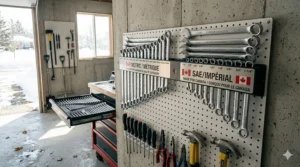
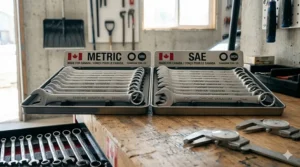
Consider wrench organizers that separate SAE and metric sets visually—colour-coded rails, labelled sections, or dedicated compartments. This simple organization prevents time wasted searching for the right measurement system during repairs.
Warranty and Brand Reputation
Lifetime warranties signal manufacturer confidence in product durability. Major brands like DEWALT, GearWrench, CRAFTSMAN, and Milwaukee typically honour these commitments through retailers like Home Depot and Canadian Tire without excessive bureaucracy.
Research customer service reputation before purchasing lesser-known brands. Some budget manufacturers offer impressive warranties on paper but make claims processing so difficult that it becomes impractical. Canadian tool forums and mechanic communities provide valuable real-world feedback on warranty experiences.
Ratcheting vs Non-Ratcheting: Making the Right Choice
How Ratcheting Mechanisms Work
Ratcheting wrenches incorporate a gear mechanism inside the box end that allows the wrench to move backward without releasing the fastener. Instead of completely removing and repositioning the wrench after each turn—tedious in confined spaces—you simply reverse direction while maintaining contact with the bolt head.
The tooth count determines minimum swing arc. A 72-tooth mechanism requires only 5 degrees of movement to advance the fastener, while 90-tooth designs need just 4 degrees. This difference becomes critical in impossibly tight locations where even a few degrees matter.
When Ratcheting Wrenches Excel
Modern engine compartments pack components tightly to maximize efficiency and aerodynamics. Accessing fasteners often requires contorting hands and wrenches into spaces barely larger than the bolt itself. Ratcheting wrenches thrive in these conditions, letting you “walk” a fastener out with minimal movement.
Dashboard disassembly represents another ideal application. Interior trim fasteners sit recessed behind plastic panels, providing little clearance for wrench movement. A ratcheting wrench can engage the fastener and operate with just a few degrees of swing, while traditional wrenches would require complete removal and repositioning for each tiny increment.
Motorcycle maintenance particularly benefits from ratcheting functionality. Bikes pack engineering into compact frames, creating access challenges that would frustrate users of standard wrenches. The combination of stubby length and ratcheting action often means the difference between a straightforward repair and a multi-hour struggle.
When Standard Combination Wrenches Suffice
High-torque applications sometimes demand solid, non-ratcheting tools. Breaking loose seized lug nuts, crankshaft bolts, or suspension components requires maximum force transfer without the complexity of ratcheting mechanisms. Standard combination wrenches handle these situations with confidence.
Budget considerations also factor into the equation. Quality ratcheting sets typically cost 50-100% more than comparable non-ratcheting collections. If your maintenance rarely involves confined spaces, the premium may not justify the added expense.
Durability through abuse favours simpler tools. Drop a ratcheting wrench off a ladder and the internal mechanism might sustain damage even if the wrench appears intact externally. Standard combination wrenches contain no moving parts to fail—they’re just solid steel.
Hybrid Approach for Best Results
Many experienced Canadian mechanics maintain both types: a comprehensive non-ratcheting set for everyday use and heavy-duty applications, plus a smaller ratcheting collection targeting common tight-access sizes (10mm, 13mm, 3/8″, 1/2″). This strategy maximizes efficiency while controlling costs.
Consider starting with a quality standard set and adding ratcheting wrenches as specific needs emerge from actual workshop experience. This prevents over-investing in features you might rarely utilize while ensuring you have reliable tools for basic maintenance.
Storage Solutions: Keeping Your Wrenches Organized
Why Organization Matters Beyond Aesthetics
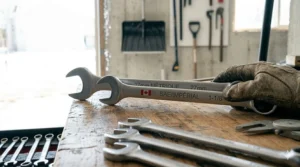
Proper wrench storage delivers three critical benefits: tool protection, efficiency, and safety. Wrenches thrown loose in a toolbox bang against each other during transport, damaging chrome finishes and potentially bending lighter sizes. This premature wear costs money in replacement tools.
Efficiency improves dramatically with organized storage. Professionals understand that time spent hunting for the right wrench adds up to significant lost productivity over weeks and months. Quick visual identification of sizes and measurement systems accelerates repair workflow.
Safety considerations shouldn’t be overlooked. Loose wrenches scattered across workshop floors create tripping hazards, while improperly stored tools can fall from shelves, potentially causing injury. Organized storage eliminates these risks.
Wall-Mount Storage Rack Systems
Pegboard organizers with wrench holders offer versatile storage at minimal cost. Mount a 4×8 pegboard section above your workbench and arrange wrenches in size order, separating SAE from metric for quick identification. This visual system makes it immediately obvious when tools are missing or misplaced.
Magnetic tool strips provide secure mounting without requiring specific hole patterns like pegboards. Attach these strips to metal surfaces—toolbox sides, workshop walls with steel studs, rolling carts—and wrenches snap into place with strong magnetic hold. This works particularly well in mobile service vehicles where vibration might dislodge traditional holders.
Rail-style wrench organizers feature graduated teeth that grip wrench handles, holding each tool individually. These compact organizers mount to walls or fit inside toolbox drawers, keeping wrenches sorted by size with instant visual verification of your complete set.
Portable Storage Solutions
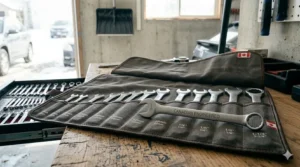
Roll-up wrench pouches suit mobile mechanics who transport tools between job sites. Quality versions feature individual pockets for each wrench size, preventing tools from rubbing together during transport. Look for heavy-duty canvas or nylon construction that resists tearing from sharp wrench corners.
Blow-molded cases often come bundled with wrench sets but vary dramatically in quality. Better versions feature custom-fitted compartments that hold each specific wrench size securely. Cheap alternatives just provide generic slots that allow movement during transport, defeating the organizational purpose.
Socket-style organizer trays work well inside larger toolboxes or rolling carts. These trays feature graduated holes that accept wrench handles, keeping tools upright and organized. The compact design maximizes drawer space efficiency while providing clear size identification.
Climate Considerations for Canadian Storage
Temperature swings in unheated Canadian garages—from summer heat to -30°C winter cold—stress tool storage systems. Plastic organizers become brittle in extreme cold, cracking when tools are removed. Metal storage handles temperature variations better.
Humidity control prevents rust formation on wrench surfaces. Even chrome-plated tools can develop corrosion if stored in damp conditions like coastal garages or basements. Silica gel packets placed in toolboxes absorb moisture, while light oil coating on tools adds protection during long-term storage.
Consider seasonal storage strategies if you work outdoors or in unheated spaces. Bring frequently used tools indoors during winter months to prevent handling frozen metal, while less-critical items remain in garage storage. This prevents the shock of touching -20°C chrome steel with bare hands during emergency repairs.
Common Mistakes When Buying Wrench Sets
Falling for “Piece Count” Marketing
Manufacturers love advertising huge piece counts—”200-piece tool set!”—but scrutiny often reveals deception. Those impressive numbers frequently include basic items like Allen keys, screwdrivers, and pliers that aren’t actually wrenches. You might discover only 20-30 actual combination wrenches buried within that “massive” set.
Focus on the actual wrench sizes included rather than total piece count. A quality 20-piece wrench set with comprehensive size coverage beats a 50-piece collection that duplicates common sizes while missing critical odd sizes. Read the detailed contents list before purchasing.
Ignoring Storage Quality
The wrench set arrives in a nice blow-molded case—convenient! Six months later, the case’s hinge cracks from regular opening, the latches break off, and wrenches rattle loose during transport. Many budget sets cut costs through inferior storage components that fail quickly.
Consider storage replacement costs when evaluating tool sets. A $60 wrench set with garbage storage might need a $30 organizer upgrade, bringing your true cost to $90. Meanwhile, a $90 set with durable metal storage represents better value despite higher initial price.
Buying Incomplete Size Ranges
Some wrench sets skip less-common sizes to reduce manufacturing costs. Missing sizes like 11mm, 14mm, or 7/16″ create frustrating gaps when you encounter fasteners in those dimensions. Verify the set includes continuous size coverage across the range you need.
Pay special attention to stubby wrench availability if you work in confined spaces. Some sets market “comprehensive coverage” but only include stubby versions of the most popular sizes, forcing you to purchase additional stubby wrenches separately for complete access capability.
Overlooking Handle Length
Wrench leverage depends directly on handle length. Short-handled wrenches reduce the torque you can safely apply, potentially requiring breaker bars or cheater pipes for stubborn fasteners. Compare handle lengths between competing sets—sometimes budget options save costs by reducing material (shorter handles).
Professional-grade sets typically feature longer handles that provide better leverage without requiring excessive force. This reduces user fatigue during all-day work sessions and improves safety by decreasing the likelihood of slipping under high torque.
Trusting Brand Names Blindly
Major tool brands sometimes license their names to third-party manufacturers who produce lower-quality products than the brand’s core lines. CRAFTSMAN, for instance, has both professional-grade USA-made tools and budget import lines. Research specific model numbers rather than assuming all products under a trusted brand meet the same standards.
Read recent reviews focusing on quality control. Even established manufacturers occasionally suffer production issues—material changes, manufacturing facility transitions, or cost-cutting measures that compromise tool quality. Customer feedback reveals these problems before you commit money to a problematic product.
Maintenance Tips for Long-Term Performance
Cleaning After Use
Wrenches accumulate grease, oil, brake fluid, and other automotive fluids during typical use. These contaminants attract dirt and grit that can mar chrome finishes and compromise corrosion protection. Wipe wrenches clean with a shop rag after each use, removing surface contamination before it sets.
For heavier soiling, use a parts cleaner or degreaser. Spray the wrench, let it soak briefly, then wipe clean with a lint-free cloth. Avoid harsh solvents that might damage chrome plating—standard automotive parts cleaners work fine for regular maintenance.
Dry wrenches thoroughly after cleaning, especially in humid environments. Moisture trapped in box ends or against wrench surfaces initiates corrosion even on chrome-plated steel. Compressed air blows water from crevices quickly and effectively.
Rust Prevention Strategies
Light oil coating provides excellent corrosion protection for tools in storage. Apply a thin film of machine oil, WD-40, or dedicated tool protectant across wrench surfaces before long-term storage. Wipe excess oil away—you want protection, not a greasy mess.
Climate-controlled storage prevents moisture condensation that accelerates rust formation. If your workshop experiences significant humidity variation (common in Canadian basements), consider a dehumidifier during damp seasons. Alternatively, sealed toolboxes with desiccant packets create a protected microenvironment.
Check stored tools periodically for early rust formation. Surface rust caught early removes easily with fine steel wool or a brass brush. Ignoring minor corrosion allows it to spread and pit the steel, eventually compromising structural integrity.
Proper Usage Techniques
Wrenches are designed for specific applications—respect those limitations. Open-end wrenches work great for initial fastener engagement and final snugging but shouldn’t handle maximum torque. Switch to the box end for serious tightening to prevent spreading the open end jaws.
Never use a pipe or cheater bar to extend wrench handles unless absolutely necessary. This practice multiplies applied force beyond the tool’s design limits, potentially bending the wrench or breaking internal ratcheting mechanisms. If standard wrenches won’t budge a fastener, upgrade to impact tools or breaker bars designed for high-torque applications.
Select the correct size every time. Using an oversized wrench that “kind of fits” rounds fastener corners, creating future removal problems. Take an extra moment to find the proper size—your future self will thank you when those bolts come out easily during the next service.
When to Replace Rather Than Repair
Chrome plating damage that exposes base steel necessitates replacement. Once corrosion penetrates the protective chrome layer, it spreads beneath the surface, weakening the tool structure. Attempting to use compromised wrenches risks sudden failure under load—dangerous when you’re applying significant force.
Bent or twisted wrenches rarely return to true alignment. The heat treatment that hardens steel also makes it resistant to cold straightening. A bent wrench creates improper load distribution on fasteners, increasing the risk of bolt head rounding.
Ratcheting mechanisms that slip under load indicate internal wear or damage. Repair isn’t practical for most ratcheting wrenches—the internal components aren’t serviceable without specialized equipment. Replace the tool and investigate why it failed (improper torque application, using a cheater bar, etc.) to prevent repeat damage to the replacement.
Special Considerations for Canadian Vehicle Maintenance
Cold Weather Challenges
Canadian winters test both tools and mechanics. Metal wrenches left in unheated garages overnight reach ambient temperatures, making them painfully cold to handle with bare skin. Keep a pair of mechanic’s gloves in your toolbox for emergency roadside repairs, or bring frequently used tools indoors during extreme cold snaps.
Frozen fasteners resist removal more stubbornly than room-temperature hardware. The contraction from cold can actually make fasteners tighter, while ice formation in threads creates additional friction. Apply penetrating oil and allow it to soak before attempting removal—patience prevents broken bolts.
Chrome finishes resist cold well, but cheaper coatings can crack or peel during freeze-thaw cycles. This is why Canadian mechanics emphasize quality tools with proper chrome plating rather than budget alternatives with thin finishes.
Road Salt Corrosion Issues
Every Canadian driver knows the battle against rust. Road salt accelerates metal corrosion dramatically, affecting both vehicles and tools. Wrenches used on brake work, suspension repairs, and underbody maintenance contact salt-contaminated components directly, transferring corrosive residue.
Rinse wrenches with clean water after working on heavily salt-exposed areas, then dry thoroughly and apply protective oil. This simple habit prevents salt from attacking wrench surfaces during storage. Pay special attention to box end interiors where moisture can pool.
Vehicles subjected to Canadian winters often feature rounded or corroded fastener heads. This makes proper wrench fit even more critical—using slightly wrong sizes almost guarantees stripped bolt heads. When working on older Canadian vehicles, have both SAE and metric sizes available, plus backup options like 6-point sockets or bolt extractor sets.
Mixed Fleet Maintenance Reality
Canadian households commonly own vehicles from different manufacturers and eras. A family might drive a Ford F-150 (mixed SAE/metric), a Toyota RAV4 (all metric), and a vintage Harley (all SAE). This diversity demands comprehensive tool coverage rather than specialized sets.
Professional Canadian mechanics servicing mixed fleets report that comprehensive SAE and metric wrench combo sets pay for themselves within months through improved efficiency. No more digging through multiple incomplete sets or running to the parts store mid-repair because you’re missing one critical size.
Consider the vehicles in your area when selecting wrench sets. Prairie provinces feature more American pickups and SUVs (requiring broader SAE coverage), while urban Ontario sees more European and Asian imports (metric-heavy). Tailor your toolkit to match local vehicle demographics if you’re working professionally.
❓ Frequently Asked Questions
❓ What sizes should a complete SAE and metric wrench combo set include for Canadian automotive work?
❓ Are ratcheting wrenches worth the extra cost in Canadian dollars?
❓ Can I use metric wrenches on SAE bolts or vice versa in emergencies?
❓ How do I prevent wrench corrosion in humid Canadian garage conditions?
❓ What's the difference between 6-point and 12-point box ends for combination wrenches?
Conclusion: Finding Your Perfect Wrench Set for Canadian Conditions
Selecting the right SAE and metric wrench combo set transforms workshop frustration into efficient repair workflow. The seven sets reviewed here offer proven solutions across budget ranges—from Husky’s exceptional value at under $100 CAD to Milwaukee’s premium PACKOUT integration for mobile professionals. Each serves specific needs within Canada’s unique automotive landscape.
Remember that tool purchases represent long-term investments. Quality wrenches last decades with proper care, while cheap alternatives need replacement within years. Factor durability and warranty coverage into purchase decisions rather than focusing solely on initial price. Canadian mechanics working in harsh climates particularly benefit from corrosion-resistant finishes and robust construction.
Your ideal wrench set depends on actual usage patterns. Weekend DIYers maintaining family vehicles need different coverage than professional mechanics servicing mixed fleets daily. Honest self-assessment of requirements prevents both under-buying (missing critical sizes) and over-spending (features you’ll never utilize).
Consider starting with a comprehensive non-ratcheting set like the GearWrench 32-piece or Husky 34-piece collections, then adding specialized ratcheting wrenches as specific needs emerge. This phased approach builds a complete toolkit while controlling costs and ensuring each tool purchase addresses genuine workshop requirements.
Recommended for You
- Portable Table Saw vs Cabinet Saw: 7 Best Models Canada 2026
- 20V vs 18V Cordless Drill: 7 Best Models Canada 2026
- 7 Best Lightweight Chainsaws for Seniors Canada 2026
Disclaimer: This article contains affiliate links to Amazon.ca. If you purchase products through these links, we may earn a small commission at no additional cost to you.
✨ Found this helpful? Share it with your friends! 💬🤗
