
In This Article
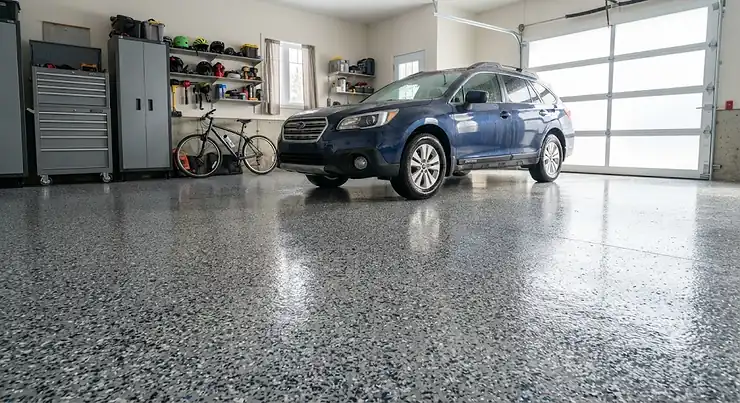
Somewhere between November and April, every Canadian garage becomes a brine tank. Your tires roll in coated in slush, your boots track in de-icer pellets, and the puddle by the door just sits there, slowly working chloride ions into whatever’s underneath it. A salt resistant garage floor coating is a protective barrier — typically epoxy, polyaspartic, or polycuramine — applied over concrete to stop that brine from soaking in, freezing, expanding, and pitting the slab from the inside out. It’s not paint. It’s armour.
Here’s the thing nobody tells you at the hardware store: not every product labelled “epoxy” actually resists salt the same way. Some are thin, one-coat paints that look tough on the shelf and peel by February. Others are genuine two-part systems engineered to shrug off calcium chloride brine for a decade or more. We dug through real product specs, aggregated review sentiment, and Canadian concrete-durability research to sort out which is which. One Global News investigation into de-icing chemistry found that even calcium chloride, often marketed as the “gentler” alternative to rock salt, attacks the internal binder that holds concrete together, which tells you something about the scale of the problem your floor is actually up against.
This guide covers seven real, purchasable products — from budget-friendly one-part paints to industrial-grade 100% solids epoxy kits and a penetrating chloride-blocking sealant — plus the comparison data, application tricks, and Canadian-specific buying logic you need to pick correctly the first time. No fluff, no invented reviews, just the analysis you’d want from a friend who’s spent way too many weekends reading concrete data sheets.
Quick Comparison Table
| Product | Coating Type | Cure Time to Drive | Best For |
|---|---|---|---|
| Rust-Oleum RockSolid Polycuramine | Polycuramine, 2-part | 24 hours | Fastest premium one-coat finish |
| ArmorPoxy Garage Epoxy Floor Kit | 100% solids epoxy | 24 hours | Heaviest-duty DIY build |
| Gorilla Epoxy Garage Floor Coating | 100% solids epoxy | 24 hours | Best all-around DIY value |
| Rust-Oleum EpoxyShield | Water-based 2-part epoxy | 72 hours | Budget-friendly true epoxy |
| Behr Premium 1-Part Epoxy | 1-part acrylic epoxy | 7 days (light traffic sooner) | No-etch, renter-friendly refresh |
| KILZ 1-Part Epoxy Acrylic | 1-part acrylic epoxy | 7 days | Lowest-cost touch-up coat |
| Ghostshield Siloxa-Tek 8500 | Penetrating silane-siloxane sealant | Same day, light use | Invisible chloride-blocking layer |
A quick scan tells the real story: the two-part, 100% solids products (RockSolid, ArmorPoxy, Gorilla) all cure to vehicle-ready in about a day and build real film thickness, while the one-part acrylic paints ask you to wait a full week before parking a car on them. That week isn’t a typo — it’s the tradeoff you make for a lower price and a no-etch application. Meanwhile the Siloxa-Tek sealant isn’t competing in the same category at all; it’s a chloride-blocking layer you can add under or alongside a coating rather than instead of one.
💬 Just one click — help others make better buying decisions too!😊
Top 7 Salt Resistant Garage Floor Coating Products: Expert Analysis
1. Rust-Oleum RockSolid Polycuramine Garage Floor Coating — hardest one-coat finish on the list
The standout here is chemistry, not marketing copy: polycuramine cross-links into a genuinely different polymer structure than epoxy, and Rust-Oleum’s own technical claims put it at roughly 20 times the hardness of standard epoxy. The 2.5-car kit covers up to 500 sq. ft. in a single self-leveling coat, walks on in 8-10 hours, and is fully vehicle-ready in about 24 hours — a fraction of the multi-day wait that traditional epoxy demands. That speed matters more than it sounds like it should; a garage that’s unusable for three days in the middle of a Canadian winter is a garage where snow, salt, and slush just pile up somewhere else instead.
Based on the spec comparison, this is the product built specifically for the no-hot-tire-pickup, no-cracking-in-cold-weather scenario that trips up cheaper coatings. Reviewers consistently note that the self-leveling formula genuinely does level itself out with minimal roller technique required, and that the decorative chip broadcast gives a professional, speckled terrazzo look rather than a flat painted slab. What most buyers overlook is that “20 times stronger than epoxy” refers to abrasion and hardness testing, not necessarily flexibility — polycuramine is rigid, so a slab with active structural movement needs crack repair first, not just a coating on top.
This is the pick for homeowners who want the closest thing to a professional coating without hiring a crew, and who are willing to pay a premium for speed and one-coat simplicity. A DIYer who’s never mixed a two-part product before should budget extra time for the burst-pouch mixing step, since getting the ratio wrong is the single most common cause of a tacky or uneven cure.
Pros:
- ✅ Vehicle-ready in about 24 hours, fastest premium option here
- ✅ Self-leveling formula reduces roller-mark risk for first-timers
- ✅ Rated resistant to salt, oil, gas, and hot tire pickup in one coat
Cons:
- ❌ Rigid finish means cracks must be repaired before coating, not after
- ❌ Burst-pouch mixing ratio leaves little room for error
Priced in the C$180-C$260 range for a 2.5-car kit at the time of research, RockSolid Polycuramine sits at the top of the DIY tier — worth it if speed and hardness matter more to you than shaving every last dollar off the project.
2. ArmorPoxy Garage Epoxy Floor Kit — thickest industrial-grade DIY build
ArmorPoxy’s 17-piece kit is a genuine 100% solids, two-part system finished with a separate UltraGlaze topcoat, which is a meaningfully different build than the single-coat products on this list. Here’s what the spec sheet won’t tell you outright, but the two-layer structure implies: a base coat plus a dedicated topcoat gives you two independent chances to build film thickness, and thicker film is directly correlated with how long a coating resists hot tire pickup and chloride penetration before it needs recoating.
On paper, this means ArmorPoxy is aimed at buyers who treat their garage more like a workshop than a parking spot — frequent rolling toolboxes, jack stands, dropped wrenches, the kind of abuse that thin one-coat paints don’t survive past a season or two. Reviewers and industry buying guides consistently flag “commercial-grade” DIY epoxy kits like this one as the category that best splits the difference between hiring a professional crew and buying a hardware-store bucket. The tradeoff is application complexity: a two-layer system with a topcoat means two separate work sessions, two etch-and-clean cycles, and more room for a DIYer to skip a step.
This is the product for the buyer who’s coated a floor before, or who’s genuinely willing to follow a multi-stage instruction sheet closely. First-timers who just want a weekend project with minimal fuss will likely be happier with Gorilla’s simpler single-coat kit below.
Pros:
- ✅ Two-layer base-plus-topcoat system builds real film thickness
- ✅ Slip and hot tire resistance rated for heavy workshop use
- ✅ 100% solids formula avoids the shrinkage water-based epoxies see
Cons:
- ❌ Two-stage application takes more total project time than one-coat kits
- ❌ More prep steps increase the chance of a DIY misstep
Expect to pay in the C$300-C$420 range for a 600 sq. ft. kit at the time of research — a premium over Gorilla or EpoxyShield, but one that buys genuine extra film thickness rather than just a brand name.
3. Gorilla Epoxy Garage Floor Coating Kit — best all-around value in 100% solids
Gorilla’s 12-piece kit delivers a genuine 100% solids, two-part epoxy — not water-based, not a thin acrylic paint — and covers up to 550 sq. ft. from two gallons of material. The 100% solids detail matters more than it sounds: water-based epoxies lose volume as they cure and dry down thinner than they go on, while 100% solids formulas cure at essentially the same thickness they’re applied, which is a large part of why this category resists hot tire pickup better than the budget paints further down this list.
Reviewers consistently describe the coating as “thicker than expected — almost like a heavy paint,” which lines up with the 100% solids chemistry, and note that the self-leveling behaviour does most of the smoothing work as long as application is reasonably even. A common complaint in user reviews is that actual coverage runs shorter than the stated 550 sq. ft. on rougher or more porous concrete, so buyers with an older, more textured slab should plan on buying slightly more than the calculator suggests. What most buyers overlook is that the included etch step genuinely is the make-or-break part of the whole project — reviewers who skipped or rushed it reported adhesion problems, while those who scrubbed thoroughly reported a floor that “held up great” after the first parking season.
This is the pick for a first-time DIYer who wants genuine epoxy performance without ArmorPoxy’s two-stage process or RockSolid’s higher price point. It’s arguably the single best value-for-effort ratio on this list.
Pros:
- ✅ True 100% solids epoxy, not a thinner water-based formula
- ✅ Drive-on ready in about 24 hours after a single coat
- ✅ Includes decorative flakes, etch, and tools in one kit
Cons:
- ❌ Real-world coverage often falls short of the 550 sq. ft. claim
- ❌ Medium viscosity takes some elbow grease to roll evenly
At around C$150-C$220 CAD for the 2.5-car kit at the time of research, this is consistently the value pick among genuine two-part epoxies — a mid-range price for a coating that performs closer to the premium tier.
4. Rust-Oleum EpoxyShield Garage Floor Coating Kit — most accessible true two-part epoxy
EpoxyShield is a water-based, two-part epoxy that Rust-Oleum rates at roughly five times the strength of a one-part epoxy paint, and it’s explicitly formulated to resist gasoline, antifreeze, motor oil, road salt, and hot tire pickup. Being water-based rather than 100% solids is the key spec to understand here: it’s genuinely a two-component chemical-cure system (so it’s a real epoxy, not diluted acrylic), but it applies thinner and requires a longer cure window — 24 hours for light foot traffic and a full 3 days before vehicles — than the 100% solids competitors above.
Based on the spec comparison, EpoxyShield occupies the practical middle ground for a Canadian buyer on a budget: it’s a true chemical-cure epoxy, so it will outlast a one-part paint by years, but the water-based formula and thinner build mean it won’t match RockSolid or Gorilla for raw abrasion resistance. Reviewers consistently praise the glossy, “showroom-quality” finish and the included decorative chips, while a recurring theme in feedback is that skipping the recommended clear topcoat noticeably shortens how long the gloss and chemical resistance hold up under regular winter tire traffic.
This is a solid choice for a first garage-coating project on a moderate budget, especially paired with the optional EpoxyShield clear topcoat for extra UV and abrasion protection. Buyers who can’t tolerate a three-day driveway-parking inconvenience should look at the polycuramine or 100% solids options instead.
Pros:
- ✅ Genuine two-part chemical-cure epoxy at a lower price point
- ✅ Rated resistant to gasoline, oil, salt, and hot tire pickup
- ✅ Water-based formula is lower odour for attached garages
Cons:
- ❌ Full vehicle cure takes 3 days versus 24 hours for premium kits
- ❌ Thinner water-based build wears faster without a clear topcoat
At roughly C$130-C$190 for a 2.5-car kit at the time of research, EpoxyShield is one of the more accessible entry points into true two-part epoxy performance.
5. Behr Premium 1-Part Epoxy Concrete & Garage Floor Paint — easiest no-etch application
Behr’s 1-part epoxy is a self-priming, ready-to-use, water-based formula that skips the acid-etch step required by every two-part product on this list — you clean, you roll, you’re mostly done. That convenience comes from the chemistry: this is an acrylic paint fortified with epoxy resin, not a true chemical-cure two-component epoxy, so the trade for that easier application is a thinner, less chemically resistant film overall.
Here’s what most buyers overlook: “resists hot tire pick-up” on the label describes performance relative to ordinary latex floor paint, not relative to a true epoxy system. Industry buying guides consistently classify 1-part epoxy-acrylic paints as a different, lighter-duty category than 2-part epoxies, best suited to a garage used mainly for parking one daily driver rather than a workshop with rolling tool chests and jack stands. On the plus side, the low-VOC, self-priming formula makes it genuinely practical for renters, condo garages, or anyone who wants a same-weekend refresh without renting an etching sprayer.
This is the right call for light-duty protection and a quick cosmetic upgrade, not for a garage that sees heavy winter salt tracking every single day. Pair it with a penetrating sealant underneath (see product 7) if road salt is your primary concern and a full epoxy system is out of budget or timeline.
Pros:
- ✅ No acid-etch step required, genuinely DIY-friendly
- ✅ Self-priming formula saves a full extra work session
- ✅ Low-VOC water-based formula, easier for attached garages
Cons:
- ❌ 1-part acrylic-epoxy blend, not a true chemical-cure epoxy
- ❌ Full 7-day cure before vehicle traffic is a long wait
Typically found in the C$45-C$65 range per gallon at the time of research, this is a genuinely budget-conscious option — just size your expectations to match a paint-plus-resin product rather than an industrial coating.
6. KILZ 1-Part Epoxy Acrylic Concrete & Garage Floor Paint — lowest-cost genuine epoxy-acrylic refresh
KILZ’s single-component, water-based formula sits in the same category as Behr’s product above — an acrylic paint reinforced with epoxy resin rather than a true two-part chemical cure — and is formulated to resist hot tire pick-up, scuffing, fading, cracking, and peeling. Industry comparison guides consistently rank it as a “best bang for the buck” pick specifically because it holds up somewhat better against hot tire pickup than comparable one-part competitors while staying at a genuinely low price point.
What the spec sheet doesn’t spell out clearly: KILZ recommends two thin coats rather than one thicker one, and that two-coat approach is part of why reviewers report slightly better durability than some single-coat 1-part paints. Reviewers consistently note the satin finish looks clean and modern without the high-gloss shine that shows every dust particle, which some buyers actually prefer for a working garage floor. A common theme in comparison write-ups is that, like Behr, KILZ is best matched to light passenger-vehicle traffic rather than a heavy workshop environment, since it’s still fundamentally a paint-category product rather than a resin flooring system.
This is the pick for the tightest budget or a rental property where a multi-day, multi-step epoxy project isn’t practical. Just don’t expect it to match the salt and abrasion resistance of the 100% solids kits above — it’s a meaningfully different product category wearing similar marketing language.
Pros:
- ✅ Lowest price point of any true coating on this list
- ✅ Two-coat application improves durability over single-coat paints
- ✅ No primer required, straightforward for first-time DIYers
Cons:
- ❌ Acrylic-epoxy blend wears faster than true 2-part systems
- ❌ 7-day cure and annual touch-ups likely in high-traffic areas
At around C$40-C$60 per gallon at the time of research, this is squarely the entry-level option — a real upgrade over bare concrete, but not a substitute for genuine epoxy where heavy salt exposure is a daily reality.
7. Ghostshield Siloxa-Tek 8500 Penetrating Concrete Sealer — invisible chloride-blocking layer
This is the odd one out on the list, and deliberately so: Siloxa-Tek 8500 is a ready-to-use, water-based silane-siloxane penetrating sealer, DOT-approved for use on roads and bridges, explicitly marketed as a water and salt repellent rather than a surface coating. It doesn’t sit on top of the concrete like the six coatings above — it soaks in and chemically bonds within the pores, so it leaves the concrete looking essentially unchanged while blocking the capillary pathways that chloride ions use to get in.
What most buyers overlook about penetrating sealers is that they solve a different problem than epoxy does. Reviewers and independent buying guides consistently describe products in this category as protecting against water and salt intrusion without adding slip resistance, hot tire pickup resistance, or the cosmetic upgrade that an epoxy or polycuramine coating provides. Based on the spec comparison, this makes Siloxa-Tek 8500 the right call in three specific scenarios: as a first-line defence under a future epoxy project, as protection for a garage floor you don’t want to change the look of, or as a standalone option for exterior aprons and driveway sections leading into the garage where an epoxy coating wouldn’t be practical anyway.
This is a specialist’s tool, not a like-for-like alternative to the epoxy kits above — but for the buyer whose actual pain point is chloride penetration rather than cosmetics, it may be the most targeted purchase on this entire list.
Pros:
- ✅ DOT-approved formula built specifically for salt and water repelling
- ✅ Leaves concrete’s natural look and texture unchanged
- ✅ Can be used under a future epoxy coating for added protection
Cons:
- ❌ Provides no hot tire pickup or abrasion resistance on its own
- ❌ Doesn’t hide stains, cracks, or cosmetic imperfections
Priced in the C$50-C$90 range per gallon at the time of research, this is inexpensive insurance against the exact chemical process that’s slowly eating Canadian driveways and garage slabs.
Top 7 Products: Full Spec & Value Comparison
| Product | Solids Type | Coverage (per kit) | Salt/Chemical Resistance | Price Range (CAD) | Best For |
|---|---|---|---|---|---|
| RockSolid Polycuramine | 2-part polycuramine | Up to 500 sq. ft. | Very high | C$180-C$260 | Fastest premium finish |
| ArmorPoxy Kit | 2-part, 100% solids | Up to 600 sq. ft. | Very high | C$300-C$420 | Heavy workshop use |
| Gorilla Epoxy Kit | 2-part, 100% solids | Up to 550 sq. ft. | High | C$150-C$220 | Best DIY value |
| EpoxyShield | 2-part, water-based | Up to 500 sq. ft. | Moderate-High | C$130-C$190 | Budget true epoxy |
| Behr 1-Part Epoxy | 1-part acrylic-epoxy | ~400-500 sq. ft./gal | Moderate | C$45-C$65/gal | No-etch refresh |
| KILZ 1-Part Epoxy | 1-part acrylic-epoxy | ~300-500 sq. ft./gal | Moderate | C$40-C$60/gal | Lowest-cost coat |
| Siloxa-Tek 8500 | Silane-siloxane sealer | ~175-225 sq. ft./gal | Very high (chloride-specific) | C$50-C$90/gal | Invisible salt barrier |
Looking at the table above, the jump in salt and chemical resistance from the 1-part acrylic paints to the 2-part epoxy and polycuramine systems is the single biggest performance gap on this entire list — bigger, honestly, than the gap between the mid-tier and premium 2-part options. Budget buyers should note that a Siloxa-Tek sealant layered under a KILZ or Behr topcoat can meaningfully close that gap without jumping straight to a C$300+ ArmorPoxy build. If your slab already shows early pitting or scaling, spend the extra money on RockSolid or ArmorPoxy first — a thin coating over already-compromised concrete just hides a problem that keeps getting worse underneath.
✨ Don’t Miss These Exclusive Deals!
🔍 Take your garage floor project to the next level with these carefully selected products. Click on any highlighted item to check current pricing and availability. These coatings will help you build a genuinely salt-resistant floor your whole family will appreciate every single winter!
What Is Salt Resistant Garage Floor Coating?
Salt resistant garage floor coating is a protective epoxy, polyaspartic, or polycuramine layer applied over concrete that blocks chloride-laden brine, oil, and moisture from penetrating the slab’s pores, preventing the freeze-thaw cracking and pitting that untreated concrete suffers under repeated winter salt exposure.
The reason this matters so much in Canada specifically comes down to basic chemistry. Road salt (mostly sodium chloride, with calcium chloride and magnesium chloride increasingly common in provincial and municipal de-icing programs) dissolves into a saline brine on your tires and boots, tracks into the garage, and soaks into porous, unprotected concrete. When temperatures swing back below freezing — which, in most of Canada, happens dozens of times each winter — that trapped brine expands as it freezes, and the pressure cracks the concrete matrix from the inside. Repeat that cycle for a few seasons and you get the pitted, flaking surface known as spalling. According to a review of Ontario Ministry of Transportation infrastructure data, chloride-induced corrosion is considered the single leading cause of concrete deck deterioration on the province’s bridges, which gives a sense of scale for a process that’s quietly happening in home garages too, just slower and less visibly.
A coating interrupts that cycle by sealing the surface (film-forming products like epoxy) or by chemically bonding within the pores to repel water and chloride (penetrating sealants like Siloxa-Tek). Either approach works; which one is right depends on your budget, your garage’s traffic level, and whether you want a cosmetic upgrade along with the protection.
Practical Usage Guide: Applying and Maintaining Your Coating Through a Canadian Winter
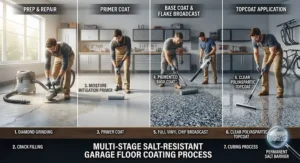
Getting a salt resistant garage floor coating to actually last through a Canadian winter comes down to three things most product boxes gloss over: surface prep, cure timing, and first-season habits.
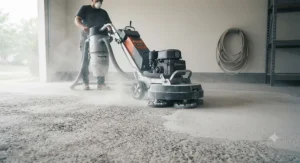
Surface prep is non-negotiable. Every product on this list, from the cheapest KILZ paint to the ArmorPoxy system, will fail early if applied over an improperly prepped slab. Clean thoroughly with a degreaser, then etch (chemically or via diamond grinding for a longer-lasting bond) until water absorbs into the concrete instead of beading on the surface. Skipping this step is consistently cited as the number one cause of peeling and bubbling across manufacturer FAQs and independent reviews alike.
Respect the cure schedule, especially in a cold garage. Manufacturer cure times assume roughly 21°C and moderate humidity; an unheated Canadian garage in late fall or early spring runs colder, which slows curing significantly. Add extra days before driving on the coating if your garage sits below 13°C, and never apply below 10°C, since the chemical reaction that hardens epoxy and polycuramine simply doesn’t complete properly in the cold.
The first 30 days set the tone for the next decade. Avoid parking directly after the manufacturer’s minimum cure window even if the surface feels dry — full chemical cross-linking can take longer than surface-dry time suggests. Once cured, sweep or squeegee standing salt brine promptly rather than letting it sit; even the most chloride-resistant coating benefits from not marinating in concentrated brine daily. A seasonal habit — sweeping weekly through winter, then a full mop with a pH-neutral cleaner each spring — is enough maintenance for most coated floors to look new for years.
Real-World Scenarios: Matching the Right Coating to Your Garage
The daily commuter in a Prairie winter. If you’re parking one vehicle in an attached garage in Winnipeg or Regina, tracking in salt and road grime five days a week for five months straight, a genuine two-part epoxy like Gorilla or EpoxyShield strikes the right balance of protection and cost. Add a Siloxa-Tek sealant on the exterior apron leading into the garage, where coatings aren’t practical, to catch the brine before it ever reaches your coated interior slab.
The weekend mechanic with a heated workshop garage. If your garage doubles as a workshop with rolling tool chests, jack stands, and the occasional dropped socket wrench, prioritize film thickness and abrasion resistance over speed. ArmorPoxy’s two-layer system or RockSolid’s high-hardness polycuramine will outlast a thinner one-coat product under that kind of mechanical abuse, even if the upfront cost is higher.
The condo or rental garage on a tight budget and timeline. If you don’t own the property long-term, or you need the garage back in service within a weekend, Behr’s or KILZ’s 1-part epoxy-acrylic paints offer a real cosmetic and light-protective upgrade without the multi-day etch-and-cure commitment of a true epoxy system. It won’t outlast a premium coating, but it’s a legitimate, honest improvement over bare, unsealed concrete for the money and time involved.
Problem → Solution: Fixing Road Salt Damage and Concrete Spalling Before You Coat
Problem: Surface scaling or flaking already visible. This is early-stage spalling — the top layer of concrete has started breaking down from freeze-thaw and chloride exposure. Grind or sand away loose material, patch with a concrete repair compound rated for exterior or garage use, and let it cure fully before any coating goes on top. Coating over active scaling just traps the problem under a new surface.
Problem: White, powdery deposits on the concrete (efflorescence). This is mineral salt migrating to the surface as moisture evaporates, and it’s a signal of ongoing moisture movement through the slab — a condition, incidentally, well documented on general reference sites covering concrete spalling and related deterioration processes. Address the moisture source (grading, drainage, or a moisture vapour barrier) before coating, or the new coating can delaminate from below.
Problem: Hairline cracks running through the slab. Small cracks let brine directly into the concrete’s interior, bypassing whatever surface protection you apply. Fill with a flexible polyurethane crack sealant rated for exterior temperature swings before coating — rigid epoxy fillers can crack again with slab movement.
Problem: A previously coated floor that’s peeling. Peeling almost always traces back to inadequate original surface prep, not a bad product. Strip the failing coating, re-etch or grind the bare concrete underneath, and start the process fresh; layering a new coating over a failing one just accelerates the next failure.
Problem: No visible damage yet, but heavy annual salt exposure. This is the easiest problem to solve — apply a penetrating sealant like Siloxa-Tek 8500 now, before damage starts, rather than waiting for pitting to appear. Prevention is dramatically cheaper than repair in this category.
How to Choose Salt Resistant Garage Floor Coating
- Assess your slab’s current condition first. Cracks, spalling, or efflorescence need repair before any coating — no product on this list is a substitute for fixing damaged concrete underneath it.
- Match coating type to traffic level. Light passenger-car use suits 1-part epoxy-acrylic paints; daily heavy use or workshop traffic justifies a true 2-part epoxy or polycuramine system.
- Weigh cure time against your schedule. A 24-hour polycuramine cure versus a 7-day acrylic paint cure is a real logistical difference if your garage is your only parking option.
- Check for genuine salt and chloride resistance claims, not just “durable.” Look specifically for hot tire pickup resistance and chemical resistance ratings, not generic marketing language.
- Consider a penetrating sealant as a complement, not a competitor. Pairing a Siloxa-Tek-style sealant with a lighter-duty topcoat can close much of the performance gap to premium coatings at a lower total cost.
- Factor in Canadian cold-weather cure conditions. Confirm minimum application temperature and plan your project for a window when the garage will hold above 10°C throughout the cure period.
- Budget for prep tools, not just the coating itself. Etching solution, a pressure washer or stiff brush, and a moisture test are part of the real project cost, whichever product you choose.
Epoxy for Canadian Garage Winters: What Actually Holds Up
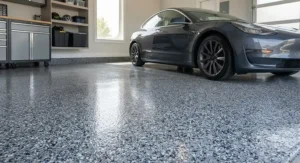
Not every “epoxy” performs the same once temperatures start swinging between plus and minus double digits, which is exactly the stress pattern most of Canada sees every winter. The critical distinction is flexibility versus rigidity. Traditional epoxy cures hard and largely inflexible; as the slab beneath it contracts in deep cold and expands again on a mild day, a rigid coating has nowhere to go and can develop hairline stress cracks over several seasons. Polyaspartic and polycuramine formulas, by contrast, retain more flexibility after curing, which lets them move with the slab rather than against it.
Here’s what most buying guides gloss over: this flexibility gap matters more in an unheated detached garage than in an attached, heated one. If your garage stays consistently above freezing through winter, a standard 100% solids epoxy like Gorilla or ArmorPoxy will likely perform for a decade or more without issue. If your garage regularly swings from -20°C overnight to above freezing on a sunny afternoon — common across the Prairies and much of rural Ontario and Quebec — the added flexibility of a polycuramine system like RockSolid becomes a more meaningful long-term advantage, not just a marketing point.
UV exposure is the second Canadian-specific factor worth flagging. A garage with a window, a glass door insert, or one that regularly sits open on bright winter days will expose the coating to more UV than a fully enclosed bay. Traditional epoxy yellows under sustained UV exposure; polyaspartic and polycuramine topcoats resist that yellowing far better, which is worth factoring in if you care about the floor’s appearance five years down the road, not just its chemical resistance on day one.
Chloride Resistant Sealant vs Epoxy Coating: Which Protects Better?
| Factor | Chloride Resistant Sealant | Epoxy / Polycuramine Coating |
|---|---|---|
| Protection mechanism | Penetrates and bonds within pores | Forms a surface film barrier |
| Visual change | None, concrete looks natural | Full colour/gloss transformation |
| Hot tire pickup resistance | Not applicable, no film to lift | High (2-part) to moderate (1-part) |
| Typical lifespan | 5-10+ years depending on formula | 5-20+ years depending on system |
| Application difficulty | Low, spray or roll and done | Moderate to high, multi-step prep |
| Typical cost | Lower per sq. ft. | Higher per sq. ft. |
The analysis here isn’t really “which wins” — it’s “which problem are you solving.” A chloride resistant sealant like Siloxa-Tek 8500 is the more efficient choice when your goal is purely stopping salt penetration on a floor whose appearance you’re happy with, especially on exterior aprons or driveways where a glossy epoxy finish isn’t practical or desired. An epoxy or polycuramine coating earns its higher cost and effort when you also want the cosmetic upgrade, the abrasion resistance for tools and equipment, and the easy-clean surface that a penetrating sealant simply can’t provide on its own. Many Canadian garages genuinely benefit from both — a sealant on the exterior approach and steps, a full coating on the interior slab.
How to Protect Garage Floor from Road Salt in Canada: Regional Considerations
Protecting a garage floor from road salt in Canada isn’t a one-size-fits-all project, because provincial and municipal de-icing practices vary meaningfully. Ontario and Quebec municipalities lean heavily on sodium chloride rock salt at high volumes; several Prairie cities, including Edmonton, have experimented with calcium chloride brine, which one municipal engineer publicly warned attacks the internal binder holding concrete together even more aggressively in some conditions. Coastal British Columbia sees less rock salt but more sustained damp-and-freeze cycling, which drives moisture-related deterioration through a slightly different mechanical pathway even without heavy chloride input.
Whatever your region, the underlying concrete performance requirements are formalized nationally. The CSA Group’s concrete construction standard, CSA A23.1, defines specific exposure classes for structures facing chloride and freeze-thaw conditions, reflecting just how seriously Canadian engineering treats this exact failure mode at a structural level — the same physics apply at garage-floor scale, just with lower stakes than a bridge deck. That’s a useful mental model for homeowners: if professional engineers design for chloride exposure as a first-order risk in structural concrete, a coating or sealant on your own slab isn’t overkill, it’s the residential equivalent of the same logic.
Practically, that means buyers in high-salt-volume provinces should lean toward the more chemically resistant 2-part epoxy, polycuramine, or penetrating sealant options on this list rather than the lighter 1-part acrylic paints, while buyers in milder coastal climates with lower salt volumes have more flexibility to prioritize cost and cosmetics over maximum chloride resistance.
Common Mistakes When Buying Salt Resistant Garage Floor Coating
The most common mistake is treating every product labelled “epoxy” as interchangeable. As the comparisons above make clear, a 1-part acrylic-epoxy paint and a 100% solids 2-part epoxy are meaningfully different products wearing similar names, with a real performance gap between them. Reading past the front-of-package claims to the actual solids type and cure schedule avoids a lot of buyer’s remorse.
A second frequent error is skipping surface prep to save a weekend, then blaming the product when it peels within a season. Every manufacturer FAQ and independent review consistently traces early coating failure back to inadequate etching or cleaning, not defective material. A third mistake is coating over visible cracks or spalling without repairing them first, which just seals moisture and future damage underneath a new surface rather than solving the underlying problem. Finally, buyers sometimes underestimate coverage needs on rougher, more porous older concrete — as reviewers of the Gorilla kit noted — and end up short mid-project, which is an easy fix if you buy a slightly larger kit than the calculator suggests from the start.
Long-Term Cost & Maintenance: Total Cost of Ownership
Comparing sticker price alone misses most of the real economics here. A KILZ or Behr 1-part paint costs less upfront but typically needs recoating or touch-ups every 1-3 years under heavy salt exposure, especially in high-traffic tire paths. A genuine 2-part epoxy like Gorilla or EpoxyShield, properly prepped and applied, commonly lasts 8-15 years before a full recoat is needed. Polycuramine and premium 100% solids systems like RockSolid and ArmorPoxy can push past 15-20 years under normal residential use.
Run the simple math over a 15-year window: two or three recoats of a C$50 paint (plus your own labour each time) can land in the same total-cost neighbourhood as one C$200-C$400 premium coating applied once — and that’s before counting the value of your weekends. A penetrating sealant like Siloxa-Tek sits in an interesting middle position: relatively low cost, but typically needs reapplication every 5-10 years since it’s not a surface film that wears visibly, just a chemical treatment that gradually depletes.
Maintenance costs stay modest across every category on this list as long as prep was done correctly the first time. Routine sweeping and occasional pH-neutral mopping are the baseline; the real cost driver is how many times you have to redo the entire project, which is squarely a function of upfront prep quality and product tier, not luck.
Features That Actually Matter (And Those That Don’t)
Actually matters: genuine 2-part chemical cure versus 1-part acrylic blend, since this single spec predicts most of the real-world durability difference on this list. Actually matters: proper surface prep compatibility and etch requirements, since skipping this step causes more coating failures than any material choice. Actually matters: cold-weather cure temperature range, since a coating rated for warm climates may simply fail to cure correctly in an unheated Canadian garage in shoulder-season weather.
Doesn’t matter as much as it sounds: ultra-high gloss ratings, since a satin or low-gloss finish performs identically in terms of chemical and salt resistance and often hides tire marks and dust better day to day. Doesn’t matter as much as it sounds: decorative flake variety, which is purely cosmetic and has zero bearing on chloride resistance. Doesn’t matter as much as it sounds: brand name alone — as this comparison shows, a lesser-known penetrating sealant can outperform a famous coating brand for the specific job of blocking chloride, because they’re solving genuinely different problems.
Frequently Asked Questions
❓ Does epoxy garage floor coating actually stop road salt damage?
❓ How long does salt resistant garage floor coating last in Canada?
❓ Can I apply garage floor epoxy in a cold Canadian garage?
❓ Is a penetrating sealant better than epoxy for salt protection?
❓ What is the cheapest way to protect a garage floor from road salt?
Conclusion
Road salt isn’t going away, and neither is the freeze-thaw cycle that turns it into a slow-motion demolition crew for unprotected concrete. What changes is how prepared your garage floor is to take that abuse without pitting, scaling, and eventually crumbling at the edges. Across the seven products here, the honest takeaway is that there’s no single universally “best” salt resistant garage floor coating — there’s a best match for your traffic level, your climate, your timeline, and your budget. A daily commuter in an unheated Prairie garage has different real needs than a weekend mechanic in a heated workshop bay, and the smartest move is matching the coating chemistry to that reality rather than chasing the highest-rated product in isolation.
Whichever direction you go, the fundamentals don’t change: repair damage before you coat, respect the cure schedule even when it’s inconvenient, and treat surface prep as the actual product you’re buying, since it determines whether anything you apply on top survives its first real Canadian winter.
Recommended for You
- How to Epoxy Garage Floor Canada: 7 Best Kits Reviewed (2026)
- Best Winter Grade Epoxy Garage Floor Kits in Canada 2026 (7 Top Picks)
- Best 7 Heavy Duty Rubber Tiles for Garage in Canada (2026)
Disclaimer: This article contains affiliate links. As an Amazon Associate, I earn from qualifying purchases. If you purchase products through these links, we may earn a small commission at no additional cost to you.
✨ Found this helpful? Share it with your friends! 💬🤗
