
In This Article
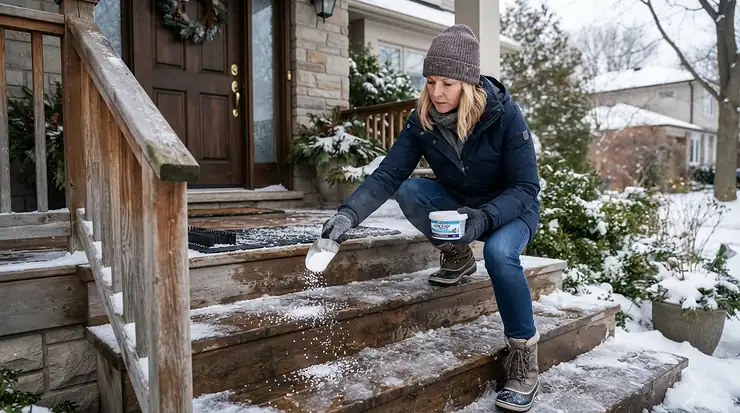
Every October the same ritual plays out across the country. The hose gets coiled, the shovel gets dragged out of the garage, and somebody hauls home the cheapest bag on the shelf. Eco-friendly ice melt is a de-icing product made to melt ice with a lighter footprint than rock salt. It typically skips sodium chloride, cuts or removes chlorides, favours biodegradable or plant-derived ingredients, and goes easier on pets, lawns and concrete. No product is perfectly harmless, but the gap between options is real.

That gap is worth understanding. About five million tonnes of road salt are used in Canada each year, and according to Environment and Climate Change Canada’s road salts FAQ, almost all of the chloride eventually reaches waterways. Your driveway is a tiny slice of that total. Still, it’s the slice you control.
Here’s the plot twist: the “green” label on a bag is mostly marketing. Some products are chloride-free. Some are salt-free but still contain a chloride compound. Some lean on urea, which is a fertilizer-grade nitrogen source and not a plant. I’ve sorted through listings, spec sheets and retailer review threads so you don’t have to.
Use this guide to find the best biodegradable ice melt for driveways, compare plant-derived options and learn what actually happens to your soil after the thaw. One honest note up front: product availability on amazon.ca shifts through the season, so confirm stock before you commit.
Quick Comparison: 7 Eco-Friendly Ice Melt Options at a Glance
Before the deep dive, here’s the cheat sheet. Ratings below come from manufacturer or retailer listings, and “per listing” means the brand’s own claim. Treat those as claims to weigh, not lab results.
| Product | Active chemistry (per listings) | Rated low temp | Best For |
|---|---|---|---|
| Safe Paw Ice Melter | Amide core with glycols, salt-free and chloride-free | About -19°C (-2°F) | Yards with pets and garden beds |
| Snow Joe MELT Beet-It | CMA enriched with beet extract | About -29°C (-20°F) | Deep-cold regions, plant-adjacent steps |
| Windsor Pet Friendly Ice Melt | Urea (per retailer Q&A), salt and chloride free | -12°C | Mild-cold days, small steps |
| GroundWorks Natural Ice Melter | Not disclosed on listing | Not stated | Residue-conscious households |
| Yardworks PawProtect | Salt-free, urea-based per shopper Q&A | -12°C | Budget pre-treatment |
| Alaskan Pet Friendly Ice Melter | Not clearly disclosed | Not stated | Long driveways, bulk coverage |
| Sifto Safe Step Sure Paws | Magnesium chloride per spec sheet | -26°C | Coldest climates on a budget |
Look at the pattern. The two products that clearly avoid chlorides, Safe Paw Ice Melter and Snow Joe MELT Beet-It, cover very different temperature ranges. The urea-based pair, Windsor Pet Friendly Ice Melt and Yardworks PawProtect, stop at -12°C. Sifto Safe Step Sure Paws goes coldest but carries a chloride compound, which matters if chloride-free formulas are your hard line.
💬 Just one click — help others make better buying decisions too!😊
Top 7 Eco-Friendly Ice Melt Picks: Expert Analysis
1. Safe Paw Ice Melter — salt-free pick for lawn-heavy yards
Safe Paw Ice Melter is the one to beat when the garden matters as much as the walkway. Per the maker, it’s a patented compound with a crystalline amide core infused with glycols. It ships as a 3.7 kg (8 lb) jug, a 10 kg flexipail and a 15.9 kg bucket, and it’s rated to roughly -19°C (-2°F). The brand says you can use about half as much as you would with salt, and that it slows re-icing for up to 72 hours. In practice that means a lighter hand on the scoop and fewer top-ups on a stubborn step.
Based on the spec comparison, it suits families with dogs, kids and perennial borders beside the path. It’s also the cleanest fit for shoppers who want chloride-free formulas with a plain-language label. One caveat from the maker’s own guidance: concrete should be at least a year old and air-entrained, so brand-new pours deserve patience.
On reviews, the brand’s literature cites a strong average on Amazon’s U.S. listing. I couldn’t verify amazon.ca review counts, so check those before buying.
Pros:
- ✅ Salt-free and chloride-free per the manufacturer
- ✅ Concentrated, so you use less per application
- ✅ Jug, pail and bucket sizes for any yard
Cons:
- ❌ Costs more per kilogram than urea options
- ❌ Not advised for very new concrete
Expect jug sizes around C$30-C$50 at the time of research, with large pails climbing well beyond that. Verdict: a premium price that’s defensible if your plants are the priority.

2. Snow Joe MELT Beet-It — CMA and beet extract for deep cold
Snow Joe MELT Beet-It is the only pick here built on calcium magnesium acetate (CMA), enriched with beet extract. The 25 lb (11.3 kg) bucket includes a measuring scoop and colour-coated crystals so you can see your coverage. The listing claims melting down to -20°F, roughly -29°C. That’s a serious number, and it’s the coldest rating in this roundup that doesn’t rely on a chloride.
What does that mean for you? If you live where January regularly dips below -25°C, this is the rare option that is both chloride-free and plausibly up to the job. CMA is also considered less harmful to vegetation than salt, according to a municipal de-icing guide. The trade-off is cost, since one consumer article flags CMA as much pricier than other ice-melt products.
On reviews, I couldn’t verify amazon.ca ratings, and the product is mainly marketed in the U.S. Check for Canadian stock and shipping before you plan around it.
Pros:
- ✅ Chloride-free CMA base
- ✅ Rated to about -29°C per listing
- ✅ Measuring scoop and colour-coded crystals
Cons:
- ❌ Premium cost for the bucket size
- ❌ Canadian availability may be limited
Budget roughly C$40-C$65 for the 25 lb bucket at the time of research. Verdict: the cold-climate specialist, worth it only where the temperature demands it.
3. Windsor Pet Friendly Ice Melt — made-in-Canada urea option
Windsor Pet Friendly Ice Melt is a veterinarian-developed, salt-free and chloride-free jug made in Canada. It comes in a 3.63 kg size, and the coloured pellets show where you’ve already spread. The brand says it melts to -12°C. A retailer Q&A confirms the earlier version contains urea.
Here’s the translation. Urea is gentler on paws than chloride salts, but it’s still a nitrogen source, so very heavy application near waterways isn’t ideal. The -12°C rating also means it’s a shoulder-season performer, fine for the first freezing rain of November and less convincing in a deep freeze.
Reviewer sentiment on a Canadian retailer is genuinely mixed. Some reviewers say it’s gentler on grass, shrubs and dog paws. Others say it doesn’t work as well at lower temperatures, and one says it didn’t work for its intended purpose at all. That’s consistent with the -12°C spec.
Pros:
- ✅ Salt-free and chloride-free per the brand
- ✅ Coloured pellets show coverage
- ✅ Made in Canada
Cons:
- ❌ Struggles below -12°C
- ❌ Urea adds nitrogen to runoff
Expect roughly C$15-C$20 for the jug. Verdict: an affordable shoulder-season helper, not a January workhorse.
4. GroundWorks Natural Ice Melter — residue-free, Canadian-made
GroundWorks Natural Ice Melter promises a safe, eco-friendly formula that doesn’t leave an oily residue. That detail matters more than it sounds. Oily film gets tracked across hardwood and tile, and it’s the kind of annoyance that has people abandoning “green” products by February. It’s sold in a 12 lb (5.4 kg) jug and a 22 lb (10 kg) bag, and it’s listed as Made in Canada.
The listing doesn’t state its active ingredient or temperature rating. So read the safety data sheet before you assume anything about chloride content or cold-weather performance. That gap is the main reason I’d rank it behind the better-documented picks.
Reviewer sentiment: I couldn’t find verifiable review text for this product, so there’s nothing honest to summarize. That is useful information in itself, because a thin public track record means less evidence to lean on.
Pros:
- ✅ Marketed as residue-free
- ✅ Canadian-made, two pack sizes
- ✅ Positioned as safe for kids and pets
Cons:
- ❌ Ingredients and temperature rating not disclosed
- ❌ Little verifiable review history
Expect roughly C$28-C$35 at the time of research. Verdict: promising for tidy households, but verify the data sheet first.
5. Yardworks PawProtect — budget pre-treatment pick
Yardworks PawProtect is a 7 kg salt-free ice melter sold as pet-friendly, concrete-safe, vegetation-safe and biodegradable. The listing rates it to -12°C and recommends pre-application to stop ice from bonding to the surface. A shopper Q&A suggests it’s urea-based.
The pre-treatment advice is the smartest feature here. Spreading a thin layer before a storm costs less than chasing a glazed driveway afterwards. It also means you use less product overall, which keeps nitrogen and runoff down.
Reviewers are split on it. One calls it dog-friendly and says it works well. Another says it didn’t melt anything. Both can be true. A -12°C product behaves very differently on a mild morning than on a bitter one, and sub-zero cold would explain the second reaction.
Pros:
- ✅ Low cost for a salt-free formula
- ✅ Suited to pre-storm application
- ✅ Concrete-safe and vegetation-safe per listing
Cons:
- ❌ Rated only to -12°C
- ❌ Mixed review reports on performance
Expect roughly C$18-C$24 for 7 kg. Verdict: the best budget entry for mild winters, as long as you spread early.

6. Alaskan Pet Friendly Ice Melter — big jug for long driveways
Alaskan Pet Friendly Ice Melter is a Canadian-origin 4.5 kg jug pitched as gentle on vegetation, asphalt and concrete, non-staining and safe around pets. The brand claims it works “twice as fast” and lasts longer than traditional salt. That’s a marketing claim, and I couldn’t find independent testing to back it up.
What’s missing matters. The listing doesn’t clearly name the active ingredient or the minimum temperature. So the sensible move is to treat this as an unverified candidate and check the label for chloride content.
Reviewer sentiment: I found no verifiable review text, so I won’t characterize one. If you buy it, check recent reviews on the listing you’re ordering from.
Pros:
- ✅ Positioned as safe on asphalt and concrete
- ✅ Non-staining per the brand
- ✅ Canadian origin
Cons:
- ❌ Active ingredient not clearly disclosed
- ❌ “Twice as fast” claim unverified
Expect roughly C$20-C$26 at the time of research. Verdict: reasonable value if the label checks out, but the information gap keeps it mid-pack.
7. Sifto Safe Step Sure Paws — coldest-rated, but not chloride-free
Sifto Safe Step Sure Paws is the honest outlier. The 10 kg bag is described as salt-free, natural and pet-friendly, and it’s rated to -26°C. The spec sheet, though, lists its chemical system as magnesium chloride. Magnesium chloride is a chloride, so the “salt-free” label and the chloride question have different answers.
Chlorides are the part that persists in soil and water. So Sifto Safe Step Sure Paws is less harsh on paws and plants than rock salt, but it isn’t a chloride-free formula. If that distinction matters to you, it should shape your choice.
Reviewer sentiment is thin and mixed. One retail reviewer reports the product turning to mush, which suggests moisture-related storage problems. Keep the bag sealed and dry.
Pros:
- ✅ Rated down to -26°C
- ✅ Large 10 kg bag with applicator
- ✅ Resealable packaging
Cons:
- ❌ Contains a chloride compound
- ❌ Reports of clumping in humid storage
Expect roughly C$24-C$30. Verdict: a strong value for deep cold, as long as chloride-free isn’t your hard line.
Spec-by-Spec Showdown: Which Eco-Friendly Ice Melt Wins Where
The table below puts the practical differences side by side. Prices are approximate ranges at the time of research, so check current price on amazon.ca.
| Product | Size seen | Approx. price range | Chloride-free? | Best For |
|---|---|---|---|---|
| Safe Paw Ice Melter | 3.7 kg to 15.9 kg | C$30-C$50 (jug) | Yes, per maker | Garden-adjacent paths |
| Snow Joe MELT Beet-It | 11.3 kg | C$40-C$65 | Yes (CMA) | Deep cold |
| Windsor Pet Friendly Ice Melt | 3.63 kg | C$15-C$20 | Yes, per brand | Mild-cold steps |
| GroundWorks Natural Ice Melter | 5.4 kg / 10 kg | C$28-C$35 | Unverified | Tidy interiors |
| Yardworks PawProtect | 7 kg | C$18-C$24 | Salt-free; chloride unverified | Budget pre-treat |
| Alaskan Pet Friendly Ice Melter | 4.5 kg | C$20-C$26 | Unverified | Bulk coverage |
| Sifto Safe Step Sure Paws | 10 kg | C$24-C$30 | No | Cold on a budget |
Read the table by price per kilogram and the cheapest option isn’t automatically the winner. Windsor Pet Friendly Ice Melt looks inexpensive but stops working earlier in the season. Safe Paw Ice Melter costs more up front, but its concentrated formula means a jug stretches further. And Snow Joe MELT Beet-It is the only one where the premium buys both a chloride-free formula and a deep-cold rating.
How to Choose Eco-Friendly Ice Melt: 6 Steps
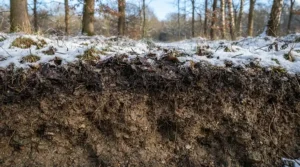
- Check the real chemistry, not just the label. “Salt-free” doesn’t mean “chloride-free.” Chlorides are the part that leaches. According to Quebec’s environment ministry, dissolved chlorides are mostly carried off into groundwater and surface water, while the cations are largely retained by soil.
- Match the temperature rating to your winters. A -12°C product is wasted on a Winnipeg January. A -29°C product is overkill on the West Coast.
- Think about what’s beside the path. Lawns, shrubs and beds argue for garden-safe deicers. Pets argue for lower-irritation formulas.
- Check your concrete’s age. New pours are vulnerable in their first winters, and some makers specify a minimum age.
- Compare per-use cost. A concentrated formula used at half the rate can beat a cheaper bag.
- Plan to shovel first. The best eco-friendly ice melt is the one you barely need because you’ve cleared the bulk by hand.
Chloride-Free Formulas: What They Are and What They Aren’t
Chloride-free formulas melt ice without adding chloride ions to the environment. That’s the headline benefit, and it’s the reason the category exists. Chloride is stubborn. It doesn’t break down or bind to soil, so it moves with water until it reaches a stream, lake or aquifer.
But “chloride-free” covers very different chemistry. CMA, such as the base of Snow Joe MELT Beet-It, is acetate-based and chloride-free. Urea, found in Windsor Pet Friendly Ice Melt and likely in Yardworks PawProtect, avoids chloride but adds nitrogen. Safe Paw Ice Melter uses an amide and glycol system that the maker says is chloride-free. Each swap carries a different trade-off.
Here’s the practical read. If your priority is the lowest possible chloride load, choose from the first group and use sparingly. If your priority is simply gentler paws and plants, a magnesium chloride blend like Sifto Safe Step Sure Paws is a step up from rock salt, though not a chloride-free formula. One more point deserves emphasis. A chloride-free product also isn’t “no impact.” Heavy, repeated application of anything adds chemical load to your soil, which is why the application habits later in this guide matter as much as the product you pick.
Runoff Impact on Soil: What Happens After the Thaw
The runoff impact on soil is where the hidden cost lives. When snow melts, dissolved de-icer moves into the ground and the nearest drain. Rock salt is about 97 percent sodium chloride, per the Quebec ministry, and once it dissolves, chloride travels onward while the sodium is mostly retained by the soil. Retained sodium can degrade soil structure, which is why roadside lawns turn crusty and bare.
The numbers are sobering at a larger scale. A study of a Lake Ontario watershed, published in a Canadian hydrogeology paper, found that about half of the road salt applied to one urban stream was removed annually by overland flow. The rest accumulated in the shallow subsurface, with stream chloride reaching up to 2,000 mg/L. For comparison, a provincial summary cites a long-term chloride exposure limit of 120 mg/L for certain freshwater species.
Your driveway isn’t a highway, but the principle scales down. Every handful that doesn’t need to be there is a handful that doesn’t leach. Soil chemistry also punishes repetition. A single light application may wash through, while ten applications on the same strip of bed edge stack up. That’s why shovel-first habits and less product per pass cut your runoff impact on soil more than any label can.
Garden-Safe Deicers: Protecting Beds, Lawns and Shrubs
Garden-safe deicers are products that minimize harm to vegetation when runoff or foot-traffic spread reaches planted areas. The label alone doesn’t guarantee safety. The product, the dose and the drainage all matter.
Start with where the water goes. A path that slopes toward a lawn sends melt straight to the roots. Grade a walkway away from beds if you can, or switch to garden-safe deicers like Safe Paw Ice Melter along that edge and keep stronger material for the street side.
Next, think about timing. Plants are most vulnerable in late winter and early spring, when roots start waking up and the accumulated melt is released. A light hand in February protects April’s tulips.
Third, protect the vulnerable plants first. Evergreen hedges near the road get hit by salt splash from passing traffic, so a gentler formula on your own side cuts the double exposure. Also remember that Snow Joe MELT Beet-It is marketed as safer for vegetation, while Sifto Safe Step Sure Paws is described as vegetation-friendly but contains a chloride compound.
Finally, don’t forget the tracked-in problem. Residue travels on boots and paws. A doormat and a quick wipe-down keep any de-icer off your floors, and out of your dog’s mouth.
Best Biodegradable Ice Melt for Driveways: Concrete, Asphalt and Pavers
Driveways are the hardest test, because they’re wide, they’re heavily trafficked and they’re often poured concrete. If you’re hunting for the best biodegradable ice melt for driveways, three questions decide it.
How old is the concrete? Many manufacturers advise against de-icers on concrete younger than about a year. Safe Paw Ice Melter states a minimum age, and Yardworks PawProtect is listed as concrete-safe. Interlocking pavers and stamped finishes deserve similar caution, since freeze-thaw cycles do most of the damage and chemistry just accelerates it.
How big is the surface? For a double-wide driveway, bulk matters. The 10 kg to 15.9 kg sizes of Safe Paw Ice Melter, or the 10 kg Sifto Safe Step Sure Paws bag, beat repeatedly buying small jugs. Spreading by hand across wide surfaces also tends to over-apply, so a hand-crank spreader is worth the small investment.
How cold does it get? Biodegradable formulas that stop at -12°C will leave you improvising during a cold snap. If your winters regularly drop lower, choose a deep-cold formula, or keep sand for traction as a backup.
Biodegradable also doesn’t mean unlimited. It means the compound can break down over time. Meanwhile it can still move through runoff, which is why moderate application remains the rule.
Best Plant-Based Ice Melt Review: Beet, CMA and Alfalfa Explained
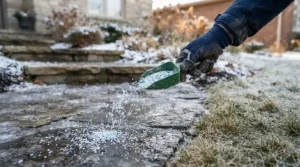
This best plant-based ice melt review begins with a fair warning. “Plant-based” is a loose term in this market. True plant-derived ingredients include beet extract, alfalfa meal and acetate compounds that can be produced by fermentation. Urea, by contrast, is typically manufactured and is better described as a nitrogen source than a plant product.
Beet-based products. Sugar beet extract lowers the freezing point of water and gives brines a sticky quality that helps them cling to surfaces. One horticultural source cited in a consumer article puts the effect at around -20°F. A commercial de-icer supplier, meanwhile, points out that beet juice is sticky and that higher concentrations are needed to match calcium or magnesium additives. Beet is best seen as an enhancer, not a standalone miracle.
CMA. Calcium magnesium acetate is chloride-free and biodegradable, but it’s expensive and it works more slowly. Snow Joe MELT Beet-It pairs CMA with beet extract, which is why it’s the only product here that fits this category cleanly.
Alfalfa meal. It provides traction and some nitrogen, and one guide calls it moderately effective as an ice melter. It’s a gentle fix for tricky steps, though not for glazed driveways.
My verdict: for a true plant-derived pick, Snow Joe MELT Beet-It is the standout, while Safe Paw Ice Melter is the better all-around chloride-free choice.
Eco-Friendly Ice Melt vs Rock Salt: Cost, Performance and Impact
Rock salt wins on sticker price and loses on almost everything else you care about after the thaw. Here’s the full comparison.
| Factor | Rock salt | Eco-friendly ice melt |
|---|---|---|
| Upfront cost per kg | Lowest | Higher (roughly C$2-C$6/kg for these picks) |
| Chloride load | Very high | Lower, or none in chloride-free formulas |
| Pet and plant impact | Harsh on paws, lawns | Gentler, though varies by product |
| Cold performance | Weakens near -10°C to -15°C | Ranges from -12°C to -29°C |
| Best For | Large, low-stakes surfaces | Pets, gardens, new concrete |
The price gap narrows when you count replacement costs. Salt-damaged lawns need reseeding, and corroded railings need repainting. A concentrated product used at half the rate, like Safe Paw Ice Melter, also cuts the real cost per use. Meanwhile Yardworks PawProtect keeps the entry cost low if you pre-treat before storms.
Performance deserves honesty too. Rock salt is not useless, and in deep cold, Sifto Safe Step Sure Paws or Snow Joe MELT Beet-It are the credible alternatives. The sensible approach is a hybrid. Shovel thoroughly, use eco-friendly ice melt on the vulnerable zones, and keep a little sand for traction.
Practical Usage Guide: Applying Eco-Friendly Ice Melt the Smart Way
Most of the environmental benefit comes from how you use the product, not what’s on the label. Try this routine.
Shovel first. De-icers work on thin ice and slush, not thick packed snow. Clear as much as you can by hand, then treat what’s left.
Pre-treat when freezing rain is forecast. A thin layer before the storm, as Yardworks PawProtect recommends, stops ice from bonding to the surface. That uses far less product than breaking up a frozen sheet.
Spread thin and even. Aim for a light scatter, not a blanket. If the pellets are piled, you’ve overdone it. Follow the bag’s spread rate.
Wait, then scrape. Give the product time to work, then shovel the slush away. Leaving dissolved material on the surface just means it dissolves into the next thaw.
Sweep up leftovers. Excess pellets on dry pavement are wasted money and unnecessary runoff.
Store it dry. Reseal the container, since clumping, like the mush one reviewer reported with Sifto Safe Step Sure Paws, kills performance.
Common first-30-day mistakes: using too much, applying to ice that’s too thick, ignoring the temperature rating and forgetting to clear the slush. Fix those four and every product in this guide performs better.
Real-World Scenarios: Matching Eco-Friendly Ice Melt to Your Home
Scenario 1: The dog family with a perennial border. You have a 12 m walkway lined with garden beds, a Labrador and two kids, and you want chloride-free formulas near the plants. Safe Paw Ice Melter in the jug or pail is the best match, with a budget of roughly C$50-C$100 per season for a small property. Use it right at the beds and keep sand in reserve for extreme cold.
Scenario 2: The prairie driveway. Winter nights sink below -25°C and your double driveway needs real power. Snow Joe MELT Beet-It is the chloride-free option built for that range, while Sifto Safe Step Sure Paws is the budget alternative if you accept the chloride compound. Pair either with a spreader and heavy shovelling.
Scenario 3: The budget townhouse. Four steps and a short path, a C$40 seasonal budget and mostly mild winters. Buy Yardworks PawProtect, pre-treat before storms and shovel diligently. Add Windsor Pet Friendly Ice Melt only for the odd icy morning near the dog’s route.
The pattern across all three is the same. Start with how cold it gets, then match the chemistry to what’s beside the path.
Safety, Regulations and Compliance: What Canada Says About Salt
Here’s the good news and the bad news. The federal government won’t ban road salts, as its own FAQ states, because winter road safety is a top priority. Instead, a Code of Practice for the Environmental Management of Road Salts, published in 2004, asks large road authorities to develop salt management plans. It applies to organizations that use more than 500 tonnes per year, so it doesn’t bind homeowners.
The science behind that approach is stark. A federal assessment concluded that road salts containing inorganic chlorides were entering the environment in quantities that pose a risk to fish, plants and wildlife. You can read the full Priority Substances List assessment report for the details. The same federal FAQ notes that road salts are not considered harmful to human health at the levels people encounter, which is why the concern centres on ecosystems.
For you, three practical takeaways follow. First, check your municipal bylaw, since many Canadian municipalities require sidewalks to be cleared and homeowners can face liability for uncleared ice. Second, the Code’s best practices, such as anti-icing and using less product, are free to adopt at home. Third, no ice melt is 100 percent pet safe, so keep pets off treated surfaces and wipe paws regardless of the label.
FAQ
❓ How much eco-friendly ice melt should I spread on a driveway?
❓ Is chloride-free ice melt safe for concrete driveways?
❓ Does eco-friendly ice melt work below -20°C?
❓ Are garden-safe deicers really safe for lawns and shrubs?
❓ Is eco-friendly ice melt worth the extra cost?
Conclusion
The honest summary is simple. No eco-friendly ice melt is perfect, and the label is only the opening chapter of the story. Safe Paw Ice Melter is the strongest all-round pick for pets and garden beds. Snow Joe MELT Beet-It is the standout for chloride-free performance in deep cold. Windsor Pet Friendly Ice Melt and Yardworks PawProtect are sensible, affordable choices for mild winters. Sifto Safe Step Sure Paws earns its place for cold-weather value, with the chloride caveat clearly in view. GroundWorks Natural Ice Melter and Alaskan Pet Friendly Ice Melter are worth considering once you’ve confirmed the ingredient lists.
Whatever you choose, the biggest wins don’t come from the bag. Shovel first, pre-treat before storms, spread thin and sweep up leftovers. Those four habits cut the runoff impact on soil more than any brand can.
Your driveway is a small piece of a very large watershed, and the choices you make before the first snowfall add up. Pick a formula that matches your climate, protect the plants and paws you care about, and let winter do its worst.
🎯 Ready to winterize smarter? Check current prices and availability on amazon.ca, and keep this guide handy for the first freeze!
Recommended for You
- Ice Melt For Interlocking Pavers: 7 Safest Picks In 2026
- Calcium Chloride Vs Rock Salt Ice Melt: 7 Proven Picks 2026
- Ice Melt For Driveways: 7 Best Proven Picks In Canada 2026
Disclaimer: This article contains affiliate links. As an Amazon Associate, I earn from qualifying purchases. If you purchase products through these links, we may earn a small commission at no additional cost to you.
✨ Found this helpful? Share it with your friends! 💬🤗
