
In This Article
There’s a specific kind of dread that hits at -22°C, gloves half off, when you thumb the remote three times and your garage door just… hums. Doesn’t budge. That’s usually the moment Canadians start actually researching garage door openers instead of just living with whatever came with the house.
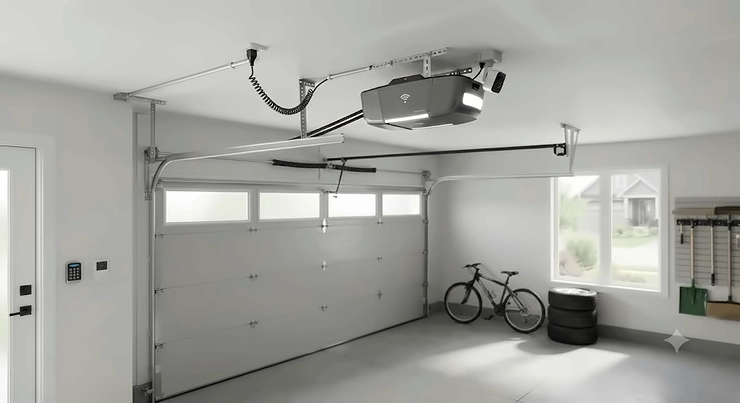
A garage door opener is a motorized unit that raises and lowers a sectional garage door on command, using a remote, a wall switch, or a phone app, while a set of counterbalance springs does the heavy structural lifting behind the scenes (more on that shortly). For most homeowners, it’s an appliance you think about twice: the day it’s installed, and the day it dies at the worst possible moment. This guide is here to shrink that second category to zero.
We’re going to walk through seven real, currently available garage door openers spanning entry-level chain drives to wall-mounted premium units, break down what an “HP” rating actually tells you (spoiler: less than the box implies), compare DIY installation against calling in a pro, and dig into warranty fine print that most buyers skip. Everything here is grounded in published specifications and aggregated review sentiment, checked against Canadian electrical and product-safety standards, rather than marketing copy. According to Wikipedia’s overview of the technology, the modern electric garage door opener has been around since 1926, and while the core mechanics haven’t changed much, the electronics wrapped around it absolutely have. Let’s get into it.
Top Rated Garage Door Openers: Quick Comparison
If you’re in a hurry — say, standing in a Canadian Tire aisle right now — here’s the condensed version before we go deep on all seven.
| Opener | Drive Type | HP Rating | Best For |
|---|---|---|---|
| Chamberlain B550 | Belt | 1/2 HP | Budget smart upgrade |
| Genie Chain Drive 750 | Chain | 3/4 HPc | Durability on a budget |
| Chamberlain B970 | Belt | 1 1/4 HP (DC equiv.) | Best all-around two-car pick |
| Genie StealthDrive 750 | Belt | 1 1/4 HPc | Quiet operation near bedrooms |
| Meross MSG100HK | Retrofit controller | N/A (add-on) | Making an old opener smart |
| Chamberlain B6753T Secure View | Belt | 1.25 HP DC | Built-in camera & security |
| LiftMaster 8500W Elite | Jackshaft (wall-mount) | 1/2 HP DC | High ceilings, two-car garages |
Looking at the spread above, there’s a clear pattern: the further you move from a basic chain drive toward belt-drive and jackshaft designs, the more you’re really paying for quiet operation and smart-home integration rather than raw lifting power. The Chamberlain B970 sits in the sweet spot for most Canadian two-car garages because it balances the DC motor’s smooth start-stop behaviour with a price that doesn’t require professional installation. Budget-focused buyers should note that the Genie Chain Drive 750 delivers nearly the same battery-backup protection as pricier belt-drive models, just with more mechanical noise.
💬 Just one click — help others make better buying decisions too!😊
Top 7 Garage Door Openers for Canadian Homes: Expert Analysis
We picked these seven to cover the realistic range of what Canadian homeowners actually shop for: rock-bottom chain drives, mid-range smart belt drives, a pure retrofit gadget for people who like their existing opener just fine, and a couple of premium options for anyone renovating a two-car garage from scratch. Every unit below is a real, currently sold product — no invented model numbers.
1. Chamberlain B550 — best budget smart upgrade
The Chamberlain B550 is the opener you buy when you want Wi-Fi control without spending like you’re outfitting a smart home showroom. Out of the box, it handles standard 2.1 m (7 ft) doors, with an extension kit available for 3 m (10 ft) doors. Its 1/2 HP belt drive is on the lighter end of the power spectrum, which matters mainly for heavier insulated doors — a single-car door on a lightweight aluminum-and-vinyl build will run fine, but a heavy double door may ask more of this motor than it comfortably gives. Based on the spec comparison with its bigger sibling, the B970, the B550 is clearly the budget trim: same myQ smart-home ecosystem, same Security+ rolling-code encryption, but a noticeably lighter-duty motor and no integrated battery backup. Reviewers consistently report smooth setup and reliable Wi-Fi performance, with recurring complaints centred on setup instructions and confusing optional smart-home subscription fees layered on top of the base myQ app. For a starter home or a lightly-used single-car garage, that trade-off is easy to live with.
Pros:
- ✅ Built-in Wi-Fi with myQ app, no separate hub needed
- ✅ Quiet belt drive compared to older chain units
- ✅ Straightforward setup with pre-programmed remotes
Cons:
- ❌ No integrated battery backup on this model
- ❌ 1/2 HP motor is light for heavier insulated doors
At around C$180-C$230, the Chamberlain B550 is a strong value pick if smart control matters more to you than raw lifting capacity or outage protection — check current price before buying, as retailer promotions shift often.
2. Genie Chain Drive 750 — toughest chain drive with real battery backup
If belt drives are the quiet luxury cars of this category, the Genie Chain Drive 750 is the pickup truck: loud, tough, and unbothered by cold garages or heavy use. It runs a 3/4 HPc DC motor over a heavy-duty chain rated for sectional doors up to 2.1 m (7 ft) tall and roughly 227 kg (500 lb), with an 8-foot extension kit available separately. What most buyers overlook about chain drives is that the added noise is a direct trade-off for mechanical simplicity — fewer things to stretch, fray, or need replacing over a decade of Canadian winters. It ships with an integrated battery backup rated for around 50 open/close cycles during an outage, which is a genuinely useful feature this far north, where ice storms knock out power for days at a stretch. Aggregated owner feedback on Genie’s chain-drive line skews positive on reliability and setup speed, with the expected criticism reserved for the audible clunk on start and stop — not a concern if your garage is detached or your bedroom isn’t directly above it.
Pros:
- ✅ Integrated battery backup for up to 50 cycles
- ✅ Rugged chain rated for heavy sectional doors
- ✅ Intellicode rolling-code security standard
Cons:
- ❌ Noticeably louder than any belt-drive option here
- ❌ No native smart-home app tier included
Priced in the C$210-C$260 range, the Genie Chain Drive 750 earns its spot as the budget pick that still takes power outages seriously — a rare combination at this price point.
3. Chamberlain B970 — best all-around belt drive for two-car garages
The Chamberlain B970 shows up on nearly every “best overall” shortlist for a reason: it’s the DC-motor, steel-reinforced belt drive that does everything reasonably well without forcing a compromise. Chamberlain rates its DC motor equivalent to 1 1/4 HP, delivered through anti-vibration technology that keeps the unit quiet enough to sleep through if your garage sits under a bedroom. Here’s what to weigh: a DC motor ramps up and slows down instead of slamming to a stop the way older AC chain motors do, which translates into less mechanical stress on the door hardware over years of daily use — a meaningful factor for a two-car garage door cycling multiple times a day. It includes an integrated battery backup, myQ Wi-Fi, and a claimed 460 m (1,500 ft) remote range, plenty for even a long Canadian driveway. Reviewers consistently praise its lifting power on heavier insulated doors and describe the quiet operation as a genuine step up from older chain units, with the rare complaint touching on the learning curve of initial travel-limit programming.
Pros:
- ✅ DC motor with smooth ramp start and stop
- ✅ Integrated battery backup included standard
- ✅ Handles heavier insulated two-car doors easily
Cons:
- ❌ Costs more upfront than basic chain-drive models
- ❌ Belt drives cost more to service long-term than chains
At roughly C$280-C$340, the Chamberlain B970 is the one to buy if you want a single opener that won’t leave you wishing you’d spent more, or less.
4. Genie StealthDrive 750 — quietest belt drive under attached bedrooms
The Genie StealthDrive 750 exists for one specific buyer: someone whose garage sits directly under, or beside, a room where people sleep. Its 1 1/4 HPc DC motor drives a steel-reinforced belt with GenieSense monitoring technology that continuously adjusts to reduce wear and vibration, and Genie backs the motor and belt with a limited lifetime warranty. The spec sheet won’t tell you this, but user reports suggest the instant, seamless switchover to battery power during an outage — rated for roughly 50 cycles — is one of its most appreciated real-world features, since there’s no lag or manual reset involved. On paper this means near-silent late-night or early-morning door cycles, which matters more than people expect until they’ve lived with a chain drive rattling a shared wall at 5:45 a.m. before a shift. Feedback aggregated across major retailers points to strong satisfaction with noise levels and HomeLink vehicle integration, with occasional notes about the Aladdin Connect app being less deeply integrated into broader smart-home ecosystems than Chamberlain’s myQ.
Pros:
- ✅ Genuinely whisper-quiet belt drive operation
- ✅ Instant battery backup switchover, no delay
- ✅ Limited lifetime warranty on motor and belt
Cons:
- ❌ Aladdin Connect app has fewer integrations than myQ
- ❌ Premium pricing versus Genie’s own chain-drive line
Expect to pay somewhere in the C$300-C$360 range for the Genie StealthDrive 750 — worth it specifically for noise-sensitive households, less so if your garage is detached.
5. Meross MSG100HK — best budget retrofit for an existing opener
Not everyone needs a whole new motor. The Meross MSG100HK is a small Wi-Fi controller that clips onto the terminals of an opener you already own — Chamberlain, LiftMaster, Craftsman, and several other brands are supported — and turns it into a smart device using your existing hardware. Reviewers consistently note that installation runs about 20 to 30 minutes and involves connecting the module to two terminals on the motor unit, plus placing a magnetic door sensor, no rewiring of the whole system required. Based on the spec comparison with buying an entirely new smart opener, this is the highest-ROI move on this list if your current motor is mechanically sound but lacks any app control: you’re paying for connectivity, not for lifting power you don’t need. It works with Apple HomeKit, Amazon Alexa, Google Home, and SmartThings, with no subscription fee attached. The main complaint in aggregated reviews involves compatibility — some older or unusual opener models aren’t supported, so checking Meross’s published compatibility list before buying matters more here than with any other product on this list.
Pros:
- ✅ Adds smart control to an opener you already own
- ✅ No monthly subscription fee required
- ✅ Works with HomeKit, Alexa, Google Home, SmartThings
Cons:
- ❌ Requires a compatible existing opener to function
- ❌ Adds no extra lifting power or battery backup
At roughly C$55-C$75, the Meross MSG100HK is the cheapest legitimate upgrade path on this entire list, provided your current motor still runs strong.
6. Chamberlain B6753T Secure View — best premium pick with a built-in camera
The Chamberlain B6753T Secure View is what happens when a garage door opener and a security camera decide to merge. Alongside its 1.25 HP DC belt drive and integrated battery backup, it includes a built-in Wi-Fi camera with roughly 130-degree field of view, two-way audio, and motion-triggered recording, all managed through the same myQ app used for door control. What most buyers overlook about integrated-camera openers is that they eliminate a second device and a second subscription decision — instead of buying a standalone garage camera and mounting it separately, the lens is already aimed at the exact spot that matters. Its 2,000-lumen LED lighting is genuinely bright enough to work under, not just see by, which matters for anyone doing weekend projects in a Canadian garage through the darker winter months. Aggregated review sentiment is strongly positive on the combination of quiet belt-drive operation and the convenience of camera footage tied directly to door events — “the garage door closed” notification with an attached video clip rather than a bare text alert. The recurring criticism centres on cost relative to buying a separate camera and basic opener individually.
Pros:
- ✅ Integrated 130° Wi-Fi camera with two-way audio
- ✅ 2,000-lumen LED lighting, genuinely bright
- ✅ Battery backup and quiet DC belt drive included
Cons:
- ❌ Highest price point among the belt-drive options here
- ❌ Camera features tied to ongoing myQ app ecosystem
Positioned around C$380-C$450, the Chamberlain B6753T Secure View is the pick for buyers who’d otherwise be shopping for a security camera and a garage door opener as two separate purchases anyway.
7. LiftMaster 8500W Elite Series — best wall-mount for high-ceiling two-car garages
The LiftMaster 8500W Elite Series takes a completely different approach: instead of mounting on the ceiling with a rail running the length of the garage, it mounts on the wall beside the door and drives the torsion bar directly. This jackshaft design is the go-to answer for garages with vaulted ceilings, overhead storage racks, or a car lift — anywhere ceiling space is precious. Despite the modest-sounding 1/2 HP rating on its 24V DC motor, jackshaft units drive the torsion spring system directly rather than pulling a trolley along a rail, so the comparison to belt-drive horsepower numbers isn’t apples-to-apples; what matters more is that it’s rated to power doors up to roughly 386 kg (850 lb). Here’s what to weigh: LiftMaster sells almost exclusively through professional dealer installation rather than big-box retail, which adds labour cost but also means the torsion-spring compatibility check happens before the unit goes on your wall, not after. It includes battery backup, built-in Wi-Fi through myQ, an automatic door lock that engages every time the door closes, and variable-speed smooth start-stop. Reviewers who’ve made the switch consistently mention the reclaimed ceiling space as the single biggest lifestyle upgrade, alongside praise for how quiet and vibration-free the wall-mounted design is compared to any ceiling-rail system.
Pros:
- ✅ Frees up all overhead ceiling space in the garage
- ✅ Automatic door lock engages on every close cycle
- ✅ Handles heavy doors up to roughly 386 kg (850 lb)
Cons:
- ❌ Requires torsion-spring hardware, not all doors qualify
- ❌ Sold through professional dealer installation only
Budget around C$450-C$550 including professional installation for the LiftMaster 8500W Elite Series — nearly double the cost of a basic belt drive, but it’s solving a completely different problem than the others on this list.
Practical Usage Guide: Setup, First 30 Days & Winter-Proofing
Getting a new opener onto the ceiling is only step one. The first month determines how many service calls you’ll make over the following decade.
During initial setup, the travel-limit programming step trips up more first-time installers than anything else — this is where you tell the opener exactly how far “fully open” and “fully closed” mean for your specific door. Rushing this step is the single most common cause of a door that reverses unexpectedly or doesn’t seal at the bottom. Give it the ten extra minutes the manual asks for.
In the first 30 days, resist the urge to skip the safety-sensor alignment check. The two photoelectric eyes near the bottom of the track need a clear, unbroken line of sight roughly 15 to 30 cm (6 to 12 in) above the floor; a stray bike, snow shovel, or extension cord across that beam is the most common reason a brand-new opener “randomly” refuses to close.
For winter-proofing specifically — and this matters more in Canada than almost anywhere else this product category gets sold — lubricate the chain or belt, rollers, and hinges with a silicone-based garage door lubricant before the first hard freeze, not after. Cold thickens standard grease, which increases motor strain exactly when garage doors already fight stiffer, contracted metal tracks. Check the weatherstripping along the bottom of the door each autumn too; a gap there lets in the cold air that makes the whole system work harder.
Real-World Scenarios: Matching an Opener to Your Household
The young family in suburban Ottawa: two kids, a minivan, and a garage that doubles as gear storage. Priorities are safety-sensor reliability and battery backup, since an outage that traps the car inside during a school-morning scramble is a real headache. The Chamberlain B970 or Genie Chain Drive 750 both fit, depending on whether quiet operation under an upstairs bedroom is worth the price gap.
The condo-townhouse owner in Calgary with an attached single garage: budget matters, smart-home integration is a nice-to-have, and the door itself is light. This is exactly the Chamberlain B550‘s lane — enough opener for the door, without paying for lifting capacity that will never get used.
The renovating homeowner in the Okanagan with a vaulted-ceiling double garage: overhead space is earmarked for a kayak rack and storage bins, ruling out a standard rail-and-ceiling unit entirely. The LiftMaster 8500W Elite Series solves the specific problem a ceiling-mounted opener physically cannot.
✨ Don’t Miss These Exclusive Deals!
🔍 Take your garage setup to the next level with these carefully selected picks. Click through to check current pricing and availability before your next trip to the hardware store!
DIY vs Professional Installation: What Canadian Homeowners Need to Know
Whether to install a garage door opener yourself or pay for professional installation comes down to three honest questions: what kind of door do you have, what tools do you already own, and how comfortable are you working near spring-loaded hardware.
Standard belt-drive and chain-drive kits — like the Chamberlain B550, Chamberlain B970, and Genie Chain Drive 750 — are genuinely designed for DIY installation. They ship with a snap-together rail system, pre-programmed remotes, and instructions built around a weekend timeline, typically two to four hours for someone reasonably comfortable with basic tools. The Meross MSG100HK retrofit controller is even more approachable, closer to installing a smart thermostat than touching the door mechanism at all.
Where DIY vs professional installation gets more serious is anything touching the torsion spring system directly, which is exactly what the LiftMaster 8500W Elite Series requires. Torsion springs store enormous mechanical energy under tension, and adjusting or replacing them without the right winding bars and technique has caused real injuries — this is the one area where “how hard can it be” genuinely isn’t the right question to ask. LiftMaster’s own sales model reflects this, routing the 8500W almost exclusively through dealer installation rather than retail shelves.
There’s also a wiring dimension worth knowing about: in Ontario, for instance, electrical work is governed by the Ontario Electrical Safety Code and inspected by the Electrical Safety Authority, and while plugging a pre-wired opener into an existing outlet typically doesn’t trigger a permit, running new dedicated wiring for the unit generally does. Requirements vary by province, so a quick check with your local authority before drilling into a wall is worth the five minutes it takes.
How to Choose a Garage Door Opener: 7 Criteria That Matter
- Door weight and material — a heavier insulated steel door needs more lifting force than a lightweight single-panel door; check your door’s rated weight before matching it to a motor.
- Drive type — chain for durability and budget, belt for quiet operation, jackshaft for reclaiming ceiling space.
- Battery backup — genuinely valuable in regions with frequent outages; largely optional in condos with reliable grid power.
- Smart-home ecosystem — myQ (Chamberlain/LiftMaster) has broader third-party integration than Genie’s Aladdin Connect; check what you already own.
- Noise tolerance — belt and jackshaft drives cost more specifically to solve a noise problem chain drives don’t have.
- Warranty structure — motor, parts, and battery are frequently covered under different terms; read the breakdown, not just the headline number.
- Installation path — DIY-friendly kits versus dealer-installed jackshaft systems changes your real total cost significantly.
Common Mistakes When Buying a Garage Door Opener
The most common mistake is buying based on horsepower alone without checking drive type or door compatibility — a powerful chain drive on a bedroom-adjacent garage solves nothing if the noise wakes the household nightly. A close second is skipping the battery-backup decision entirely, then regretting it during the first winter ice storm. Buyers also frequently underestimate installation costs for jackshaft or wall-mounted units, assuming the sticker price is the whole story when professional installation is effectively mandatory. Finally, plenty of people replace a perfectly functional motor when a retrofit controller like the Meross MSG100HK would have solved the actual complaint, which was “I want app control,” not “my opener is broken.”

Garage Door Opener HP Rating Explained
Marketers love printing “HP” on the box, but here’s the honest version: horsepower on a garage door opener is a marketing approximation, not a precise engineering measurement the way it is on a car engine. What actually determines whether an opener can handle your door is torque — the rotational force applied to lift the door’s weight against its counterbalance springs — and torque doesn’t translate to HP the same way across chain, belt, and DC jackshaft designs. That’s why Genie labels many of its motors “HPc,” short for horsepower comparable, an acknowledgment that the number is an approximation of lifting capability rather than a lab-measured rating.
| Door Type | Typical Weight | Recommended Opener Class |
|---|---|---|
| Single lightweight aluminum/vinyl | Under 68 kg (150 lb) | 1/2 HP belt or chain |
| Single insulated steel | 68-109 kg (150-240 lb) | 1/2 to 3/4 HP belt or chain |
| Double insulated steel | 109-182 kg (240-400 lb) | 3/4 to 1 1/4 HP DC belt |
| Double, heavy or oversized | Over 182 kg (400 lb) | 1 1/4 HP+ or jackshaft |
The table above is a starting point, not gospel — the Chamberlain B970‘s DC motor equivalent of 1 1/4 HP handles most double garage doors comfortably, while a basic 1/2 HP unit like the Chamberlain B550 is genuinely better matched to a single lightweight door. For reference on how these motors are tested and certified in Canada, the CSA Group’s standard for door and gate operators outlines the entrapment-protection and construction requirements every legitimately sold unit has to meet.
Best Garage Door Opener for a Two-Car Garage
A two-car garage door is wider, heavier, and gets cycled more often than a single-car door, all of which push the decision toward a stronger motor and better wear characteristics. Among the seven featured here, the Chamberlain B970 is the strongest general-purpose match: its DC motor’s ramp start-stop reduces mechanical stress on hardware that’s opening and closing multiple times daily, and the integrated battery backup covers the higher stakes of two vehicles being stuck inside during an outage. Households prioritizing near-silent operation under an attached bedroom should look instead at the Genie StealthDrive 750, while anyone renovating with a vaulted ceiling and storage ambitions should skip rail-based options entirely in favour of the LiftMaster 8500W Elite Series. Budget-focused two-car households shouldn’t discount the Genie Chain Drive 750 either — its heavier-duty chain and battery backup were built with exactly this kind of higher-cycle use in mind, just with more audible operation as the trade-off.
Opener Warranty Coverage: What’s Actually Protected
Warranty terms on garage door openers are rarely a single number, and reading past the headline claim matters. The Chamberlain B970 and Genie StealthDrive 750 both advertise lifetime coverage on the motor and belt specifically, but battery backup components are typically covered for a much shorter window — often just one year — and accessories like remotes and keypads usually fall under a separate, shorter parts warranty. The Genie Chain Drive 750 carries a limited 10-year warranty on its precision-machined motor and gearbox, distinct again from battery and accessory coverage. Retrofit devices like the Meross MSG100HK tend to carry standard one- to two-year manufacturer warranties, closer to typical consumer-electronics terms than the multi-decade promises on the mechanical motor units. The practical takeaway: if battery backup or smart-home hardware fails outside the shorter coverage window, replacing that component individually is usually far cheaper than the sticker shock of “warranty expired” might suggest, since the core motor and drive mechanism remain covered.
Belt Drive vs Chain Drive vs Jackshaft: The Real Difference
| Drive Type | Noise Level | Typical Price Premium | Best For |
|---|---|---|---|
| Chain | Loudest | Baseline | Detached garages, tight budgets |
| Belt | Quietest of the two rail types | +C$40-C$80 | Attached garages, bedrooms above |
| Jackshaft (wall-mount) | Very quiet, no ceiling rail | +C$150-C$250 | High ceilings, storage-focused garages |
The core mechanical difference is simple: chain drives pull the trolley along the rail using a metal chain, belt drives use a rubber-reinforced belt over the same basic rail design, and jackshaft units skip the rail entirely, mounting on the wall to drive the torsion bar directly. In practice, the belt-versus-chain decision is almost entirely about tolerance for noise and vibration through shared walls or ceilings — mechanically, both the Chamberlain B970 and Genie Chain Drive 750 will lift a comparable door for a comparable number of years. Jackshaft units like the LiftMaster 8500W Elite Series solve a completely different problem, ceiling clearance, and shouldn’t be cross-shopped against belt or chain drives on price alone.
Safety, Regulations & Compliance for Canadian Garages
Every legitimately sold residential garage door opener in Canada has to meet ANSI/CAN/UL 325, the binational safety standard covering door, gate, and window operators that Canadian and American industry groups harmonized in 2017. According to UL’s own announcement of the binational standard, this alignment means the safety construction, testing, and entrapment-protection requirements are now consistent on both sides of the border, which is part of why photoelectric safety sensors and auto-reverse functions are standard on every opener featured in this guide, not an optional add-on. All seven models here comply with these requirements, and none should be installed with sensors bypassed or removed — a shortcut that occasionally shows up in older DIY forum advice and genuinely isn’t worth the risk to kids, pets, or vehicles. Provincial electrical codes govern the wiring side separately, so confirming permit requirements with your local authority before any new wiring work remains good practice regardless of which opener you choose.
Frequently Asked Questions
❓ How fast can a garage door opener move?
❓ Do garage door openers need Wi-Fi to work?
❓ How long do garage door openers typically last?
❓ Can I install a garage door opener myself?
❓ Is a higher HP rating always better for a garage door opener?
Conclusion
If there’s one thing worth taking away from all seven products above, it’s that “best garage door opener” isn’t a single answer — it’s a question about your specific door, your specific garage, and how much you value quiet over cost. The Chamberlain B970 remains the safest general recommendation for most two-car Canadian garages, the Genie Chain Drive 750 covers the budget-and-battery-backup combination well, and the LiftMaster 8500W Elite Series solves a ceiling-space problem nothing else on this list touches. Meanwhile, the humble Meross MSG100HK proves you don’t always need a new motor at all — sometimes the fix really is that simple.
Whatever you land on, don’t skip the boring parts: check your door’s actual weight, confirm your torsion-spring setup if you’re eyeing a jackshaft unit, and read the warranty’s fine print before the sticker price becomes the whole decision. A garage door opener is one of those purchases you only think about twice, so it’s worth getting the first thought right.
✨ Ready to stop wrestling with a stuck door every cold snap? Compare current prices on today’s pick and get it on order before the next freeze rolls in! 🚗❄️
Recommended for You
- Chain Drive vs Belt Drive Garage Door Opener: 7 Top Picks for 2026
- Garage Door Opener for Canadian Winters: 7 Best Picks (2026)
- Garage Ventilation Winter: 7 Proven Fixes for Canadian Garages (2026)
Disclaimer: This article contains affiliate links. As an Amazon Associate, I earn from qualifying purchases. If you purchase products through these links, we may earn a small commission at no additional cost to you.
✨ Found this helpful? Share it with your friends! 💬🤗
