
In This Article
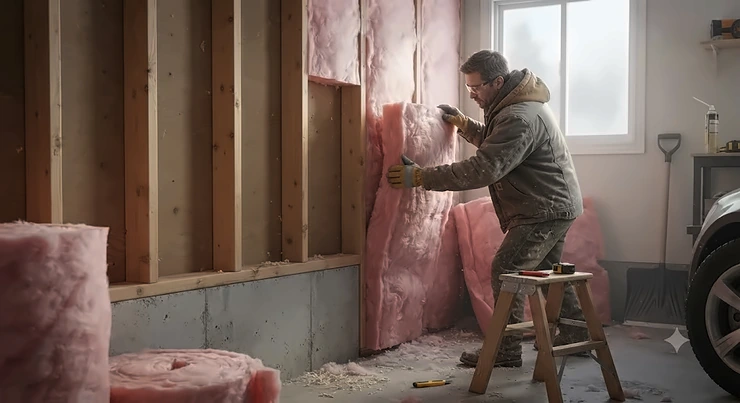
If you’ve ever stepped into your garage in January and felt your breath fog up before you even got the door open, you already know why insulation for garage walls matters more than most homeowners assume. A garage isn’t just a place to park the car — for a lot of Canadians it’s a workshop, a gym, a home office, or the one room where the dog hides from fireworks. None of that works when the walls are basically doing nothing to hold heat. Bare studs and drywall (or worse, exposed concrete block) let warmth leak out almost as fast as your furnace can produce it, and that leak doesn’t stay contained — it drags down comfort in any room that shares a wall with the garage.
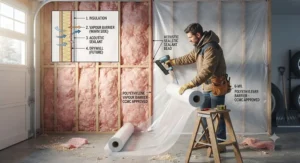
This guide skips the fluff and gets into real products, real specs, and honest trade-offs. We looked at seven actual insulation products sold in Canada, weighed batt against rigid foam against reflective systems, and broke down what each one actually does once it’s behind your drywall. Insulation for garage walls, in the simplest terms, is any material — mineral wool, fiberglass, rigid foam board, or reflective foil-faced panels — installed within or over the wall cavity to slow heat transfer, typically rated by its R-value (thermal resistance per inch of thickness).
Whether you’re chasing the cheapest possible fix before winter or building out a proper heated workshop, there’s a product on this list that fits your wall cavity, your climate zone, and your wallet. Let’s get into it.
What Is Insulation for Garage Walls, Exactly?
Insulation for garage walls refers to any material installed inside stud cavities or applied over interior/exterior wall surfaces to resist heat flow, typically rated in R-value (or RSI in metric terms). According to Natural Resources Canada’s guidance on wall insulation, walls account for roughly 20 percent of total heat loss in a typical Canadian house — and an attached garage with thin or missing insulation acts like an open window into that equation. Common materials include mineral wool batts, fiberglass batts, extruded polystyrene (XPS) board, polyisocyanurate board, and reflective foil-foam systems.
Quick Comparison Table
Before diving into individual products, here’s the fast overview — useful if you already know which insulation type fits your wall type and just want to compare at a glance.
| Insulation Type | Typical R-Value | Best Wall Situation | Price Range (CAD) |
|---|---|---|---|
| Mineral wool batt | R11–R15 (3.5″) | Open stud cavities, fire concerns | C$60–C$95 per bag |
| Fiberglass batt | R12–R20 | Open stud cavities, tightest budget | C$55–C$80 per bag |
| XPS rigid foam board | R10 per 2″ | Masonry, block, or over-stud continuous | C$45–C$70 per sheet |
| Polyiso rigid board | R13 per 2″ | Tight cavities, cold-climate walls | C$55–C$80 per sheet |
| Reflective foil-foam | R7–R21 equiv. | Stud-less, metal, or uninsulated cavities | C$150–C$300 per roll |
Looking at the table, the pattern is pretty clear: if your garage already has open 2×4 or 2×6 stud cavities, batt insulation gives you the most R-value per dollar with the least fuss. If you’re dealing with a solid masonry or metal wall with nowhere to staple a batt, rigid board or reflective foil systems earn their higher price tag by working where fibrous insulation simply can’t. Garages in colder zones — think Winnipeg, Thunder Bay, or rural Quebec — generally benefit from stacking rigid foam over batt for a thermal break, while milder coastal garages can often get away with batt alone.
💬 Just one click — help others make better buying decisions too!😊
Top 7 Insulation for Garage Walls: Expert Analysis
Here’s where we get specific. Each of these seven products is real, currently sold, and represents a different budget tier or wall situation. Ratings, specs, and review sentiment below are drawn from manufacturer data and aggregated customer feedback — nothing here is a fabricated hands-on test.
| # | Product | R-Value | Price Range (CAD) | Best For |
|---|---|---|---|---|
| 1 | Owens Corning EcoTouch PINK FIBERGLAS R20 Batt | R20 | C$55–C$80/bag | Budget 2×6 cavities |
| 2 | ROCKWOOL Comfortbatt R14 | R14 | C$65–C$95/bag | Fire-resistant standard cavities |
| 3 | Owens Corning FOAMULAR 250 XPS Board | R10 (2″) | C$45–C$65/sheet | Moisture-prone walls |
| 4 | DOW STYROFOAM Brand SM Blue XPS Board | R10 (2″) | C$50–C$70/sheet | Below-grade or damp walls |
| 5 | IKO Enerfoil Polyiso Board | R13 (2″) | C$55–C$80/sheet | Tight-space, high-R needs |
| 6 | PRODEX Total Reflective Insulation Roll | R7–R21 equiv. | C$150–C$300/roll | Stud-less or metal garages |
| 7 | ROCKWOOL Safe’n’Sound Acoustic Batt | ~R12 | C$65–C$90/bag | Workshop or converted-space garages |
That price spread interprets pretty simply once you factor in coverage area: the two batt products (Owens Corning EcoTouch PINK FIBERGLAS R20 Batt and ROCKWOOL Comfortbatt R14) win on cost-per-square-foot because a single bag covers a large chunk of wall, while the PRODEX Total Reflective Insulation Roll looks expensive per unit but is solving a completely different problem — walls with no cavity to stuff insulation into. The rigid boards sit in the middle, trading a higher sticker price for moisture resistance and continuous coverage that eliminates thermal bridging at the studs.
1. Owens Corning EcoTouch PINK FIBERGLAS R20 Batt — best budget batt for standard studs
The EcoTouch line is built around Owens Corning’s PureFiber Technology, and the standout here is a formaldehyde-free acrylic binder that keeps the batt soft enough to hand-cut without the itch factor older fiberglass was known for. At R20 for a 2×6 cavity (or R12–R14 unfaced options for 2×4 walls), it delivers real thermal performance without needing any specialty tools to install — a staple gun and a utility knife will get you through a two-car garage in an afternoon. What most buyers overlook about fiberglass batt is that its performance depends entirely on a clean, gap-free install; compressed or gapped batt loses R-value fast, so precise cutting around outlets and wiring actually matters more here than with rigid foam. Reviewers consistently report that the batt holds its loft well over time and doesn’t sag inside vertical cavities the way older paper-faced products sometimes did, though a handful of buyers note the pink dye can transfer to bare hands during install. This is the pick for anyone insulating a straightforward wood-stud garage wall on a tight budget who doesn’t need fire-rated or acoustic upgrades.
Pros:
- ✅ Lowest cost per square foot on this list
- ✅ Formaldehyde-free binder, easier on skin during install
- ✅ Fast DIY installation with basic tools
Cons:
- ❌ No moisture resistance — unsuitable for damp block walls
- ❌ R-value drops significantly if compressed or gapped
At roughly C$55–C$80 per bag depending on retailer and R-value chosen, this remains the best value entry point if your garage already has open stud cavities and a dry building envelope.

2. ROCKWOOL Comfortbatt R14 — best fire-resistant upgrade pick
Comfortbatt is stone wool, not fiberglass, and that distinction shows up immediately in how it handles heat and flame — the manufacturer rates it as non-combustible, meaning it won’t develop toxic smoke or feed a fire even under direct exposure. The batt’s flexible edge is the clever bit: it compresses slightly as you wedge it into the stud bay, then springs back to fill the cavity completely, which is exactly the kind of detail that keeps the actual installed R-value close to the R14 rating on the bag. Based on the spec comparison against standard fiberglass, stone wool also brings meaningfully better sound dampening, a real perk if your garage doubles as a workshop with power tools running near a shared wall. Reviewers consistently note the batt is noticeably denser and heavier to handle than fiberglass, which some installers appreciate for how it stays put in vertical cavities without sagging, though a few mention it’s a bit dustier to cut than expected. It’s GREENGUARD Gold Certified and made in Canada, which matters if indoor air quality or supply-chain reliability factors into your decision.
Pros:
- ✅ Non-combustible, genuine fire-resistance advantage
- ✅ Flexible edge design maintains rated R-value
- ✅ Strong sound-dampening for workshop garages
Cons:
- ❌ Costs more per bag than comparable fiberglass
- ❌ Denser material is dustier and heavier to cut
Expect to pay in the C$65–C$95 range per bag, with fire resistance and acoustic performance justifying the premium for attached garages near living spaces.
3. Owens Corning FOAMULAR 250 XPS Board — best moisture-resistant rigid board
FOAMULAR 250 is extruded polystyrene (XPS), and its calling card is a closed-cell structure that resists water absorption far better than any batt product on this list — a genuinely useful trait in a garage that sees snow melt off the car every winter. At R5 per inch, a standard 2-inch sheet lands you at R10, and the tongue-and-groove edges on most sheets reduce the air gaps that plague butt-jointed foam board installs. Here’s what to weigh: XPS performs equally well over masonry, block, or as continuous exterior insulation layered over studs, which fiberglass and mineral wool simply can’t do without a cavity to sit in. The compressive strength (roughly 25 psi) also means it can handle being screwed through for furring strips without crushing, something buyers doing a full drywall-over-foam assembly specifically look for. Reviewers highlight the consistent thickness and clean cuts with a straightedge and utility knife, though a few note the pink-tinted board can be pricier than generic XPS from smaller manufacturers with similar specs.
Pros:
- ✅ Closed-cell structure resists moisture absorption
- ✅ Works over masonry with no stud cavity needed
- ✅ Tongue-and-groove edges cut air infiltration
Cons:
- ❌ Higher cost per R-value than batt insulation
- ❌ Requires furring strips or adhesive for a clean finish
A 4×8 sheet at 2 inches thick typically runs C$45–C$65, which adds up fast across a full garage but pays off on durability in damp conditions.
4. DOW STYROFOAM Brand SM Blue XPS Board — best for damp or below-grade walls
STYROFOAM Brand — the actual blue board, not the generic term people use for any foam — has built its reputation on long-term R-value retention, meaning it doesn’t lose thermal performance over years the way some lower-grade foams gradually do as trapped gas diffuses out. On paper this means a garage insulated with SM Blue today should still be performing close to spec a decade from now, which matters if you’re not planning to redo the walls anytime soon. The board shares XPS’s core strength with FOAMULAR — closed-cell moisture resistance — but reviewers and contractors alike tend to flag it specifically for below-grade or partially-buried garage walls where soil moisture is a constant concern rather than an occasional one. What the spec sheet won’t tell you, but reviewers note, is that the blue coloring makes it easier to spot gaps and inconsistent seams during install compared to white or pink boards, a small but genuinely helpful detail for DIYers. It’s a strong pick anywhere frost heave or grade-level moisture is a realistic risk.
Pros:
- ✅ Excellent long-term R-value retention
- ✅ Strong moisture resistance for below-grade walls
- ✅ Distinct blue tint aids gap-spotting during install
Cons:
- ❌ Premium pricing compared to standard XPS options
- ❌ Overkill for fully above-grade, dry garage walls
Budget C$50–C$70 per 4×8 sheet at 2-inch thickness; the extra cost over generic XPS is really an insurance premium against moisture damage over time.
5. IKO Enerfoil Polyiso Board — best R-value per inch for tight cavities
Enerfoil is polyisocyanurate foam sandwiched between foil facers, and the headline number here is R6.5 per inch — meaningfully higher than the R5 per inch you get from XPS, which matters a lot when garage wall space is tight and you can’t afford to lose interior square footage to thick insulation. Made in Canada, the foil facing on both sides also functions as a built-in radiant barrier and a decent air-leakage reducer once seams are taped, effectively giving you two insulation strategies layered into one product. Based on the spec comparison, a 2-inch Enerfoil sheet at roughly R13 outperforms a same-thickness XPS sheet at R10, which is the kind of difference that actually shows up on a cold February morning. Reviewers consistently mention that the foil facing scuffs and dents more easily during transport and handling than the tougher plastic-faced XPS boards, so a bit more care is needed on the job site. It’s the board of choice for garages being converted into heated, finished workshop space where every inch of wall cavity counts.
Pros:
- ✅ Highest R-value per inch on this list
- ✅ Foil facing doubles as a radiant barrier
- ✅ Canadian-made with reliable supply availability
Cons:
- ❌ Foil surface is more prone to handling damage
- ❌ Slightly pricier than comparable XPS thickness
Expect roughly C$55–C$80 per 4×8 sheet, a fair trade for buyers who need maximum R-value without eating into interior wall depth.
6. PRODEX Total Reflective Insulation Roll — best for stud-less or metal garage walls
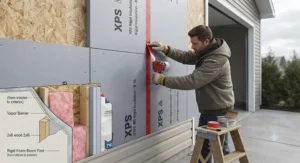
Prodex takes a completely different approach — closed-cell polyethylene foam sandwiched between two layers of reflective aluminum foil, designed to reflect radiant heat rather than just slow conductive heat transfer the way batt and rigid foam do. The manufacturer claims up to 97 percent radiant heat reflection, and reviewers in genuinely hot-summer, cold-winter climates report the biggest difference shows up in summer, when the reflective layer keeps a metal-sided garage from turning into an oven. Here’s what to weigh: this product earns its keep specifically on walls where batt or rigid board simply don’t apply — steel-frame garages, pole-barn-style structures, or masonry walls with no furring strips installed. The closed-cell core also resists mold growth and doesn’t provide nesting material for rodents, a small but real advantage over fibrous insulation in a garage that already has pest-prone gaps. Aggregated customer sentiment flags that installation quality is entirely dependent on sealing every seam with the included tape — skip that step and the reflective benefit drops noticeably.
Pros:
- ✅ Works on stud-less, metal, or masonry walls
- ✅ Strong summer heat-reflection performance
- ✅ Resists mold and rodent nesting
Cons:
- ❌ Higher upfront cost per square foot covered
- ❌ Performance heavily dependent on careful seam-taping
A single roll typically runs C$150–C$300 depending on length and thickness, covering roughly 100–350 square feet — pricier than batt, but there’s often no batt-compatible alternative for these wall types anyway.
7. ROCKWOOL Safe’n’Sound Acoustic Batt — best for workshop soundproofing plus warmth
Safe’n’Sound is marketed primarily as an acoustic product, but because it’s stone wool at roughly the same density as Comfortbatt, it still delivers a genuine thermal benefit — somewhere around R11–R12 in a standard 2×4 cavity — while dramatically cutting sound transmission through the wall. For anyone running an air compressor, a table saw, or a home gym in a converted garage, that dual benefit is the whole pitch: you’re not choosing between warmth and quiet, you’re getting both from one batt. Based on the spec comparison against Comfortbatt, Safe’n’Sound is denser and slightly less thermally efficient per inch, which tracks with its acoustic-first design intent — it’s optimized to absorb sound energy, and warmth is a welcome side effect rather than the primary engineering goal. Reviewers consistently praise the noticeable drop in noise bleed-through to adjacent rooms, particularly in party-wall situations between an attached garage and a home office or bedroom. It fits standard 2×4 or 2×6 cavities with the same friction-fit install method as any batt product.
Pros:
- ✅ Genuine dual thermal and acoustic performance
- ✅ Fits standard stud cavities, no special tools
- ✅ Fire-resistant stone wool construction
Cons:
- ❌ Slightly lower R-value per inch than Comfortbatt
- ❌ Premium price reflects acoustic-first design, not thermal-first
Priced around C$65–C$90 per bag, it’s a smart upgrade specifically for garages functioning as workshops, gyms, or studios rather than pure storage.
How to Insulate a Garage Cheap in Canada: A DIY Guide
Insulating a garage on a genuinely tight budget comes down to sequencing, not shortcuts. Start with air sealing before you buy a single batt — caulking gaps around the garage door frame, window trim, and any wiring penetrations often delivers more comfort improvement per dollar than upgrading insulation R-value, because uncontrolled air leakage bypasses insulation entirely. Once the envelope is sealed, prioritize wall area over ceiling area if you’re working section by section; walls typically border living space more directly than an unheated attic above the garage does.
For the cheapest legitimate approach, unfaced fiberglass batt like the Owens Corning EcoTouch PINK FIBERGLAS R20 Batt in a standard stud cavity beats any rigid foam or reflective system on cost per square foot, provided your walls already have open framing to work with. Buy in bulk packs rather than individual bags — most Canadian retailers price per-bag cost noticeably lower at full-pack quantities. If your garage has masonry or block walls with no cavity, don’t assume rigid foam is mandatory; a budget-friendly move is furring out the wall with 1×3 strips first, which opens up a cheap cavity you can fill with the same low-cost batt instead of paying rigid-board prices for the same square footage.
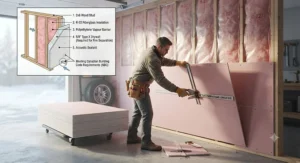
A common first-30-days mistake is skipping the vapour barrier or thermal barrier requirement entirely — most Canadian building codes require a code-compliant thermal barrier like drywall over exposed foam insulation for fire-safety reasons, and skipping it can be a real liability issue, not just a cosmetic one. Budget for that finishing layer in your original cost estimate rather than treating it as optional.
✨ Don’t Miss These Exclusive Deals!
🔍 Take your garage insulation project to the next level with these carefully selected products. Click on any highlighted item to check current pricing and availability. These picks will help you create a genuinely warmer, more usable garage your whole household will appreciate.
Real-World Scenarios: Matching Insulation to Your Garage
The weekend workshop owner: If you’re running power tools in a detached garage a few evenings a week and want to cut noise reaching the house, the ROCKWOOL Safe’n’Sound Acoustic Batt is the logical starting point — it handles both the thermal and acoustic side of the equation without needing to layer two separate products. Budget roughly C$400–C$700 in materials for a single-car bay, depending on wall height and how much of the ceiling you’re also covering.
The budget-conscious first-time homeowner: If the priority is simply stopping the garage from being unbearably cold before winter hits, and money is genuinely tight, the Owens Corning EcoTouch PINK FIBERGLAS R20 Batt paired with basic air sealing gets you 80 percent of the comfort improvement for maybe 40 percent of the cost of a full rigid-foam retrofit.
The converted-garage gym or office user: Someone spending hours a day in the space, year-round, in a colder climate zone, benefits most from combining approaches — batt insulation in open cavities plus a layer of IKO Enerfoil Polyiso Board over masonry sections for maximum R-value where wall depth allows it. This scenario justifies the higher material spend because daily comfort, not occasional use, is the goal.
Common Garage Insulation Problems (And How to Solve Them)
Problem: The garage still feels cold even after insulating. This is almost always an air-sealing issue, not an insulation-quality issue — uninsulated garage doors and unsealed gaps around service doors let conditioned air escape regardless of how good your wall insulation is. Pair any wall upgrade with a garage door insulation kit and weatherstripping.
Problem: Condensation or dampness behind rigid foam board. This usually means moisture is getting trapped between the foam and an unsealed wall surface. Seal all seams with foil tape and confirm the board is rated for the specific wall type (below-grade walls need boards like DOW STYROFOAM Brand SM Blue XPS Board specifically).
Problem: Fiberglass batt sagging or losing loft after a year. This typically points to a gap-filled or compressed install rather than a product defect — batt insulation needs to fully fill the cavity depth without being crammed in, since compression reduces the trapped air that actually provides the R-value.
Problem: Budget doesn’t stretch to insulate the whole garage at once. Prioritize the wall shared with living space first, then the garage door, then remaining walls — this sequencing captures the biggest comfort gain per dollar spent rather than spreading a thin budget evenly across every surface.
How to Choose Insulation for Garage Walls
- Confirm your wall type first. Open stud cavities call for batt; masonry, block, or metal walls call for rigid board or reflective systems — this single factor eliminates half the options immediately.
- Check your climate zone’s recommended R-value. Colder regions generally warrant stacking approaches (batt plus continuous rigid foam) rather than relying on a single thin layer.
- Decide if the garage will be heated. An unheated storage garage rarely justifies premium polyiso or reflective systems; a heated workshop or living space almost always does.
- Factor in moisture exposure. Below-grade or frequently damp walls need closed-cell rigid foam, not fibrous batt, which can hold moisture and lose performance.
- Weigh acoustic needs. If tools, compressors, or a home gym are involved, a dual-purpose product like acoustic stone wool batt earns its premium.
- Set a realistic material budget before shopping. Knowing whether you’re working with C$300 or C$1,500 up front prevents mid-project compromises that leave a wall half-insulated.
- Confirm code requirements for a thermal barrier. Provincial building codes generally require drywall or an equivalent thermal barrier over exposed foam insulation, so factor that finishing cost into your plan from the start.
Batt vs Foam Board Insulation: Which Wins for Garage Walls?
This is the comparison most DIYers actually get stuck on, and the honest answer is: it depends entirely on your wall structure and moisture exposure, not on which product is objectively “better.” Batt insulation — whether fiberglass like the Owens Corning EcoTouch PINK FIBERGLAS R20 Batt or stone wool like the ROCKWOOL Comfortbatt R14 — wins decisively on cost per square foot and installation speed, provided you have open stud cavities to work with. It’s the faster, cheaper route for a straightforward wood-framed garage.
Rigid foam board, represented here by the Owens Corning FOAMULAR 250 XPS Board, DOW STYROFOAM Brand SM Blue XPS Board, and IKO Enerfoil Polyiso Board, wins on moisture resistance, continuous coverage that eliminates thermal bridging at the studs, and higher R-value per inch — polyiso in particular delivers roughly 30 percent more R-value per inch than standard XPS. The trade-off is cost and installation complexity; foam board generally needs furring strips, adhesive, or mechanical fasteners rather than a simple friction fit.
| Factor | Batt Insulation | Rigid Foam Board |
|---|---|---|
| Cost per sq ft | Lower | Higher |
| Moisture resistance | Poor to moderate | Excellent (XPS/polyiso) |
| R-value per inch | R3.0–R4.3 | R5–R6.5 |
| Best wall type | Open stud cavities | Masonry, block, continuous |
| Install difficulty | Low (DIY-friendly) | Moderate (tools, fasteners) |
Reading the table, the practical takeaway is that most garages actually benefit from a hybrid approach rather than picking one camp exclusively — batt inside open cavities where it’s cheap and effective, rigid foam layered over masonry sections or as a continuous exterior layer where moisture or thermal bridging is a genuine concern. Treating this as an either/or decision usually leaves performance on the table somewhere in the wall assembly.
Insulating Garage Ceiling vs Walls: What Actually Matters
The instinct to insulate the ceiling first — especially under a bonus room or with an unheated attic above — is reasonable, but for most attached garages, the walls deserve priority. Walls typically share more direct surface area with heated living space (an adjoining kitchen, mudroom, or bedroom wall) than the garage ceiling does, meaning wall heat loss more directly undermines your home’s overall energy efficiency, not just the garage’s own comfort.
That said, ceiling insulation matters more in specific scenarios: garages with living space directly above them, or detached garages with minimal roof insulation where heat simply rises and escapes through an uninsulated roof deck. In those cases, ceiling insulation — often the same batt or rigid foam products used on walls — should be tackled alongside or even before wall work.
The practical sequencing most contractors recommend: insulate the shared wall with the house first, then the garage door, then remaining walls, then the ceiling last, unless there’s finished living space directly overhead, in which case the ceiling jumps to the top of the list. This order captures the largest comfort and energy gains earliest in the project, which matters if budget constraints mean the work happens over multiple phases rather than all at once.
Garage Insulation Cost in Canada: What You’ll Actually Pay
Total project cost depends heavily on garage size, wall type, and whether you’re doing the labour yourself. For a single-car garage with open stud cavities, DIY batt insulation typically runs C$300–C$600 in materials alone; a double-car garage roughly doubles that range. Rigid foam projects run higher — C$500–C$1,200 for a single-car garage once furring strips, adhesive, and finishing materials are factored in — reflecting both the higher per-sheet cost and the additional labour of a proper continuous-insulation assembly.
| Project Scope | DIY Batt (Materials Only) | DIY Rigid Foam (Materials Only) | Professional Install (Labour + Materials) |
|---|---|---|---|
| Single-car garage | C$300–C$600 | C$500–C$1,200 | C$1,200–C$2,500 |
| Double-car garage | C$600–C$1,100 | C$1,000–C$2,200 | C$2,200–C$4,500 |
The jump from DIY materials-only to professional installation reflects labour, not just markup — proper vapour barrier detailing, code-compliant drywall finishing, and careful seam-sealing on rigid foam all take real time to do correctly. It’s also worth noting that the Canada Greener Homes Grant is no longer accepting new applicants as of this writing, though the Canada Greener Homes Loan remains open for eligible retrofits, so it’s worth checking current program status before assuming a rebate will offset your material costs.
🔥 Ready to Upgrade Your Garage?
⚡ Stop losing heat through bare studs and cold concrete. Browse the products above, check current availability, and start your garage insulation project this weekend — your future self will thank you the first time a Canadian cold snap hits.
Common Mistakes When Buying Garage Wall Insulation
The most frequent misstep is buying insulation before confirming wall type — plenty of homeowners purchase a stack of fiberglass batt only to discover their garage has solid block walls with no cavity to install it in. Always confirm your wall construction before shopping.
A close second is underestimating coverage needs and buying short, which leads to mismatched batches from different manufacturing runs (a minor but real issue with slight R-value or dimension variance) or a rushed, incomplete install. Measure total wall square footage, subtract door and window area, then add roughly 10 percent for cutting waste and mistakes.
Buyers also frequently skip the thermal barrier requirement, installing exposed rigid foam board without a drywall or equivalent covering — this isn’t just a fire-code technicality, foam insulation left exposed genuinely does burn faster and produce more toxic smoke than covered assemblies. Finally, don’t assume higher R-value automatically means better value; an R13 polyiso board that fits a tight cavity properly outperforms an R20 batt installed with gaps and compression every time. Installation quality consistently matters as much as the number on the package.
Safety, Building Code & Fire-Rating Requirements
Garage insulation isn’t purely a comfort decision — it intersects with real building code and fire-safety requirements, particularly for attached garages sharing walls with living space. Most Canadian jurisdictions require a fire-rated thermal barrier, typically 12.7mm (1/2″) drywall, over any exposed foam insulation in a garage, precisely because foam products can ignite and burn faster than covered assemblies once exposed to flame.
For attached garages specifically, the wall shared with the house typically needs to meet a minimum fire-separation rating under provincial building codes — this is worth confirming with local authorities before finalizing your insulation plan, since requirements vary somewhat by province and by whether the garage is attached or detached. Products like the ROCKWOOL Comfortbatt R14 and ROCKWOOL Safe’n’Sound Acoustic Batt offer a genuine advantage here thanks to stone wool’s inherent non-combustibility, though they still require the same drywall thermal barrier as any other insulation type once installed.
If you’re insulating a garage that houses vehicles, gas-powered equipment, or stored fuel, ventilation planning matters alongside insulation — a well-sealed, well-insulated garage traps fumes more effectively than a leaky one, so factor in a proper ventilation strategy rather than treating airtightness as a purely positive outcome. When in doubt on any code question specific to your municipality, a quick call to your local building department beats guessing after the drywall is already up.
Frequently Asked Questions
❓ What is the best R-value for garage walls in Canada?
❓ Can I insulate a garage wall without removing drywall?
❓ Is rigid foam board better than batt insulation for garages?
❓ Do I need a vapour barrier when insulating garage walls?
❓ How much does it cost to insulate a two-car garage in Canada?
Conclusion
Insulation for garage walls isn’t a one-size-fits-all decision, and honestly, that’s good news — it means there’s a real, cost-appropriate option whether you’re stretching a tight renovation budget or building out a serious heated workshop. Batt insulation like the Owens Corning EcoTouch PINK FIBERGLAS R20 Batt and ROCKWOOL Comfortbatt R14 remains the fastest, cheapest route for standard stud-framed walls. Rigid foam options like the Owens Corning FOAMULAR 250 XPS Board, DOW STYROFOAM Brand SM Blue XPS Board, and IKO Enerfoil Polyiso Board earn their higher price tag on masonry, damp, or space-constrained walls. And specialty products like the PRODEX Total Reflective Insulation Roll and ROCKWOOL Safe’n’Sound Acoustic Batt solve genuinely specific problems — stud-less walls and noise control, respectively — that generic batt simply can’t touch.
The real lesson across all seven products is that installation quality and matching the product to your actual wall type matters more than chasing the single highest R-value number on a shelf tag. Confirm your wall construction, set a realistic budget, don’t skip the thermal barrier requirement, and you’ll end up with a garage that’s genuinely more comfortable through a Canadian winter — not just insulation sitting behind drywall doing less than it should.
🎯 Start Your Garage Insulation Project Today
🏠 You’ve got the product breakdown, the cost ranges, and the buying checklist — now it’s just a matter of picking up materials and getting the first wall done before the next cold snap rolls in.
Recommended for You
- 7 Best Propane Tank Top Heater Picks for Canadian Winters (2026)
- Space Heater for Workshop: 7 Picks That Actually Work (2026)
- Propane Garage Heater 2026: 7 Best Picks for Canada
Disclaimer: This article contains affiliate links. As an Amazon Associate, I earn from qualifying purchases. If you purchase products through these links, we may earn a small commission at no additional cost to you.
✨ Found this helpful? Share it with your friends! 💬🤗
