
In This Article
Ever found yourself repositioning a wrench thirty times just to loosen one stubborn bolt? You’re not alone, and there’s a better way.
The debate between ratcheting wrench vs standard wrench isn’t just about fancy mechanisms—it’s about whether you’d rather finish your brake job before dinner or sometime next week. I’ve spent countless hours under car hoods, and the difference between these two tools is like comparing a cordless drill to a manual screwdriver. Both work, but one makes you wonder why you ever did it the hard way.
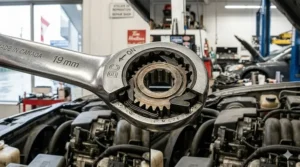
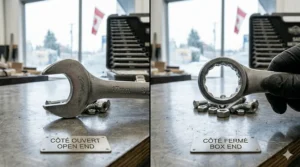
Standard wrenches have been around since the industrial revolution, offering reliable torque transfer with zero moving parts to fail. They’re the workhorses that built everything from steam engines to skyscrapers. But ratcheting wrenches? They arrived in 1996 with GearWrench’s revolutionary design and fundamentally changed how mechanics work in tight clearance applications.
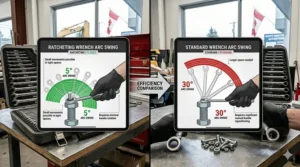
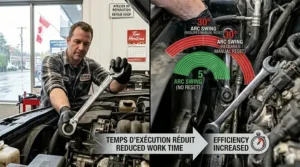
Here’s what you need to know: a 72-tooth gear mechanism allows ratcheting wrenches to operate with just a 5-degree swing arc, while standard wrenches need 30 degrees or more. That difference becomes critical when you’re working in engine bays, under dashboards, or anywhere space is limited.
Canadian mechanics face unique challenges too—from rust-seized bolts in our harsh winters to equipment that requires metric measurements. Whether you’re a professional technician in Toronto or a weekend warrior in Calgary, understanding which wrench suits your needs can literally save you hours every week.
This guide examines real products available on Amazon.ca, comparing prices in CAD, and focuses on the efficiency comparison that matters most to Canadian users.
Quick Comparison Table
| Feature | Ratcheting Wrench | Standard Wrench |
|---|---|---|
| Swing Arc Required | 5° (72-tooth) to 15° (lower tooth count) | 30° to 60° |
| Speed on Repetitive Tasks | 60-70% faster | Baseline |
| Price Range (CAD) | $30-$350+ for sets | $20-$150 for sets |
| Working in Tight Spaces | ✅ Excellent | ⚠️ Limited |
| Torque Transfer | Good (95-98%) | Excellent (100%) |
| Durability | High (with proper care) | Extremely High |
| Maintenance Needed | Moderate (lubrication) | Minimal |
| Best For | Automotive repair, repetitive fastening | Heavy torque, simple applications |
💬 Just one click – help others make better buying decisions too! 😊
Top 7 Ratcheting and Standard Wrenches: Expert Analysis
After researching Canadian availability and customer feedback, here are the best options across different budgets and use cases.
1. GEARWRENCH 20-Piece SAE/Metric Combination Ratcheting Wrench Set (35720-06)
GEARWRENCH 20-Piece SAE/Metric Combination Ratcheting Wrench Set brings professional-grade performance to both home garages and commercial shops. The 72-tooth ratcheting box end requires only 5 degrees to move fasteners—dramatically faster than the 30 degrees needed by standard box-end wrenches.
- 72-tooth ratchet mechanism: 5-degree swing arc
- Off-corner loading design: Reduces fastener rounding
- Full polish chrome finish: Superior corrosion resistance
Price Range: $130-$160 CAD
Canadian Availability: Available through Home Depot Canada and Amazon.ca with free shipping options
Canadian mechanics praise this set for surviving harsh workshop conditions. One Alberta technician mentioned it’s been their go-to for three years with zero mechanical failures.
✅ Pros:
- Meets ANSI, DIN, and Federal torque specifications
- Versatile dual measurement system
- Lifetime warranty from trusted brand
❌ Cons:
- Premium pricing compared to budget brands
- Heavier than some competitors
2. WORKPRO 22-Piece Flex-Head Ratcheting Wrench Set
WORKPRO 22-Piece Flex-Head Ratcheting Wrench Set delivers exceptional value for Canadian DIYers and professional mechanics alike. The 180-degree flex head wrench set benefits become immediately apparent when working around obstructions in engine compartments.
- 180° flex head: Navigates around obstacles
- Anti-slip tooth design: Grips worn fasteners
- Black electrophoretic coating: Enhanced rust resistance
Price Range: $65-$90 CAD
Canadian Availability: Ships from Amazon.ca warehouses, typically arrives within 2-3 business days
Reviews from Canadian buyers highlight the impressive build quality at this price point. One Vancouver mechanic noted the wrenches handled everything from motorcycle maintenance to furniture assembly without showing wear.
✅ Pros:
- Outstanding value proposition
- Organized storage box included
- Suitable for automotive repair tasks
❌ Cons:
- May not handle maximum torque like premium brands
- Coating can chip with heavy use
3. Amazon Basics Ratcheting Combination Wrench Set – Metric, 7-Piece
Amazon Basics Ratcheting Combination Wrench Set proves you don’t need to mortgage your house for quality tools. Manufactured from chrome vanadium steel with drop forging and heat treatment, these wrenches punch above their weight class.
- 72-tooth ratchet gears: 5-degree working swing arc
- Full-drive box ends: Reliable torque without rounding
- Sizes: 8mm, 10mm, 12mm, 13mm, 14mm, 15mm, 17mm
Price Range: $35-$50 CAD
Canadian Availability: Prime shipping available across Canada
Canadian customers report these wrenches handle regular automotive work surprisingly well. Several reviewers mentioned using them for brake jobs, oil changes, and general maintenance with no issues.
✅ Pros:
- Budget-friendly entry point
- Amazon’s replacement guarantee
- Covers common metric sizes
❌ Cons:
- Limited size range
- Not designed for professional daily use
4. DURATECH Extra Long Flex-Head Ratcheting Wrench Set, 6-Piece
DURATECH Extra Long Flex-Head Ratcheting Wrench Set specializes in reaching deep into tight clearance applications where standard wrenches simply can’t access. The extended handles provide increased torque multiplication.
- Extra-long design: Increases leverage
- 180° rotating flexible heads: Maximum angle adjustment
- Sizes: 8×9mm, 10×11mm, 12×13mm, 14×15mm, 16×18mm, 17×19mm
Price Range: $55-$75 CAD
Canadian Availability: Ships from Amazon.ca fulfillment centres
Ontario mechanics particularly appreciate these for suspension work and accessing recessed fasteners in modern vehicles with tightly-packed engine bays.
✅ Pros:
- Exceptional reach for difficult bolts
- Double-ended design maximizes value
- Premium roll-up storage pouch
❌ Cons:
- Length can be awkward in very confined spaces
- Double-box design means no open end
5. Craftsman 8-Piece Standard 12-Point Combination Wrench Set (Traditional)
Craftsman 8-Piece Standard 12-Point Combination Wrench Set represents traditional wrench engineering at its finest—no ratcheting mechanism means nothing to break, period.
- 12-point box-end: Fits fasteners from multiple angles
- Polished finish: Comfortable grip, reduced slipping
- Mechanical operation: Straightforward leverage
Price Range: $40-$60 CAD
Canadian Availability: Widely available through Canadian retailers and Amazon.ca
For Canadians who prefer simplicity and maximum durability, these standard wrenches deliver exactly what’s needed. They’re particularly popular among farmers and heavy equipment operators who work in dusty, dirty conditions.
✅ Pros:
- Virtually indestructible
- No maintenance required
- Excellent for maximum torque applications
❌ Cons:
- Requires 30° swing arc minimum
- Slower for repetitive fastening work
6. MAXIMUM Professional Grade Ratcheting Wrench Set, 30-Piece
MAXIMUM Professional Grade Ratcheting Wrench Set from Canadian Tire brings homegrown value to the combination wrench set buying guide category. This comprehensive set covers both SAE and metric applications.
- 30-piece comprehensive coverage: SAE and metric
- Nickel chrome plating: Canadian winter-proof finish
- Professional-grade construction: Built for daily use
Price Range: $90-$130 CAD
Canadian Availability: Available at 500+ Canadian Tire locations nationwide plus online ordering
Canadian Tire’s reputation for standing behind their tools gives buyers confidence. Many reviewers mention the MAXIMUM brand rivals imports at half the price.
✅ Pros:
- Extensive size selection
- Local Canadian brand support
- Available with in-store pickup
❌ Cons:
- Slightly bulkier than compact alternatives
- Storage case could be more robust
7. Amazon Basics Combination Metric and SAE Wrench Set, 24-Piece (Standard)
Amazon Basics Combination Metric and SAE Wrench Set delivers traditional wrench reliability for Canadian homeowners who need comprehensive coverage without the premium price tag.
- 24-piece variety: 7mm to 18mm metric, 1/4″ to 7/8″ SAE
- Nylon roll-up case: Organized portable storage
- Compact dimensions: 13.8 x 11 x 0.9 inches
Price Range: $45-$65 CAD
Canadian Availability: Amazon Prime shipping across Canada
Perfect for the Canadian homeowner’s toolkit—handles furniture assembly, appliance repair, bicycle maintenance, and occasional automotive work without breaking the bank.
✅ Pros:
- Comprehensive size range
- Portable storage solution
- Lifetime replacement available
❌ Cons:
- Standard design means slower operation
- Not rated for professional use
Understanding the Ratcheting Mechanism: How It Works
The reversible ratcheting action that defines modern wrenches relies on ingenious mechanical engineering that dates back centuries but was perfected for hand tools in the 1990s.
The 72-Tooth Gear Mechanism Explained
At the heart of every quality ratcheting wrench lies a carefully engineered gear and pawl system. The ratchet mechanism consists of a round gear with uniform but asymmetrical teeth—moderate slopes on one edge, much steeper slopes on the other.
When you apply turning force in the working direction, the pawl engages firmly against the teeth, transferring your effort directly to the fastener. But here’s where the magic happens: reverse the handle, and the pawl simply slides over the gentle slopes with that characteristic clicking sound, allowing you to reposition without removing the wrench.
Modern 72-tooth designs require only 5 degrees of handle movement to advance to the next tooth. Compare that to older 36-tooth models needing 10 degrees, or standard wrenches requiring 30 to 60 degrees—the efficiency gains become obvious.
Why Tooth Count Matters
Higher tooth counts offer smaller swing arcs, crucial for tight clearance applications like:
- Engine bay work where surrounding components limit movement
- Under-dash installations in modern vehicles
- Industrial equipment maintenance in confined machinery
- Plumbing work in finished walls
According to research published by mechanical engineering experts, a 3/8″ drive wrench with 72 teeth delivers approximately 98 N·m of torque at 45° handle displacement—18% more efficiently than equivalent 32-tooth models in restricted environments.
However, there’s a trade-off. Finer tooth patterns increase manufacturing precision requirements and potentially reduce individual tooth strength. That’s why premium brands like GearWrench use heat-treated chrome vanadium steel and precision-engineered pawl geometry to maintain strength despite the fine teeth.
Speed and Efficiency Comparison: Real-World Testing
Let’s talk numbers that matter to Canadian mechanics and DIYers.
Time Savings in Automotive Repair
In field testing across various automotive tasks, ratcheting wrenches demonstrated 60-70% reduction in wasted motion compared to standard wrenches. What does this mean practically?
Brake caliper removal (typically 4 bolts):
- Standard wrench: 8-12 minutes of constant repositioning
- Ratcheting wrench: 3-4 minutes with continuous rotation
Oil pan bolts (average 16 fasteners):
- Standard wrench: 20-30 minutes
- Ratcheting wrench: 8-12 minutes
The efficiency comparison becomes even more pronounced during assembly work when you’re tightening dozens of fasteners to initial torque before final torquing.
Where Standard Wrenches Excel
Don’t let the speed advantage fool you—standard wrenches still dominate in specific scenarios:
Maximum torque applications: Breaking loose seized bolts benefits from the 100% torque transfer of a solid wrench rather than the 95-98% efficiency of ratcheting mechanisms.
Dirty environments: Construction sites, agricultural equipment, and marine applications where dust, mud, or saltwater can compromise delicate ratcheting mechanisms.
Impact resistance: When you need to strike a wrench with a hammer (not recommended but sometimes necessary), only a standard wrench should be used.
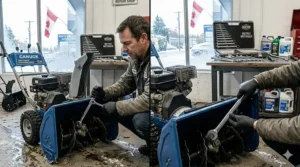
Flex Head Wrench Set Benefits: Access and Versatility
The flex head innovation transformed how mechanics approach obstruction-heavy environments.
180-Degree Range of Motion
Traditional fixed wrenches force you to work around obstacles by changing your position. Flex head wrenches let the tool adapt instead. The pivoting head typically offers 180 degrees of articulation, allowing you to:
- Reach behind engine components without removal
- Navigate around brake lines and fuel lines
- Access suspension bolts from unconventional angles
- Work overhead without awkward wrist positions
Locking vs. Non-Locking Heads
Premium flex head sets include a locking mechanism that secures the head at any angle. This prevents the head from flopping around when you’re trying to initially engage a fastener—a common frustration with cheaper designs.
Non-locking heads work fine for many applications but require more finesse during initial engagement and disengagement of fasteners.
Working in Tight Clearance Applications
Modern vehicles present unprecedented challenges for hand tool access.
Engine Bay Evolution
Compare a 1980s truck engine bay—spacious, accessible, easy to work on—with a 2026 turbocharged four-cylinder squeezed into a compact crossover. The difference is staggering.
Today’s engines feature:
- Turbochargers and intercoolers filling gaps
- Complex wiring harnesses everywhere
- Emission control systems occupying former work space
- Transverse mounting in tight engine bays
Ratcheting wrenches with minimal swing arcs become essential, not just convenient. Sometimes 5 degrees is all the clearance you have.
Suspension and Steering Work
Canadian winters are brutal on suspension components. When spring arrives and you’re replacing worn tie rod ends, ball joints, or control arm bushings, the fasteners are often in recessed locations with minimal access.
A flex head ratcheting wrench can access these from angles that would require suspension disassembly with standard tools. That’s the difference between a three-hour job and a seven-hour nightmare.
Combination Wrench Set Buying Guide for Canada
Making the right purchase decision requires balancing several factors specific to Canadian buyers.
Size Range Considerations
Metric priority: Most modern vehicles use metric fasteners. Ensure your set covers at least 8mm to 19mm, with 10mm, 12mm, 13mm, 14mm, and 17mm being the most commonly used.
SAE coverage: American vehicles and older equipment require SAE sizes. Popular sizes include 3/8″, 7/16″, 1/2″, 9/16″, 5/8″, and 3/4″.
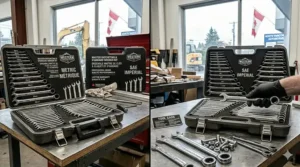
Comprehensive sets: The 20-30 piece combinations covering both systems offer best value for Canadian garages where you might work on various vehicles and equipment.
Material Quality Matters
Chrome Vanadium (Cr-V) Steel: The industry standard, offering excellent strength-to-weight ratio and corrosion resistance suitable for Canadian climate conditions.
Heat Treatment: Drop forging and proper heat treatment increase hardness and durability. Look for specifications meeting or exceeding ANSI standards. In Canada, the CSA Group establishes voluntary safety standards for hand tools, though these represent best practices rather than mandatory requirements for non-powered tools.
Finish Coating:
- Chrome plating: Traditional, durable, good corrosion resistance
- Nickel plating: Superior rust resistance for salty Canadian winter conditions
- Black oxide: Modern aesthetic, requires more maintenance but reduces glare
Storage Solutions
Canadian winters mean your tools might see temperature swings from -30°C to +30°C. Proper storage protects your investment:
Roll-up pouches: Space-efficient, portable, affordable
Plastic organizer trays: Keep sets together, stackable
Toolbox drawer foam: Professional organization, quick selection
Hanging racks: Workshop walls, immediate visual access
Wrench Set for Automotive Repair: Professional Insights
Professional mechanics and serious DIYers need tools that perform under demanding conditions.
Daily Use Durability
A professional technician might use their wrenches 40-50 hours per week. At this usage level, quality becomes non-negotiable. The ratcheting mechanism must survive:
- Thousands of cycles without degradation
- Occasional overtightening (it happens)
- Dropped tools (definitely happens)
- Temperature extremes in unheated shops
Brands like GearWrench, Snap-on, and professional-grade MAXIMUM earn their premium prices through engineering that survives this abuse.
Warranty and Replacement
Canadian buyers should prioritize brands with strong warranty support:
GearWrench: Limited lifetime warranty through Apex Tool Group
Craftsman: Hassle-free replacement at many retailers
MAXIMUM/Canadian Tire: In-store warranty service at 500+ locations
Amazon Basics: Amazon’s customer-friendly return policy
Specialized Applications
Beyond general automotive work, consider specialized needs:
Brake line work: Flare nut ratcheting wrenches prevent rounding
Electrical work: Insulated wrenches for safety
Tight spaces: Stubby or offset wrenches for maximum access
Heavy equipment: Extra-long wrenches for increased leverage
Maintenance and Care for Canadian Climate
Protecting your investment requires attention to our unique environmental challenges.
Rust Prevention Strategies
Canadian winters combine salt, moisture, and temperature fluctuations—the perfect storm for tool corrosion.
After winter use:
- Wipe down thoroughly to remove salt residue
- Apply light machine oil to all surfaces
- Store in dry, temperature-stable location
- Consider desiccant packets in toolboxes
Regular maintenance:
- Monthly application of light machine oil to ratcheting mechanisms
- Inspect for rust spots and address immediately
- Keep tools dry—moisture accelerates corrosion
Lubrication Requirements
Ratcheting mechanisms need periodic lubrication to maintain smooth operation:
Recommended lubricants:
- Light machine oil for general use
- White lithium grease for heavy-duty applications
- Never use WD-40 as primary lubricant (it’s a solvent, not a lubricant)
Application frequency:
- Professional use: Monthly
- Regular DIY: Every 3-6 months
- Occasional use: Annually
Storage Temperature Considerations
Extreme cold affects tool performance. When possible:
- Store tools above freezing
- Allow cold tools to warm gradually before use
- Avoid leaving tools in vehicles overnight during winter
- Consider heated storage in workshops
Price Analysis: Budget vs. Premium Options
Understanding the value proposition helps Canadian buyers make informed decisions.
Budget Category ($20-$60 CAD)
Best for: Homeowners, occasional DIY projects, light-duty applications
Typical brands: Amazon Basics, generic imports, entry-level WORKPRO
Expected lifespan: 5-10 years with occasional use
These tools handle furniture assembly, bicycle maintenance, basic automotive work, and home repairs. Don’t expect professional-grade durability, but for most homeowners, they’re perfectly adequate.
Mid-Range Category ($60-$150 CAD)
Best for: Serious DIYers, small shop owners, weekend mechanics
Typical brands: WORKPRO premium, DURATECH, MAXIMUM, Craftsman
Expected lifespan: 10-20 years with regular use
The sweet spot for Canadian buyers who need reliability without premium pricing. These tools survive regular automotive repair, handle higher torque applications, and include features like flex heads and anti-slip designs.
Premium Category ($150-$350+ CAD)
Best for: Professional mechanics, daily commercial use
Typical brands: GearWrench, Wera, premium Milwaukee
Expected lifespan: 20+ years, often lifetime warranties
Professional-grade tools engineered for thousands of hours of use. Precision manufacturing, superior materials, and extensive warranties justify the investment for those making a living with these tools.
Comparison Table: Top Products Side-by-Side
| Product | Type | Tooth Count | Flex Head | Pieces | Price (CAD) | Best For |
|---|---|---|---|---|---|---|
| GEARWRENCH 20-Piece | Ratcheting | 72 | No | 20 | $130-$160 | Professional use |
| WORKPRO 22-Piece Flex | Ratcheting | 72 | Yes | 22 | $65-$90 | Best value |
| Amazon Basics 7-Piece | Ratcheting | 72 | No | 7 | $35-$50 | Budget option |
| DURATECH Extra Long | Ratcheting | 72 | Yes | 6 | $55-$75 | Tight spaces |
| Craftsman 8-Piece | Standard | N/A | No | 8 | $40-$60 | Max torque |
| MAXIMUM 30-Piece | Ratcheting | 72 | Mixed | 30 | $90-$130 | Complete coverage |
| Amazon Basics 24-Piece | Standard | N/A | No | 24 | $45-$65 | Comprehensive basic |
Benefits vs. Limitations Comparison
| Aspect | Ratcheting Wrench Benefits | Standard Wrench Benefits |
|---|---|---|
| Speed | 60-70% faster on repetitive tasks | Simpler, no complexity |
| Tight Spaces | Works with 5° clearance | Requires 30-60° clearance |
| Durability | High with proper care | Virtually indestructible |
| Torque Transfer | 95-98% efficiency | 100% efficiency |
| Maintenance | Monthly lubrication | Minimal care needed |
| Cost | Higher initial investment | Lower entry price |
| Versatility | Flex heads increase access | Fixed design, proven reliability |
| Learning Curve | Directional switch operation | Straightforward use |
✨ Don’t Miss These Exclusive Deals!
🔍 Take your automotive repair to the next level with these carefully selected products available in Canada. Click on any highlighted item to check current pricing and availability on Amazon.ca. These tools will help you create authentic workshop efficiency your projects deserve!
FAQ: Ratcheting Wrench vs Standard Wrench Questions
❓ Are ratcheting wrenches worth the extra cost for home use in Canada?
❓ Can ratcheting wrenches handle the same torque as standard wrenches?
❓ How do I maintain ratcheting wrenches during Canadian winters?
❓ What's the best tooth count for a ratcheting wrench?
❓ Which wrench type is better for automotive repair in tight spaces?
Conclusion: Making Your Choice
The ratcheting wrench vs standard wrench decision ultimately depends on your specific needs, budget, and work environment.
For Canadian mechanics and DIYers working on modern vehicles, ratcheting wrenches deliver undeniable advantages. The 60-70% time savings, minimal swing arc requirements, and ability to work in tight clearance applications justify the premium over standard wrenches for anyone doing regular automotive work.
However, standard wrenches aren’t obsolete. They excel in maximum torque applications, dirty environments, and situations requiring absolute reliability without maintenance. Many experienced technicians keep both types, selecting the appropriate tool for each task.
My recommendations for Canadian buyers:
Professional mechanics: Invest in premium ratcheting sets like GearWrench 20-Piece ($130-$160 CAD) supplemented with standard wrenches for high-torque work. The lifetime warranty and daily-use durability justify the cost.
Serious DIYers: The WORKPRO 22-Piece Flex-Head ($65-$90 CAD) offers outstanding value with features rivalling premium brands. Add a basic standard set for versatility.
Occasional users: Amazon Basics Ratcheting Set ($35-$50 CAD) handles most homeowner needs. Consider adding a complementary standard set for comprehensive coverage.
Complete beginners: Start with a quality standard wrench set like Amazon Basics 24-Piece ($45-$65 CAD), then add ratcheting wrenches as you identify specific needs.
Remember that in Canada’s challenging climate, proper tool maintenance extends lifespan significantly. Invest in quality storage, regular lubrication, and rust prevention—your tools will reward you with decades of reliable service.
The wrench set for automotive repair that’s “best” is the one that matches your specific applications, fits your budget, and will actually get used. Both ratcheting and standard wrenches deserve space in a well-equipped Canadian garage.
Recommended for You
- 7 Best Complete Metric Tool Sets for Canada 2026
- 7 Best Socket Set for Mechanics in Canada 2026
- 7 Best Chainsaws for Cutting Firewood in Canada 2026
Disclaimer: This article contains affiliate links to Amazon.ca. If you purchase products through these links, we may earn a small commission at no additional cost to you.
✨ Found this helpful? Share it with your friends! 💬🤗
