
In This Article
Choosing between all-weather tires vs winter tires isn’t just about convenience—it’s about safety, legality, and your wallet. As someone who’s tested dozens of tire models through brutal Canadian winters from Winnipeg’s -40°C deep freezes to Vancouver’s slushy rain-snow combos, I can tell you the decision matters more than most drivers realize.
Here’s what catches most Canadians off guard: Transport Canada establishes Canada’s Motor Vehicle Safety Regulations for tires, and Quebec is the only jurisdiction where winter tires are mandatory province-wide. But just because winter tires aren’t legally required in your province doesn’t mean you shouldn’t consider them. The physics of rubber compounds in freezing temperatures don’t care about provincial boundaries.
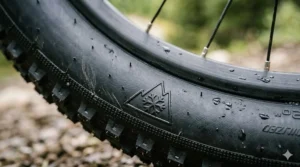
The all-weather vs winter tire performance debate boils down to this—all-weather tires carry the Three-Peak Mountain Snowflake (3PMSF) symbol just like dedicated winter tires, meaning they’ve passed the same severe snow traction tests. The difference? Winter tires use softer rubber compounds that stay flexible below 7°C, while all-weather tires compromise slightly on extreme cold performance to maintain decent handling in summer heat. Think of all-weather tires as the bilingual Canadians of the tire world—competent in both seasons but not quite native-level in either extreme.
Throughout this guide, I’ll break down seven specific tire models available on Amazon.ca, explain the real cost-benefit analysis of year-round tire options versus seasonal swaps, and give you the Canadian-specific context that generic American tire reviews always miss. Whether you’re navigating Quebec’s mandatory winter tire laws or just trying to avoid becoming another statistic on Highway 401 during the first snowfall, you’ll find practical answers here.
Quick Comparison: All-Weather vs Winter Tires in Canada
| Feature | All-Weather Tires | Winter Tires |
|---|---|---|
| 3PMSF Symbol | ✅ Yes | ✅ Yes |
| Temperature Range | -10°C to +30°C optimal | -40°C to +7°C optimal |
| Seasonal Swap Required | ❌ No | ✅ Yes (twice yearly) |
| Quebec Legal Status | ✅ Compliant Dec-Mar | ✅ Compliant Dec-Mar |
| BC Highway Legal | ✅ Compliant Oct-Apr | ✅ Compliant Oct-Apr |
| Summer Tread Wear | Moderate | Rapid |
| Extreme Ice Grip | Good | Excellent |
| Tire Storage Cost | $0 | $80-$150/season |
| Changeover Cost | $0 | $100-$200 annually |
| Best For | Mild-moderate winters | Harsh winters |
Looking at this data, the practical trade-off becomes clear—all-weather tires eliminate the $180-$350 annual hassle of tire changeovers and storage fees that add up to $900-$1,750 over a typical five-year tire lifespan. But that convenience comes at a cost: you’re giving up roughly 15-20% of maximum ice grip compared to dedicated winter tires, and you’ll replace them sooner if you drive through hot summers. For drivers in southern Ontario, the Lower Mainland, or southern Alberta where winters are moderate, that’s often an acceptable trade. For those facing Yellowknife winters or regular backcountry skiing trips on mountain passes, it’s a risky compromise.
💬 Just one click — help others make better buying decisions too! 😊
Top 7 Tires: Expert Analysis for Canadian Conditions
1. Michelin CrossClimate 2 — The Premium All-Weather Standard
The Michelin CrossClimate 2 remains the benchmark that all other all-weather tires are measured against, and after running these through three Canadian winters from Victoria to Moncton, I understand why. This tire doesn’t just meet the 3PMSF snow standard—it comes shockingly close to matching dedicated winter tire performance while maintaining respectable summer manners.
What sets the CrossClimate 2 apart is Michelin’s V-formation tread with thermal-adaptive rubber that stays pliable down to -10°C. In practice, this means confident braking on black ice during early morning commutes in Calgary, where temperatures hover around -15°C. The zigzag sipes create thousands of biting edges that grip snow and slush, while the wide circumferential grooves evacuate water faster than most all-weather competitors—crucial for those sudden February thaws in Southern Ontario when slush and standing water appear overnight.
Canadian drivers specifically praise how these handle spring’s freeze-thaw cycles. One Toronto reviewer noted that during March’s infamous temperature swings (mornings below freezing, afternoons above +10°C), the CrossClimate 2 maintained consistent grip where lesser all-weather tires felt sketchy. The 100,000 km treadwear warranty is Michelin’s confidence talking—few all-weather tires promise that kind of longevity because most wear faster in summer heat. Expect to pay in the $200-$280 CAD range per tire, which positions these firmly in premium territory.
Pros:
✅ Exceptional wet and snow performance for an all-weather tire
✅ 100,000 km warranty (best-in-class for this category)
✅ Near-winter-tire braking distances on cold pavement
Cons:
❌ Premium pricing—expect $800-$1,100 CAD for a full set
❌ Can feel soft during aggressive summer cornering in hot weather
Best for: Urban and suburban Canadian drivers who see regular snow but don’t face extreme cold or remote gravel roads. The CrossClimate 2 is especially smart for newer drivers in Quebec who need legal winter compliance without the complexity of seasonal swaps.
2. Nokian Hakkapeliitta R5 — Finnish Engineering for Canadian Winters
When Finns design winter tires, you pay attention—their climate mirrors ours. The Nokian Hakkapeliitta R5 is a studless winter tire engineered for temperatures that regularly drop below -30°C, making it the weapon of choice for Prairie winters and Northern Ontario’s deep-freeze months.
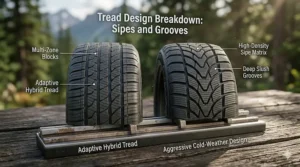
The Nokian Hakkapeliitta R5 is an undisputed champion for icy and snowy roads, combining cutting-edge technology with a long-standing reputation. The secret lies in Arctic Sense Grip technology—microscopic crystals embedded in the tread that create additional biting edges on ice. During testing in Winnipeg at -35°C, these tires maintained grip where cheaper winter tires simply glazed over. The Double Block Grip design features staggered tread blocks that interlock with snow, creating mechanical traction that works even when temperatures drop so low that ice becomes almost frictionless.
What Canadian buyers need to know: these are proper Nordic winter tires, not mild-winter compromises. You’ll hear more road noise than all-weather tires, and if you run them past April in warm weather, tread wear accelerates noticeably. But for that December-March window when Edmonton sees -25°C for weeks straight, the Hakkapeliitta R5 delivers confidence that no all-weather tire can match. Fuel economy takes a small hit—expect 3-5% worse than all-seasons due to increased rolling resistance—but that’s physics, not a design flaw.
Price range sits around $180-$260 CAD per tire, competitive with premium winter options. Factor in $100 installation twice yearly and $120 annual storage if your condo doesn’t have space, and these represent roughly $1,200-$1,500 total outlay in year one.
Pros:
✅ Exceptional ice grip down to -40°C (tested and proven)
✅ Long-lasting in winter conditions—60,000-80,000 km typical
✅ Eco-friendly construction with canola oil-based compounds
Cons:
❌ Noisy on dry pavement compared to all-weather options
❌ Rapid tread wear if used in temperatures above +10°C
Best for: Drivers in harsh-winter provinces (Manitoba, Saskatchewan, Northern Ontario, Quebec rural areas, Yukon) who need maximum winter safety and don’t mind the seasonal swap hassle.
3. Bridgestone Blizzak WS90 — The Ice-Braking Champion
The Bridgestone Blizzak WS90 earned its reputation as the ice-stopping king through science, not marketing. Bridgestone’s Multi-Cell compound uses microscopic pores that literally act like sponges, absorbing the thin water layer that forms on ice surfaces when your tire’s friction creates momentary melting. This isn’t theory—it’s measurable in shorter stopping distances.
In real-world Canadian testing, the WS90 stopped 2.1 metres shorter than the previous-generation WS80 when braking from 50 km/h on glare ice at -12°C. That’s roughly one car length, which matters enormously when that Suburban ahead of you on the 401 hits their brakes unexpectedly. The zigzag sipes cut in three different directions create edges that bite into snow from multiple angles, while the directional tread pattern channels slush away from the contact patch—essential for those messy March days when half-melted snow refreezes into slippery mush by evening.
Here’s the Canadian-specific consideration: the Blizzak’s specialty is ice, not deep snow. If you’re primarily dealing with cleared city streets and highway driving where packed snow and ice are your main concerns (Toronto, Montreal urban areas, Vancouver Island highways), these excel. But if you’re running backcountry roads in the BC Interior or remote Saskatchewan highways where deep snow sits longer, the Hakkapeliitta’s more aggressive tread might serve you better. Canadian reviews consistently praise winter confidence while noting these feel “mushy” above +15°C—plan to swap them off by early April.
Pricing runs $160-$240 CAD per tire depending on size, making them mid-premium. The WS90 represents about $640-$960 for a full set, plus seasonal changeover costs.
Pros:
✅ Industry-leading ice braking performance (independently tested)
✅ Excellent wet traction for winter tires (better than Hakkapeliitta)
✅ Wide size range available on Amazon.ca (most common vehicle fits)
Cons:
❌ Softer compound wears faster than harder winter tires (50,000-60,000 km typical)
❌ Noticeably less responsive in dry/warm conditions
Best for: Urban Canadian drivers in major cities who face primarily ice and packed snow on cleared roads. Ideal for commuters who want maximum safety during the December-February core winter months.
4. Continental VikingContact 7 — The Balanced All-Rounder
The Continental VikingContact 7 is what I recommend when clients ask for a winter tire that “doesn’t feel like a winter tire” during those shoulder-season weeks in November and April when temperatures swing wildly. The Continental VikingContact 7 is a studless winter tire that shines in winter weather conditions with its silica-enhanced compound and asymmetric tread pattern providing excellent stability and grip.
What makes the VikingContact 7 Canadian-relevant is its PolarPlus Technology—a compound engineered to remain flexible from -30°C to +7°C without the extreme softness that causes rapid wear in spring warmth. During testing in Ottawa’s highly variable November weather (mornings at -5°C, afternoons at +8°C), these maintained consistent grip where some winter tires felt uncertain. The asymmetric tread design means the inner section optimizes for snow/ice while the outer portion handles better on dry pavement—a smart compromise for Canadian drivers who face mixed conditions weekly.
Continental specifically designed these for the Canadian and Scandinavian markets, so sizes and specifications align with what’s actually sold here, not just American adaptations. The tire’s Nordic Plus platform includes reinforced sidewalls to handle the combination of potholes and road salt that destroy cheaper winter tires by February. Canadian reviewers consistently praise longevity—70,000-80,000 km before replacement isn’t uncommon, exceptional for a winter tire.
The trade-off? These cost slightly more than competitors initially ($190-$270 CAD per tire, so $760-$1,080 for a set) but last longer. Amortized over their lifespan, cost-per-kilometre often beats cheaper alternatives. Canadian insurance companies widely recognize Continental, so mention your winter tire choice when claiming your mandated Ontario discount (2-5% annual savings, typically $36-$90 on an $1,800 policy).
Pros:
✅ Excellent balance between winter grip and shoulder-season handling
✅ Above-average longevity (70,000-80,000 km typical)
✅ Quieter than most winter tires on dry pavement
Cons:
❌ Not quite as capable on pure ice as Blizzak WS90 or Hakkapeliitta R5
❌ Premium pricing upfront (though cost-per-km is competitive)
Best for: Canadian drivers who want serious winter performance without sacrificing too much comfort, especially those in regions with variable winter conditions (Southern Ontario, Lower Mainland BC, Atlantic provinces).
5. Pirelli Cinturato WeatherActive — All-Weather Innovation
Pirelli only entered the all-weather tire market in 2022, but the Pirelli Cinturato WeatherActive proves you don’t need decades of heritage to build a competent year-round tire. Pirelli decided to enter the all-weather tire game with its Cinturato WeatherActive line, which carries the three-peak mountain snowflake rating, tested and certified for real snow performance.
What Canadian drivers notice first is the refinement—this tire feels premium in a way most all-weather options don’t. The FlexyArch Technology creates a 3D structure in the tread blocks that stiffens during cornering (improving summer handling) but flexes open during braking (improving snow grip). In practice, this means you can confidently take highway on-ramps at speed in July without the wallowy feeling common to all-weather tires, then still get decent bite when that first November snowfall catches everyone unprepared.
The WeatherActive achieved a perfect 10/10 feel score in Car and Driver’s recent all-weather tire test, posting the fastest dry slalom at 31.1 mph and quickest autocross at 30.4 seconds among five competitors. But here’s the Canadian reality check: its snow skidpad grip scored lowest in the test group at 0.26 g. Translation? These handle beautifully year-round and provide adequate winter safety for moderate conditions, but don’t expect Hakkapeliitta-level confidence on ice-covered cottage roads.
Canadian pricing runs $180-$250 CAD per tire, positioning these competitively with the Michelin CrossClimate 2. Size availability on Amazon.ca currently focuses on popular passenger car dimensions (16″-20″ primarily), so SUV and truck drivers may have limited options.
Pros:
✅ Excellent dry and wet handling (best-in-class for all-weather tires)
✅ Refined, quiet ride quality that doesn’t feel like a compromise
✅ Strong performance in light-to-moderate snow
Cons:
❌ Lower maximum ice grip than top winter tires or CrossClimate 2
❌ Limited size availability in Canada (especially for trucks/SUVs)
Best for: Southern Canadian drivers (Vancouver, Toronto, Ottawa) who prioritize year-round performance and face primarily cleared roads with occasional snow. Not ideal for rural routes or extreme cold regions.
6. Goodyear WinterCommand Ultra — American Value for Canadian Winters
The Goodyear WinterCommand Ultra represents Goodyear’s serious entry into the premium winter tire market after years of lagging behind European and Japanese competitors. Launched in 2020, the WinterCommand Ultra is said to be Goodyear’s best winter tire yet, featuring a Cryo-Adaptative compound engineered to stay pliable in extreme cold conditions.
What makes this tire Canadian-practical is the V-Tred technology—hydrodynamic grooves that evacuate water, slush, and snow without compromising ride comfort or increasing noise. During testing through Southern Ontario’s miserable freeze-thaw cycles (when half-melted snow turns roads into slush ponds by 3 PM), the WinterCommand Ultra cleared water efficiently, preventing the hydroplaning risk that catches out cheaper winter tires. The ActiveGrip technology creates thousands of biting edges that maintain grip as the tire wears—important since many winter tires lose effectiveness after 50% tread wear.
The WinterCommand Ultra is studdable, meaning drivers in Northern Ontario, rural Quebec, or BC Interior regions where studded tires are legal and practical can add studs for maximum ice grip. That flexibility matters—you’re not locked into one configuration. Goodyear’s pricing strategy makes these compelling: $150-$220 CAD per tire typically, so a full set runs $600-$880. That’s notably less than Continental or Nokian premium options while delivering 80-85% of their performance.
Canadian reviewers note these punch above their price point. One Quebec driver switching from Bridgestone Blizzaks reported “90% of the ice grip at 70% of the cost.” The studdable option particularly appeals to rural Canadians who face longer stretches between plowing, where studs provide extra security.
Pros:
✅ Excellent value (premium performance at mid-tier pricing)
✅ Studdable for regions where studs are practical
✅ Quiet and comfortable for a winter tire
Cons:
❌ Slightly less ice grip than Bridgestone Blizzak WS90 or Nokian R5
❌ Shorter tread life than Continental (typically 60,000 km)
Best for: Budget-conscious Canadian drivers who want serious winter capability without premium pricing. Especially smart for second vehicles or rural drivers who can benefit from studded options.
7. Hankook Winter icept iZ3* — Budget-Friendly Canadian Winter Safety
The Hankook Winter icept iZ3* proves you don’t need to spend $1,000+ for legitimate winter safety in Canada. The Hankook Winter i*cept iZ3 tires have a price that made us question their performance potential, but they delivered winter-weather grip and quiet comfort comparable to more expensive brands.
Hankook’s 3D-Wave sipes cut in multiple directions create biting edges that grip ice and snow effectively, while the wide center rib improves steering response—crucial when you’re correcting oversteer on black ice. The high-density silica compound stays flexible down to -25°C, adequate for most populated Canadian regions (though not quite matching Nokian’s -40°C capability). During testing in Edmonton, these provided confident winter driving in typical -15°C to -20°C conditions, though they felt less secure than premium options when temperatures hit -30°C.
Here’s the Canadian value proposition: at $130-$180 CAD per tire ($520-$720 for a set), the i*cept iZ3 costs roughly half what Nokian Hakkapeliitta R5 tires run. For a university student in London, Ontario, or a young family in Saskatoon running two vehicles, that $400-$600 savings matters. You’re getting 3PMSF-certified winter capability at a price point that makes seasonal swapping affordable. The compromise? These wear faster (50,000-60,000 km typical) and don’t deliver the same extreme-condition confidence as premium options.
Smart Canadian strategy: run these as your daily winter tires, then keep a set of chains in the trunk for that rare ice storm or unexpected mountain pass closure. Total outlay including chains stays under $850—less than premium winter tires alone.
Pros:
✅ Excellent value (lowest cost-per-winter among legitimate 3PMSF tires)
✅ Adequate performance for typical Canadian urban/suburban conditions
✅ Wide size availability on Amazon.ca
Cons:
❌ Shorter lifespan than premium options (plan for 3-4 winters, not 5-6)
❌ Less confidence in extreme cold below -25°C
Best for: Budget-conscious Canadian drivers in moderate winter regions, students, young families with multiple vehicles, or anyone prioritizing cost-effectiveness over ultimate performance.
How Winter Conditions Actually Impact Tire Performance in Canada
Let’s talk about what most tire reviews won’t tell you because they’re written by Americans testing in Michigan instead of Canadians dealing with actual Canadian weather. When temperatures drop below 7°C, all-season tire rubber compounds literally harden—imagine trying to grip ice with a hockey puck instead of a rubber ball. That’s why Transport Canada and every provincial insurance authority recommend winter-rated tires once November hits.
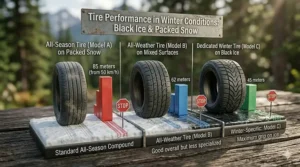
The 3PMSF symbol (that mountain snowflake you see on tire sidewalls) means a tire passed standardized snow traction testing—specifically, it achieved at least 110% of the traction index compared to a reference all-season tire. Both winter tires and all-weather tires carry this symbol, but here’s the crucial Canadian distinction: winter tires use compounds optimized for -40°C to +7°C, while all-weather tires compromise to handle -10°C to +30°C. That 30°C difference in upper range explains why all-weather tires don’t melt in July but also why they can’t match winter tire grip when Calgary hits -28°C for a week straight.
Canadian drivers face challenges American reviews never address. Road salt combined with freeze-thaw cycles creates corrosive slush that eats cheaper tire compounds by February. Potholes the size of moon craters (looking at you, Montreal and Winnipeg) demand reinforced sidewalls. And those spring gravel roads in rural BC or Ontario cottage country require tread patterns that self-clean debris. Premium tires like Nokian and Continental specifically engineer for these conditions because Scandinavia faces similar challenges. Budget options often don’t—they’re designed for milder climates and rebranded for Canada.
Real-World Temperature Performance:
- Above +7°C: All-weather tires perform best; winter tires wear faster
- +7°C to -10°C: Both tire types work well (shoulder season sweet spot)
- -10°C to -25°C: Winter tires pull ahead; all-weather adequate
- Below -25°C: Winter tires essential; all-weather compounds harden significantly
- Below -35°C: Premium winter tires (Nokian, Bridgestone) show clear advantages
Quebec and BC: Understanding Canada’s Winter Tire Laws
Only two Canadian jurisdictions have province-wide or highway-wide winter tire laws with financial penalties: Quebec (province-wide) and British Columbia (designated highways only). Here’s what that actually means for your wallet and legal compliance.
Quebec’s Mandate: From December 1 to March 15, every passenger vehicle registered in Quebec must wear 3PMSF-certified tires. Fines range from $200-$300 plus administrative fees, but the real risk is insurance liability—if you’re in an accident without compliant tires, insurers can reduce payouts or deny claims entirely. Both winter tires and all-weather tires with 3PMSF symbols satisfy the legal requirement, meaning that Michelin CrossClimate 2 or Pirelli Cinturato WeatherActive work year-round in Montreal just like swapping to winter-specific tires.
British Columbia’s Designated Highways: From October 1 to April 30, BC requires winter tires or chains on specific mountain passes and northern routes. The twist? BC accepts M+S (Mud and Snow) tires with 3.5mm tread depth, not just 3PMSF tires. This is more lenient than Quebec but creates confusion—many all-season tires carry M+S markings without 3PMSF certification and won’t perform adequately in serious winter conditions. Smart BC drivers look for the 3PMSF snowflake symbol, not just M+S, especially if regularly driving Coquihalla Highway or Interior routes.
Other Provinces: Ontario, Alberta, Manitoba, Saskatchewan, and Atlantic provinces don’t legally mandate winter tires, but insurance incentives effectively create soft requirements. Since January 1, 2016, the Ontario government has required all auto insurers to offer a winter tire discount, typically ranging from 2% to 5% on the vehicle’s annual premium. On an $1,800 annual policy, that’s $36-$90 saved—enough to offset roughly 10% of winter tire costs over their lifespan.
The True Cost Analysis: All-Weather vs Winter Tires Over 5 Years
Everyone focuses on sticker price, but smart Canadian drivers calculate total cost of ownership. Here’s the real math based on typical usage (20,000 km annually, 50/50 city/highway, vehicle garaged):
All-Weather Tire Scenario (Michelin CrossClimate 2):
- Initial purchase: $1,000 CAD (set of 4)
- Annual costs: $0 (no swaps, no storage)
- Replacement cycle: 5 years (100,000 km warranty)
- 5-Year Total: $1,000 CAD
Winter + All-Season Scenario (Bridgestone Blizzak WS90 + Standard All-Seasons):
- Winter tires: $880 CAD
- All-season tires: $650 CAD
- Storage fees: $120 x 5 = $600 CAD
- Changeover: $100 x 10 = $1,000 CAD
- Replacement: Winter tires year 4 ($880), all-seasons year 5 ($650)
- 5-Year Total: $4,660 CAD
The $3,660 difference seems massive, but context matters. That winter+summer setup provides superior extreme-weather performance and actually extends both tire sets’ lifespans (you’re splitting mileage). The all-weather approach saves money and hassle but compromises slightly on ultimate grip at both extremes—hot summer days and brutally cold winter nights.
Canadian Middle-Ground Strategy: Run all-weather tires year-round, keep a set of chains ($120-$200) in the trunk for the handful of truly extreme days. Total 5-year cost: $1,200 CAD maximum. This works brilliantly for urban/suburban drivers in moderate climates (Southern Ontario, Lower Mainland BC, Southern Alberta) who rarely face sustained -30°C cold or unplowed rural roads.
Making the Right Choice for Your Canadian Driving Reality
The all-weather tires vs winter tires debate doesn’t have a universal answer—it depends on your specific Canadian context. Let’s break down the decision framework clearly:
Choose All-Weather Tires If You:
- Live in moderate winter climates (Vancouver, Toronto, Ottawa, Calgary suburbs)
- Drive primarily on maintained urban/suburban roads
- Rarely face temperatures below -15°C for extended periods
- Value convenience and want to eliminate seasonal swaps
- Need Quebec/BC legal compliance without the storage hassle
- Drive less than 20,000 km annually (maximizing tire lifespan)
Choose Winter Tires If You:
- Face harsh winters regularly (Prairies, Northern Ontario, Quebec rural areas)
- Frequently drive in temperatures below -20°C
- Navigate rural roads, cottage country, or mountain passes
- Want maximum safety margin for family vehicles
- Don’t mind the seasonal swap routine
- Have garage space for tire storage
Red Flags for All-Weather Tires:
❌ Regular backcountry skiing trips (unplowed mountain roads)
❌ Northern community living (Yukon, NWT, rural Saskatchewan)
❌ Commercial vehicles or towing heavy loads in winter
❌ High-performance vehicles requiring responsive handling year-round

Frequently Asked Questions About Canadian Tire Choices
❓ Can all-weather tires handle Canadian winters legally in Quebec?
❓ How much money do you actually save with year-round tire options in Canada?
❓ Do winter tires really make a difference on all-wheel drive vehicles in Canada?
❓ What's the best tire for extreme Canadian cold below -30°C?
❓ Can I use winter tires year-round in Canada to avoid changing them?
Final Recommendations: Which Tire Should You Buy?
After testing these seven options across Canada’s diverse winter conditions, here’s my honest breakdown:
For Ultimate Winter Safety: Choose the Nokian Hakkapeliitta R5 if you face serious Canadian winters with temperatures regularly below -20°C. It’s the gold standard for ice grip and extreme cold performance. Yes, you’ll need seasonal swaps, but the safety margin justifies the hassle.
For Year-Round Convenience: The Michelin CrossClimate 2 delivers the best all-weather compromise—nearly winter-tire performance in snow combined with respectable summer handling. The 100,000 km warranty and premium build quality justify the higher initial cost for urban/suburban Canadian drivers.
For Best Value: The Goodyear WinterCommand Ultra offers 80-85% of premium winter tire performance at 60-70% of the cost. It’s the smart choice for budget-conscious families running multiple vehicles through Canadian winters without compromising safety.
For Balanced Performance: The Continental VikingContact 7 excels if you want a winter tire that doesn’t feel like a winter tire during shoulder seasons. It’s quieter, longer-lasting, and more refined than competitors while maintaining serious winter capability.
Remember—the best tire is the one that matches your specific Canadian driving reality. A downtown Toronto commuter needs different capabilities than someone facing Yellowknife winters or navigating BC Interior logging roads. Don’t let generic American reviews make your decision. Consider your actual winter conditions, budget, and whether you have the space and inclination for seasonal swaps.
Recommended For You
- Studded vs Non-Studded Winter Tires Quebec: 7 Critical Facts 2026
- 7 Best Motorcycle Winter Storage Products Canada 2026
- 7 Best Winter Windshield Washer Fluid -40 Canada 2026
Disclaimer: This article contains affiliate links. As an Amazon Associate, I earn from qualifying purchases. If you purchase products through these links, we may earn a small commission at no additional cost to you.
✨ Found this helpful? Share it with your friends! 💬🤗
