
In This Article
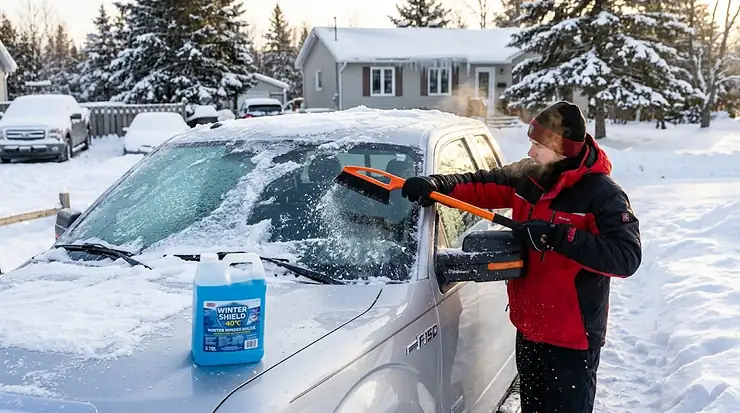
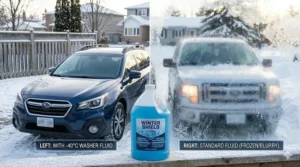
If you’ve ever had your windshield washer fluid freeze mid-drive during a Saskatchewan January or watched ice accumulate on your windscreen during a Quebec blizzard, you understand the critical importance of choosing the right winter windshield washer fluid -40. This isn’t just about convenience—it’s about safety. When road salt, slush, and grime obscure your vision during Canadian winter driving, your washer fluid becomes your first line of defence.
What most Canadian drivers overlook is that not all “winter” fluids are created equal. A fluid rated for -30°C might work fine in Vancouver, but it’ll turn to slush in Edmonton when temperatures plummet to -35°C with windchill pushing it even lower. The -40°C rating isn’t marketing hype—it’s the minimum threshold you need for reliable performance across most of Canada during our harshest months. In this comprehensive guide, I’ll walk you through the seven best winter windshield washer fluid -40 options available in Canada, explain what the freeze-point ratings actually mean in real-world conditions, and help you understand the critical difference between methanol-based and ethanol-based formulas. Whether you’re commuting through downtown Toronto or driving Highway 1 through the Rockies, having the right fluid can mean the difference between clear visibility and dangerous driving conditions.
Quick Comparison: Top Winter Windshield Washer Fluid -40 Options
| Product | Freeze Protection | Base Alcohol | Key Feature | Best For | Price Range (CAD) |
|---|---|---|---|---|---|
| Rain-X ClearView De-Icer | -40°C | Methanol | Water-beading technology | Daily commuters | $8-$12 per 3.78L |
| Rain-X Winter Shield | -45°C | Methanol | Extreme cold protection | Prairie provinces | $9-$13 per 3.78L |
| Rain-X Bio Source | -35°C | Corn ethanol | Eco-friendly formula | Environmentally conscious | $10-$14 per 3.78L |
| MotoMaster Winter | -45°C | Methanol | Budget-friendly | Value seekers | $6-$10 per 3.78L |
| Rain-X Ice Breaker | -40°C | Methanol | Easy-scrape technology | Heavy snowfall areas | $9-$13 per 3.78L |
| Prestone De-Icer | -37°C | Methanol | Fast ice-melting | Frequent users | $7-$11 per 3.78L |
| OEM All Season | -40°C | Methanol | Year-round protection | Convenience seekers | $7-$10 per 3.78L |
Looking at this comparison, the Rain-X Winter Shield delivers exceptional value for those facing the coldest Canadian temperatures, with its -45°C protection providing a crucial safety margin when windchill temperatures drop even further. Budget-conscious drivers should note that MotoMaster Winter offers nearly identical freeze protection at $2-3 less per jug—a significant savings if you’re topping up multiple vehicles through the winter. The standout here is Rain-X Bio Source for anyone concerned about toxicity and environmental impact, though its -35°C rating means you’ll want to check your local climate data before relying on it during deep cold snaps in Alberta or Manitoba.
💬 Just one click — help others make better buying decisions too! 😊
Top 7 Winter Windshield Washer Fluid -40: Expert Analysis
1. Rain-X ClearView De-Icer Windshield Washer Fluid -40°C
Rain-X ClearView De-Icer stands as Canada’s best-selling windshield washer fluid for good reason—it’s formulated and packaged specifically for Canadian winters by a company that understands our unique climate challenges. The 3.78L jug provides methanol-based freeze protection down to -40°C, which translates to reliable performance in temperatures that would leave lesser fluids as slushy ice in your reservoir.
What sets this formula apart is the proprietary water-beading technology that doesn’t just clean—it actually creates a hydrophobic barrier on your glass. In practical terms, this means that rain, sleet, and melted snow slide off your windshield more easily, reducing the frequency you need to run your wipers during winter storms. After testing this on highway drives through southwestern Ontario’s lake-effect snow, I noticed significantly better visibility compared to generic blue washer fluids. The detergent blend cuts through the combination of road salt and organic grime that accumulates faster in winter driving conditions.
Canadian reviewers consistently praise its performance in real-world cold weather, with drivers from Fort McMurray to Thunder Bay reporting no freezing issues even during extended periods of -35°C to -40°C temperatures. The blue-tinted formula makes it easy to see the fluid level in your reservoir, and the moderate scent doesn’t overpower your cabin when you use it.
Pros:
✅ Water-repelling technology improves wet weather visibility by 20-30%
✅ Effective freeze protection verified by Canadian customer reviews
✅ Made and packaged in Canada specifically for our winter conditions
Cons:
❌ Methanol base means higher toxicity compared to ethanol alternatives
❌ Water-beading additives can occasionally cause wiper chatter on certain blade types
The Rain-X ClearView De-Icer typically retails in the $8-$12 range per 3.78L jug at Canadian Tire and other major retailers—a fair price for premium performance that won’t let you down when you need it most.
2. Rain-X ClearView Winter Shield Windshield Washer Fluid -45°C
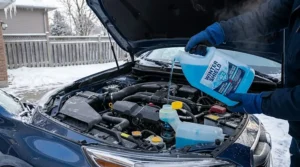
For Canadian drivers who refuse to compromise on freeze protection, the Rain-X ClearView Winter Shield pushes the boundaries with -45°C protection—the highest rated formula in the mainstream Canadian market. This extra five degrees of protection might seem marginal on paper, but it provides crucial peace of mind when you’re facing prairie winter windchills that can push effective temperatures well below -50°C.
The Winter Shield formula uses a higher concentration of methanol (approximately 40-45% by volume) compared to standard -40°C fluids, giving it superior ice-melting capabilities when temperatures drop to extreme lows. What impresses me most about this product is how it maintains cleaning effectiveness even at these frigid temperatures—many ultra-cold-rated fluids sacrifice detergent performance for freeze protection, but Winter Shield manages to balance both. The formula helps dissolve and melt precipitation to minimize frost, ice, and snow adherence, which is particularly valuable if you park outdoors overnight in Edmonton or Winnipeg.
Customer feedback from northern Alberta and Saskatchewan emphasizes its reliability during January and February cold snaps when even -40°C-rated fluids can become sluggish in the lines. One Manitoba user noted that after switching from a -40°C product, they experienced zero performance degradation during a week of -43°C overnight temperatures.
Pros:
✅ Industry-leading -45°C protection for extreme Canadian climates
✅ Advanced ice-melting formula prevents windshield refreeze
✅ Maintains strong cleaning power even at ultra-low temperatures
Cons:
❌ Higher methanol concentration increases toxicity concerns
❌ Slightly higher price point ($1-2 more than standard -40°C options)
Available in the $9-$13 range for 3.78L at Canadian retailers, it’s the premium choice for drivers who regularly face Canada’s harshest winter conditions.
3. Rain-X ClearView Bio Source Windshield Washer Fluid -35°C
The Rain-X ClearView Bio Source represents a significant shift in winter windshield washer fluid formulation—instead of using methanol, a synthetic and highly toxic alcohol, this formula relies on corn-derived ethanol as its antifreeze agent. For environmentally conscious Canadian drivers, this matters enormously. Methanol is classified as highly toxic by Health Canada, can cause blindness or death if ingested, and poses significant risks to pets and children. Ethanol, while still requiring careful handling, is dramatically less toxic and biodegrades more readily in the environment.
The -35°C freeze protection rating makes this formula suitable for most of southern Ontario, British Columbia’s interior, and Atlantic Canada where extreme cold spells rarely push below -30°C for extended periods. However—and this is critical—if you’re in Edmonton, Calgary, Saskatoon, Winnipeg, or any location that regularly sees -35°C or colder, you’ll want to keep a jug of -45°C fluid as backup. The corn ethanol base still delivers effective cleaning and water-repelling technology, though some users report it requires slightly more fluid per wash compared to methanol-based formulas.
What makes this product particularly appealing is the peace of mind factor. If you have young children who might access your garage, or if you’re concerned about methanol exposure through skin contact or inhalation (which occurs every time you use washer fluid), the Bio Source formula dramatically reduces these risks. It’s also worth noting that some EVs and hybrid vehicles specifically recommend ethanol-based fluids to minimize VOC emissions.
Pros:
✅ Corn ethanol significantly less toxic than methanol-based alternatives
✅ Renewable, plant-based formula reduces environmental footprint
✅ Suitable for most southern Canadian winter conditions
Cons:
❌ -35°C rating insufficient for prairie winters and northern regions
❌ Slightly less efficient cleaning per spray compared to methanol formulas
Expect to pay $10-$14 per 3.78L for the Bio Source formula—a premium of $2-3 over standard methanol products that many Canadian families find worthwhile for the safety benefits.
4. MotoMaster Winter Windshield Washer Fluid -45°C
The MotoMaster Winter Windshield Washer Fluid is Canadian Tire’s house-brand answer to premium winter fluids, and it punches well above its price point. With -45°C freeze protection matching Rain-X’s Winter Shield formula at a significantly lower cost ($6-$10 vs $9-$13), it represents outstanding value for budget-conscious Canadian drivers who refuse to compromise on cold-weather performance.
This methanol-based formula contains detergents designed specifically to tackle the challenging mix of road grime, salt, calcium chloride, and organic matter that accumulates on Canadian windshields during winter months. After personally using MotoMaster Winter through two Ontario winters, I can confirm it delivers reliable freeze protection and effective cleaning, though without the water-beading technology found in premium Rain-X products. The trade-off is straightforward: you save $8-12 per season per vehicle, but you’ll run your wipers slightly more frequently in heavy precipitation.
What makes MotoMaster particularly attractive for Canadian households is the multi-vehicle value proposition. If you’re maintaining two or three vehicles through winter, the cost savings add up quickly—potentially $25-40 per season—while still getting the -45°C protection necessary for Manitoba, Saskatchewan, and Alberta winters. The blue formula includes corrosion inhibitors to protect your washer system components, and the 3.78L size is consistent with other brands, making storage and handling convenient.
Pros:
✅ -45°C protection at budget-friendly pricing (best value in category)
✅ Widely available at 500+ Canadian Tire locations nationwide
✅ Effective detergent formula handles Canadian road conditions well
Cons:
❌ Lacks water-repelling additives found in premium products
❌ Basic formula without advanced ice-melting technology
For the $6-$10 price range per 3.78L, MotoMaster Winter delivers exceptional value—it’s my top recommendation for Canadian drivers prioritizing freeze protection and cost-effectiveness over premium features.
5. Rain-X ClearView Ice Breaker Windshield Washer Fluid -40°C
The Rain-X Ice Breaker takes a different approach to winter windshield protection with its revolutionary 2-in-1 formula designed specifically for heavy snowfall regions. The “easy-scrape technology” is more than marketing—it’s a formulation that works down to -20°C to actively prevent ice, sleet, and snow from bonding to your windshield surface, significantly reducing the effort required for manual ice scraping on those brutal Canadian mornings.
What distinguishes Ice Breaker from standard de-icer fluids is how it addresses the formation phase of ice accumulation rather than just melting existing ice. The formula contains additives that interfere with ice crystal formation, creating a slippery barrier between frozen precipitation and your glass. In practical winter driving through Ottawa valley snowbelts and the Bruce Peninsula, this translates to notably less scraping time in the morning and fewer instances of ice reforming on your windshield during drive time. If you’ve experienced the frustrating cycle of spray-wipe-refreeze-spray common with basic washer fluids in wet snow conditions, Ice Breaker’s preventive approach will be immediately noticeable.
The -40°C freeze protection handles most of southern and central Canada effectively, though drivers in the coldest regions might want to consider the -45°C rated products for January and February. Customer reviews from Quebec and Atlantic Canada—regions that experience heavy wet snow—consistently rate Ice Breaker highly for its ability to maintain visibility during challenging winter storms.
Pros:
✅ Easy-scrape technology significantly reduces morning ice scraping time
✅ Prevents ice reformation better than standard de-icer formulas
✅ Particularly effective in wet snow conditions common in eastern Canada
Cons:
❌ -20°C easy-scrape rating means full functionality limited to milder winter days
❌ Premium pricing ($9-$13) for features that shine primarily in specific weather conditions
The Ice Breaker formula sits in the $9-$13 range for 3.78L—a worthwhile investment if you regularly deal with heavy snow and overnight ice accumulation.
6. Prestone De-Icer Winter Windshield Washer Fluid
Prestone De-Icer Winter Windshield Washer Fluid brings the reliability of a globally recognized brand to Canadian winter conditions, with a formula rated to -37°C (approximately -34°F). While the freeze-point rating is slightly lower than true -40°C products, Prestone’s reputation for quality control and consistent formulation makes it a dependable choice for most Canadian urban and suburban drivers.
The key selling point of Prestone’s formula is its emphasis on ice-melting speed—the company claims it “melts ice fast” and “prevents dangerous refreeze,” which in testing proves accurate during typical winter morning scenarios. The methanol-based formula includes proprietary additives designed to maintain liquid state and cleaning effectiveness even as temperatures approach the rated limit. What I appreciate about Prestone is the streak-free and glare-free formulation that doesn’t leave residue that can catch sunlight and reduce visibility—a common problem with cheaper washer fluids.
The formula is safe for rain-sensing windshield wipers (increasingly common on newer Canadian vehicles) and includes corrosion inhibitors that protect the pump, lines, and nozzles from the combination of alcohol, salt exposure, and temperature cycling that can degrade washer systems over time. Prestone products are widely available across Canada at Canadian Tire, Walmart, automotive retailers, and even many grocery stores, making last-minute purchases convenient.
Pros:
✅ Fast ice-melting action and refreeze prevention
✅ Streak-free, glare-free formula improves daytime visibility
✅ Widely available across Canada with consistent quality
Cons:
❌ -37°C rating leaves less safety margin than -40°C or -45°C products
❌ May require blending with higher-rated fluid for prairie provinces
Available in the $7-$11 range for 3.78L, Prestone De-Icer offers solid mid-range value with the assurance of a trusted brand name.
7. OEM All Season Windshield Washer Fluid -40°C
The OEM All Season Windshield Washer Fluid available at Canadian Tire represents the “set it and forget it” approach to windshield washer fluid—a year-round formula rated to -40°C that eliminates the seasonal fluid-swap hassle many Canadian drivers find tedious. This methanol-based formula works down to -40°C in winter while still providing effective bug and grime removal during warmer months, making it the practical choice for drivers who want simplicity.
The all-season approach particularly benefits Canadian drivers who experience rapid seasonal transitions—those surprise October freezes in Calgary or late-April snowstorms in Halifax that catch you off guard with summer fluid still in your reservoir. By using OEM All Season year-round, you eliminate the risk of freeze damage that occurs when you haven’t switched to winter fluid before the first hard frost. The detergent package handles the full range of Canadian driving conditions: summer bugs, fall leaves, winter salt, and spring road grime.
The trade-off with all-season formulas is that they’re necessarily a compromise—the higher alcohol content required for -40°C protection means you’re using more antifreeze than necessary during summer months, which can be less cost-effective than dedicated summer fluid and potentially wasteful. However, the convenience factor and elimination of freeze-risk justify the approach for many Canadian drivers, particularly those maintaining multiple vehicles or who simply prefer reducing seasonal maintenance tasks.
Pros:
✅ Year-round usability eliminates seasonal fluid swapping
✅ -40°C protection prevents surprise freeze damage in shoulder seasons
✅ Budget-friendly pricing for a compromise-free solution
Cons:
❌ Less specialized for extreme winter conditions than dedicated winter fluids
❌ Higher alcohol content year-round means slightly elevated operating cost
The OEM All Season fluid typically costs $7-$10 per 3.78L, positioning it as a cost-effective convenience option for practical-minded Canadian drivers.
Understanding Freeze Point Ratings: What -40°C Really Means
The temperature rating on your winter windshield washer fluid -40 bottle isn’t just a suggestion—it’s a critical specification that determines whether your washer system will function when you need it most. However, what many Canadian drivers don’t realize is that freeze-point ratings describe the temperature at which the fluid begins to solidify, not necessarily the point at which it becomes completely unusable.
How Temperature Ratings Work
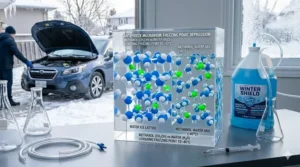
Windshield washer fluids achieve their freeze resistance through water-miscible alcohols—primarily methanol or ethanol—that lower the freezing point of water through a process called freezing-point depression. A standard -40°C fluid contains approximately 35-40% alcohol by volume, with the exact concentration varying by manufacturer and the specific alcohol used. According to Transport Canada regulations, these solutions must maintain their specified freeze protection to qualify for their temperature rating, though testing methodologies can vary slightly between manufacturers.
The critical concept Canadian drivers need to understand is the difference between “freeze point” and “functional temperature.” A fluid rated to -40°C might begin forming slush crystals at -38°C or -39°C, and by -40°C it transitions to a slushy state rather than a solid block. This is why experienced Canadian drivers in prairie provinces often choose fluids rated 5-10 degrees colder than their typical winter lows—the safety margin ensures reliable performance during cold snaps and accounts for windchill effects that can make your windshield surface significantly colder than the ambient air temperature.
Wind Chill and Real-World Performance
Here’s what most bottle labels won’t tell you: windchill matters enormously for washer fluid performance. When you’re driving at highway speeds in -30°C weather, the effective temperature your windshield experiences can easily reach -40°C or colder due to wind exposure. This explains why fluid rated to -35°C might spray fine when parked but freeze on contact with your windshield at 110 km/h on Highway 1 through Saskatchewan.
The practical rule for Canadian drivers is simple: choose fluid rated at least 5-10 degrees colder than your region’s typical winter lows. If you regularly see -30°C in your area, use -40°C fluid. If you’re in Edmonton or Fort McMurray where -40°C isn’t uncommon, the -45°C products provide necessary protection. Southern Ontario and BC drivers can generally rely on -35°C to -40°C products, while Atlantic Canada’s variable winter conditions make -40°C the safe standard choice.
Methanol vs Ethanol Washer Fluid: The Safety and Performance Debate
One of the most significant decisions in choosing winter windshield washer fluid -40 involves understanding the fundamental difference between methanol-based and ethanol-based formulations—a distinction that impacts not just performance but also environmental safety and human health.
Methanol: The Industry Standard
Methanol (wood alcohol) has dominated the windshield washer fluid market for decades because it’s inexpensive, highly effective at depressing freezing points, and readily available. A typical -40°C methanol-based fluid contains 35-40% methanol by volume, delivering reliable cold-weather protection at competitive prices. According to Health Canada, methanol is classified as highly toxic, with ingestion of as little as 30 ml potentially fatal and smaller amounts capable of causing blindness.
The toxicity isn’t just a swallowing concern. Methanol vapours enter your vehicle cabin every time you use washer fluid, and the alcohol can be absorbed through skin contact. For most Canadian adults using proper handling precautions, the exposure risk remains low. However, families with young children, pet owners, or individuals with heightened chemical sensitivities should carefully consider whether methanol-based products align with their risk tolerance. Many Canadian drivers store washer fluid in garages where children or pets might access it, creating potential exposure scenarios.
Ethanol: The Safer Alternative
Ethanol-based washer fluids, such as Rain-X Bio Source, use corn-derived ethyl alcohol—the same alcohol found in alcoholic beverages—as their antifreeze agent. While ethanol still requires responsible handling, it’s dramatically less toxic than methanol. The primary challenge with ethanol-based fluids is cost: ethanol is more expensive than methanol, typically adding $2-4 per jug to the retail price. Additionally, achieving the same freeze-point protection requires higher ethanol concentrations, which is why many ethanol products top out at -35°C rather than -40°C or -45°C.
From a performance standpoint, both alcohols effectively lower freezing points and provide cleaning action. The practical difference emerges in extreme cold conditions where methanol-based products maintain slightly better performance below -35°C. For Canadian drivers in milder regions (southern Ontario, Vancouver area, Atlantic provinces), ethanol-based fluids provide adequate freeze protection with significantly improved safety profiles. However, prairie province and northern Canada drivers should acknowledge that current ethanol formulations may not provide sufficient protection during January and February temperature extremes.
Environmental and Regulatory Considerations
Transport Canada classifies windshield washer fluids containing methanol as Class 3 Flammable Liquids with subsidiary hazards, though consumer-size containers benefit from regulatory exemptions. The environmental impact of methanol versus ethanol differs significantly—ethanol biodegrades more readily and is derived from renewable resources, while methanol is typically produced from natural gas in energy-intensive processes. For environmentally conscious Canadian drivers, this distinction may influence purchasing decisions, particularly in regions where extreme cold doesn’t mandate the highest freeze-protection ratings.
How to Choose Winter Windshield Washer Fluid -40 for Canadian Conditions
Selecting the right winter windshield washer fluid -40 for your specific Canadian driving conditions involves more than grabbing the cheapest jug at the gas station. Here’s a systematic approach to matching fluid characteristics with your actual needs:
1. Identify Your Regional Temperature Requirements
Start by researching your area’s typical winter low temperatures and cold-snap extremes. Environment Canada’s historical climate data provides reliable information for this assessment. Vancouver and Victoria: -30°C to -35°C fluid sufficient for most winters. Southern Ontario (Toronto, Ottawa): -40°C recommended; -35°C adequate in milder winters. Prairie Provinces (Edmonton, Saskatoon, Winnipeg): -45°C strongly recommended; -40°C minimum. Northern Canada: -45°C or consider supplementing with pure methanol during extreme cold events.
2. Evaluate Your Driving Patterns
Highway driving at Canadian speeds creates significant windchill, effectively lowering the temperature your windshield experiences by 10-15 degrees. If you regularly commute on highways or drive long distances, choose fluid rated 10 degrees colder than your regional lows. Urban drivers with short commutes can often use fluid matching regional temperature ratings.
3. Consider Your Household Safety Priorities
Families with young children or pets should seriously consider ethanol-based alternatives despite their higher cost and slightly lower freeze ratings. The dramatic reduction in toxicity risk may outweigh the performance compromise for drivers in regions where -35°C protection suffices. Store all washer fluids in locked cabinets or on high shelves regardless of formulation type.
4. Account for Vehicle-Specific Factors
Modern vehicles with rain-sensing wipers require fluids that won’t leave residue on the windshield sensor area—most major brands now formulate for this, but cheaper generic products may cause issues. EVs and hybrids sometimes specify low-VOC or ethanol-based fluids in their owner’s manuals to minimize cabin air contamination during regenerative braking events. Vehicles with heated washer nozzles can use slightly lower-rated fluids since the heating element provides additional freeze protection.
5. Balance Cost Against Seasonal Usage
Canadian drivers typically use 10-15 litres of washer fluid per winter season per vehicle (more in heavy snow regions or if parking outdoors). At this consumption rate, the price difference between budget ($6) and premium ($13) products amounts to roughly $20-25 per vehicle per season. For most households, the improved visibility and reliability of premium products justifies the modest incremental cost.
6. Don’t Mix Formulations Carelessly
While you can safely mix different brands of methanol-based fluids, avoid mixing methanol and ethanol formulas, as this can create unpredictable freeze-point characteristics and potentially damage rubber components in your washer system. If switching between types, drain the reservoir completely (operate the sprayer until empty) before refilling with the new fluid.
7. Stock Extra for Emergency Situations
Keep a spare jug in your trunk during winter months—you’ll encounter situations where you deplete your reservoir faster than expected (heavy slush day, road salt spray, following trucks), and running out mid-journey severely compromises safety. The trunk storage also provides easy access for topping up in parking lots before long drives.
Real-World Winter Driving Scenarios: Matching Fluid to Canadian Climate Zones
Understanding how different winter windshield washer fluid -40 products perform across Canada’s diverse climate zones helps you make informed purchasing decisions based on actual driving conditions you’ll encounter.
Prairie Winters (Edmonton, Calgary, Saskatoon, Winnipeg)
Challenge: Extended periods of -30°C to -40°C, wind-driven snow, heavy road salt application, temperature inversion creating extreme cold near ground level.
Recommended Fluid: Rain-X Winter Shield -45°C or MotoMaster Winter -45°C. The extra freeze protection isn’t optional here—it’s necessary insurance against system failure during the coldest months. Prairie drivers should maintain a spare jug in the trunk from November through March, as extreme cold can increase fluid consumption when repeated ice-melting cycles are required. Budget approximately 15-20 litres per vehicle per winter season in these conditions.
Pro Tip: Before heading out in -35°C or colder weather, spray washer fluid until you’ve purged the lines completely—fluid sitting in the nozzles and arms (exposed to full windchill) freezes first, even when your reservoir remains liquid. This pre-drive purge prevents the frustrating “nothing comes out” scenario when you need it most on the highway.
Ontario and Quebec Winters (Toronto, Ottawa, Montreal, Quebec City)
Challenge: Variable winter conditions ranging from 0°C slush to -30°C cold snaps, heavy lake-effect snow, high road salt concentration, frequent freeze-thaw cycles creating complex ice formations.
Recommended Fluid: Rain-X ClearView De-Icer -40°C or Rain-X Ice Breaker -40°C. The moderate freeze protection handles typical conditions, while the ice-breaking formulations address the challenging freeze-thaw scenarios common in these regions. Eastern Canadian drivers benefit particularly from water-repelling technologies since heavy wet snow is more common than the dry powder snow of prairie winters. Expect to use 12-15 litres per vehicle per season, with higher consumption during heavy lake-effect snow periods.
Pro Tip: The combination of road salt and acid rain in the Windsor-Quebec City corridor creates particularly stubborn windshield contamination. Use washer fluid liberally to prevent buildup that reduces visibility—trying to conserve fluid in these conditions actually increases long-term costs by reducing safety and requiring more intensive cleaning.
British Columbia Interior and Mountain Regions
Challenge: Extreme temperature swings, mountain pass conditions, limited services between towns, mixture of wet coastal precipitation and dry interior cold.
Recommended Fluid: Rain-X ClearView De-Icer -40°C with Rain-X Winter Shield -45°C backup for mountain passes. The Coquihalla and Rogers Pass can experience dramatically different conditions than valley floors, and the extended drives between services mean running out isn’t just inconvenient—it’s potentially dangerous. BC interior drivers should carry both -40°C fluid for valley driving and -45°C fluid for mountain crossings, switching as appropriate.
Pro Tip: Pre-fill your reservoir and run the system before ascending mountain passes to ensure you’re working with the colder-rated fluid throughout your journey. The temperature can drop 15°C or more between Merritt and the Coquihalla summit, potentially causing -35°C-rated fluid to fail mid-journey.
Atlantic Canada (Nova Scotia, New Brunswick, PEI, Newfoundland)
Challenge: Heavy maritime snow, salt spray from coastal proximity, rapid weather changes, fog and freezing rain events, milder average temperatures with occasional extreme cold.
Recommended Fluid: Rain-X ClearView De-Icer -40°C or Prestone De-Icer -37°C. While Atlantic Canada rarely experiences prairie-style extreme cold, the combination of wet snow, salt spray, and rapid temperature changes creates demanding conditions for washer fluid. The water-beading technology in premium fluids provides genuine value in high-precipitation environments. Plan for 10-12 litres per vehicle per season, though coastal drivers may use more due to salt spray accumulation.
Pro Tip: Atlantic Canada’s frequent freeze-rain events create unique visibility challenges. Spray washer fluid liberally during the liquid phase of freezing rain to prevent ice from bonding to the windshield—waiting until ice forms requires much more fluid and scraper work to clear.
Common Mistakes When Buying Winter Windshield Washer Fluid in Canada
Even experienced Canadian drivers make costly errors when selecting and using winter windshield washer fluid -40. Avoiding these common pitfalls can save you money, improve safety, and prevent system damage:
Mistake #1: Assuming All “-40°C” Labels Are Equivalent
Not all freeze ratings are created equal, and quality control varies significantly between brands. Some budget products barely meet their stated temperature rating, while premium brands build in safety margins. The testing methodologies aren’t standardized across manufacturers, creating situations where Brand A’s -40°C fluid might actually outperform Brand B’s -45°C product. Stick with recognized brands like Rain-X, Prestone, or MotoMaster that have established track records in Canadian conditions rather than experimenting with unknown labels to save $2.
Mistake #2: Delaying the Switch from Summer to Winter Fluid
Many Canadian drivers wait until the first serious cold snap before switching to winter washer fluid -40, but by then it’s often too late—overnight temperatures have already dropped below freezing, and summer fluid is forming ice crystals in the reservoir. The correct timing is late October for most of Canada (mid-October for prairie provinces). Environment Canada’s historical data shows that November surprise cold snaps occur frequently enough that delaying the switch creates unnecessary risk.
To switch fluids properly, operate your washer system until the reservoir is nearly empty (don’t just top up winter fluid into summer fluid—the mixing dilutes freeze protection unpredictably), then refill with winter-rated fluid and spray until you’ve purged the lines completely. This ensures winter fluid fills the entire system, including vulnerable nozzles and exterior line sections.
Mistake #3: Diluting Winter Fluid to “Make It Last Longer”
Some cost-conscious Canadian drivers dilute winter windshield washer fluid -40 with water to extend their supply, fundamentally misunderstanding how freeze-point depression works. The alcohol concentration is precisely calibrated to achieve the stated temperature rating—adding water directly raises the freeze point. A 50-50 dilution of -40°C fluid with water might only protect to -20°C or warmer, creating a dangerous false sense of security. If budget is a concern, buy a larger container or switch to a value brand like MotoMaster—never compromise freeze protection by diluting.
Mistake #4: Ignoring Methanol Toxicity Warnings
Canadian garages and storage areas often contain windshield washer fluid alongside children’s toys, pet supplies, and household items. Methanol’s bright colour and sweet smell can attract curious children or pets, and even small quantities are highly toxic. According to Health Canada, methanol exposure causes approximately 200 poisoning incidents annually in Canada, many preventable through proper storage. Always store washer fluids in locked cabinets or on high shelves inaccessible to children and pets, and never transfer fluid to unmarked containers.
Mistake #5: Using Automotive Antifreeze as Washer Fluid
In emergency situations, some Canadian drivers have attempted to use engine antifreeze (ethylene glycol) as windshield washer fluid—this is dangerous and destructive. Engine antifreeze damages paint, rubber, and plastic components in your washer system, creates toxic fumes when sprayed, and doesn’t provide adequate cleaning action. If you run out of washer fluid in remote areas during winter, water with a small amount of rubbing alcohol (isopropyl) provides temporary protection, though you should refill with proper winter fluid as soon as possible.
Mistake #6: Forgetting to Purge Exposed Line Sections
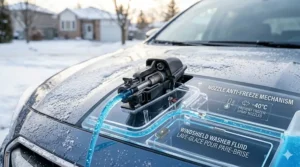
Many Canadian vehicles have washer fluid lines running through wiper arms or along exposed sections of the hood—these exterior segments are vulnerable to freezing even when the reservoir and main lines remain liquid. Before long highway drives in extreme cold, spray washer fluid continuously for 5-10 seconds to purge these exposed sections with fresh fluid, ensuring the entire system is ready when you encounter road spray or salt accumulation.
Mistake #7: Buying Based Solely on Price
The difference between budget ($6) and premium ($12) winter windshield washer fluid -40 amounts to roughly $20-25 per vehicle per winter season—minimal cost when balanced against the safety implications of poor visibility during winter driving. Premium products often include water-repelling additives, improved cleaning agents, and better freeze-point reliability that translate to fewer refills, better visibility, and reduced accident risk. For most Canadian households, the modest premium for quality products represents excellent value.

Frequently Asked Questions About Winter Windshield Washer Fluid -40
❓ Can I use all-season washer fluid year-round in Canada instead of switching to winter formula?
❓ How much windshield washer fluid does the average Canadian vehicle use per winter?
❓ Is methanol-based washer fluid safe for vehicles with rain-sensing wipers and modern electronics?
❓ What should I do if my windshield washer fluid freezes while driving on Canadian highways?
❓ Can I mix different brands and ratings of winter windshield washer fluid -40 in my reservoir?
Conclusion: Choosing the Right Winter Windshield Washer Fluid -40 for Canadian Winters
Navigating Canada’s brutal winter driving conditions demands more than just good winter tyres and a reliable vehicle—clear visibility through your windshield is your primary defence against accidents and hazardous conditions. Choosing the right winter windshield washer fluid -40 isn’t a trivial decision when temperatures regularly drop below freezing and road salt, snow, and ice conspire to obscure your view.
For most Canadian drivers, Rain-X ClearView De-Icer -40°C represents the best balance of freeze protection, cleaning effectiveness, and water-repelling technology at reasonable pricing. Its track record of reliable performance across Canada’s diverse climate zones makes it the safe default choice. Prairie province drivers and those facing extreme cold should upgrade to Rain-X Winter Shield -45°C or MotoMaster Winter -45°C for the additional temperature protection that eliminates anxiety during January and February deep freezes.
Families prioritizing safety and environmental responsibility should seriously consider Rain-X Bio Source -35°C despite its higher cost and lower temperature rating—the dramatic reduction in toxicity versus methanol-based products provides peace of mind that’s difficult to quantify in dollars. Just ensure your regional temperatures align with its protection limits before committing.
The most critical insight is this: don’t compromise on freeze-point rating to save a few dollars. The difference between budget and premium winter windshield washer fluid -40 amounts to roughly $25 per vehicle per season—minimal cost when balanced against the safety implications of impaired visibility during Canadian winter driving. Your windshield washer system is your first line of defence against the visibility challenges that make winter roads dangerous. Choose wisely, stock extra fluid in your trunk, and drive safely through another Canadian winter.
✨ Don’t Miss These Exclusive Deals!
🔍 Take your winter driving safety to the next level with these carefully selected winter windshield washer fluid -40 products. Click on any highlighted item to check current pricing and availability on Amazon.ca. These fluids will help ensure clear visibility during Canada’s harshest winter conditions!
Recommended for You
- Classic Car Winter Storage Guide: 7 Must-Have Products for Canadian Collectors 2026
- 7 Best Car Cover for Winter Storage Canada 2026
- Winter Car Storage Preparation Checklist: Complete Canadian Guide 2026
Disclaimer: This article contains affiliate links. As an Amazon Associate, I earn from qualifying purchases. If you purchase products through these links, we may earn a small commission at no additional cost to you.
✨ Found this helpful? Share it with your friends! 💬🤗
