
In This Article
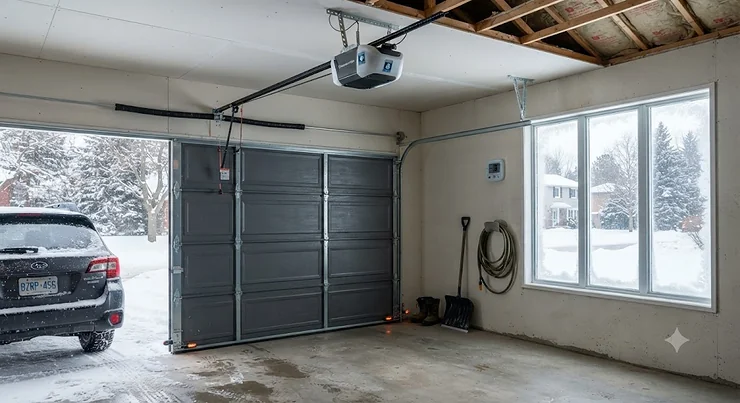
Minus twenty-eight on the dashboard thermometer, a driveway that looks like a skating rink, and a garage door opener that groans, hesitates, then gives up halfway through its climb. If you’ve lived through a Canadian January, you already know this scene by heart. A cold weather rated garage door opener is built specifically to keep working through that scene — stronger torque reserves, cold-tolerant lubrication, and battery systems engineered to hold their charge when the mercury drops, rather than a standard unit simply asked to cope with conditions it was never designed for. Not every opener sold at a big-box store is built for that reality, and the difference between “rated for winter” and “just happens to survive it” is bigger than most shoppers assume. For background on how these systems are built, the mechanics of garage door openers are worth a quick skim before you start comparing spec sheets.
This guide digs into seven real, currently available openers — from budget chain-drive units to premium jackshaft and screw-drive systems — and explains, in plain terms, why cold actually breaks garage door hardware in the first place. We’ll compare torque, drive type, battery chemistry, and the maintenance habits that separate an opener that lasts fifteen winters from one that’s dead by its third. Whether you’re outfitting an attached garage in Winnipeg or a detached shop in the Laurentians, you’ll walk away knowing exactly what to look for — and what marketing language to ignore.
Quick Comparison: Cold-Ready Openers at a Glance
Before the deep dive, here’s the short version for anyone standing in an aisle with a phone in one hand.
| Opener | Drive Type | Best For | Price Range (CAD) |
|---|---|---|---|
| LiftMaster 8500W Elite | Jackshaft (wall-mount) | Extreme cold, low ceilings | C$650–C$800 range |
| Genie MachForce Connect 4063 | Screw drive | Heavy insulated doors | C$450–C$550 range |
| Genie StealthDrive Connect 7155-TKV | Belt drive | Quiet attached garages | C$400–C$480 range |
| Chamberlain B970 | Belt drive | All-around family use | C$320–C$400 range |
| Genie Chain Drive 750 | Chain drive | Mid-budget with backup power | C$260–C$320 range |
A pattern shows up immediately: the openers with the fewest exposed moving parts — jackshaft and screw drive units — tend to sit at the top of the price range, while classic chain drives anchor the budget end. That’s not marketing fluff; fewer chains and pulleys mean fewer surfaces for condensation to freeze onto overnight. Still, price alone doesn’t predict cold-weather performance — a well-maintained chain drive with the right lubricant can outlast a neglected premium unit, which is exactly why the maintenance sections further down matter just as much as the spec sheet.
💬 Just one click — help others make better buying decisions too!😊
Top 7 Cold Weather Rated Garage Door Openers: Expert Analysis
1. LiftMaster 8500W Elite Series — fewest moving parts, most cold-proof
The LiftMaster 8500W Elite Series skips the trolley-and-rail setup entirely and mounts straight to the torsion bar, which is exactly why it shows up on so many “best for winter” lists from installers, not just bloggers. Its 24V DC motor is wall-mounted rather than ceiling-mounted, which means less exposed hardware collecting frost, and it’s rated for sectional doors up to 4.2 m (14 ft) high and 385 kg (850 lbs). The jackshaft design means there’s no chain or belt stretching across a freezing garage ceiling to contract, stiffen, or snap a link on a -30°C morning. Based on the spec comparison with trolley-style openers, that structural simplicity is the single biggest reason this unit shows up in commercial and northern-residential installs where downtime isn’t an option. It’s the pick for anyone with a cathedral ceiling, a low-headroom garage, or simply zero patience for winter callbacks. Reviewers consistently report that the wall-mount design also frees up ceiling storage space, a nice bonus that has nothing to do with temperature but everything to do with why people love it. Integrated battery backup keeps the door moving through a winter power outage, which pairs well with the storm season most of the country deals with each January.
Pros:
- ✅ Jackshaft design avoids chain/belt cold-contraction issues
- ✅ Wall-mount frees up garage ceiling storage space
- ✅ Integrated battery backup for winter power outages
Cons:
- ❌ Premium price compared to trolley-style openers
- ❌ Professional installation strongly recommended
At around C$650–C$800 in the mid-to-premium tier, the LiftMaster 8500W Elite Series isn’t a casual impulse buy, but for a garage that has already fought you every January, the reduced failure points genuinely justify the spend.
2. Genie MachForce Connect 4063 — fastest screw drive, most torque
If your garage door is an insulated, double-wide monster that already feels heavy on a warm day, the Genie MachForce Connect 4063 is worth a hard look. Its 140-volt DC motor is rated at 2 HPc (horsepower comparable — more on what that actually means shortly) and drives a proprietary screw-drive mechanism rather than a chain or belt. What most buyers overlook about screw drives is that the threaded steel rod handles temperature swings differently than a chain: it doesn’t sag, doesn’t need chain tensioning, and the trolley simply rides the thread regardless of how cold the steel gets. Genie rates its opening speed at roughly 30 cm (12 inches) per second, about twice the pace of a typical chain or belt unit, which matters when you’re standing in a driveway in a windchill warning waiting for the door to finish its cycle. Aggregated review sentiment on this model highlights how well it handles heavier insulated doors without labouring, though a few users note the screw mechanism benefits from an occasional fresh coat of manufacturer-approved lubricant to stay smooth through the winter months.
Pros:
- ✅ 2 HPc motor handles heavy insulated doors with ease
- ✅ Screw-drive mechanism resists chain-style cold contraction
- ✅ Nearly double the opening speed of chain/belt models
Cons:
- ❌ Louder in operation than belt-drive alternatives
- ❌ Battery backup sold as a separate add-on
Expect the Genie MachForce Connect 4063 to land in the C$450–C$550 range, with the optional battery backup module priced separately — a worthwhile add if outages are common where you live.
3. Genie StealthDrive Connect 7155-TKV — quietest belt drive with battery backup
For attached garages sitting under a bedroom, noise matters as much as torque, and the Genie StealthDrive Connect 7155-TKV is built around that trade-off. Its 1¼ HPc DC motor drives a steel-reinforced belt, and Genie’s own internal testing claims it runs up to 40% quieter than a standard chain-drive unit. Here’s what to weigh: belt drives can be marginally more sensitive to cold-induced stiffness than chain drives because rubber compounds naturally lose flexibility as temperatures drop, but manufacturers have compensated for this with reinforced, temperature-rated belt materials in recent generations. Built-in Wi-Fi through the Aladdin Connect app removes the need for a separate smart hub, and the included battery backup is rated for up to 50 full open-and-close cycles during an outage — genuinely useful during an ice-storm blackout. What most buyers overlook about this model is that its “smart” features aren’t just convenience add-ons; remote alerts mean you’ll know immediately if the door froze partway through a cycle instead of discovering it after you’ve already left for work.
Pros:
- ✅ Up to 40% quieter than standard chain-drive openers
- ✅ Built-in Wi-Fi, no separate smart hub needed
- ✅ Battery backup rated for roughly 50 cycles
Cons:
- ❌ Belt material needs periodic cold-weather inspection
- ❌ Aladdin Connect app is a separate ecosystem from myQ
Positioned around C$400–C$480, this is a strong mid-premium choice for anyone prioritizing a quiet start-up on a frosty morning without paying jackshaft prices.
4. Chamberlain B970 — best all-rounder belt drive for attached garages
The Chamberlain B970 is the opener that keeps showing up in comparison threads for a reason: it’s a genuinely well-rounded, DIY-friendly unit with a steel-reinforced belt and Chamberlain’s MAX lift power system, rated at the equivalent of 1¼ HP. Based on the spec comparison, that lifting force is enough headroom for insulated double doors that get heavier and stiffer once winter cold thickens the door’s weatherstripping and seizes up any marginal hardware. Reviewers consistently note the anti-vibration technology keeps ceiling-transmitted noise down even as temperatures swing, and the included battery backup means a power outage during a snowstorm doesn’t strand your car inside. Security+2.0 rolling-code encryption and myQ smartphone control round out a package that doesn’t feel stripped-down at its price point. What the spec sheet won’t tell you, but user reports suggest, is that installation is genuinely manageable for a confident DIYer with an afternoon free — a meaningful cost saving over the jackshaft models above, which typically call for a professional.
Pros:
- ✅ 1¼ HP-equivalent MAX lift power system
- ✅ Included battery backup for storm outages
- ✅ DIY-friendly installation with clear instructions
Cons:
- ❌ Ceiling-mounted trolley has more exposed hardware than jackshaft units
- ❌ myQ subscription needed for some smart-home integrations
At roughly C$320–C$400, the Chamberlain B970 earns its reputation as the default mid-range recommendation for a reason — it just works, winter after winter.
5. Genie Chain Drive 750 — best mid-range chain drive with battery backup
Chain drives get a bad reputation for being noisy, but they earn their keep in cold climates through sheer mechanical simplicity, and the Genie Chain Drive 750 is a solid example of the type done right. Its ¾ HPc DC motor pairs with a heavy-duty chain and a five-piece rail system that snaps together without extra hardware, which keeps installation quick even with cold fingers in an unheated garage. Unlike the base-model chain drives below it, the 750 includes a battery backup, a meaningful upgrade for anyone who’s been locked out during a January ice storm. Aggregated customer sentiment describes the DC motor as noticeably quieter than older AC chain-drive units, even if it still can’t match a belt drive for hush. Here’s what to weigh: a well-lubricated chain drive is mechanically forgiving in the cold — there’s no belt rubber to stiffen — but that chain does need the freeze-resistant lubricant discussed later in this guide applied more diligently than a belt ever would.
Pros:
- ✅ Battery backup included, unlike most chain drives at this price
- ✅ Simple mechanics with fewer temperature-sensitive materials
- ✅ Quick five-piece rail installation
Cons:
- ❌ Louder than belt or jackshaft alternatives
- ❌ Chain requires more frequent lubrication than a belt
Priced in the C$260–C$320 range, the Genie Chain Drive 750 is the sensible middle ground for buyers who want backup power without stretching into belt-drive pricing.
6. Genie Chain Drive 550 — best budget chain drive for standard doors
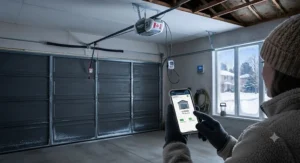
For a single-car garage with a standard 2.1 m (7 ft) door and a modest budget, the Genie Chain Drive 550 covers the basics without apology. Its ½ HPc DC motor is rated for doors up to 227 kg (500 lbs), and the maintenance-free, precision-machined gearbox carries a 10-year limited warranty — a genuinely long commitment for an entry-level unit. On paper this means less overhead than the 750 above, but the trade-off is no built-in battery backup, so a mid-storm outage will leave you working the manual release. Reviewers consistently describe the soft-start and soft-stop control as smoother than older chain-drive units, which reduces jarring stress on cold, stiffened door hardware during that first startup of the morning. HomeLink and Car2U compatibility out of the box is a small but appreciated touch, since it skips the bridge accessories some budget openers still require.
Pros:
- ✅ 10-year limited warranty on motor and gearbox
- ✅ Soft-start/soft-stop reduces stress on cold hardware
- ✅ Built-in HomeLink and Car2U compatibility
Cons:
- ❌ No battery backup included
- ❌ Chain drive is the loudest option in this lineup
Sitting under C$250 in most cases, the Genie Chain Drive 550 is an honest budget pick — no smart-home bells, just a dependable motor for a standard garage.
7. Craftsman 1/2 HP Chain Drive Opener — leanest bare-bones budget pick
Rounding out the lineup, the Craftsman 1/2 HP Chain Drive Opener is about as no-frills as a modern opener gets — a rugged steel chain drive with a wall control panel, a single remote, and safety reversing sensors, backed by a 4-year motor warranty. It’s not going to win any smart-home comparisons; there’s no Wi-Fi, no app, no battery backup. What it does offer is a low upfront cost and a reputation, built over decades of the Craftsman name, for surviving unglamorous daily use in unheated garages across the country. Based on the spec comparison, its lifting force is best suited to lighter, uninsulated doors rather than a heavy double-wide slab, so buyers with bigger doors should look further up this list. Aggregated review sentiment suggests the tri-frequency remote system and anti-burglary rolling codes hold up fine, though as with any budget chain drive, cold-weather longevity depends heavily on how consistently the chain gets lubricated — a task that’s easy to forget until the door starts groaning.
Pros:
- ✅ Lowest cost of entry in this lineup
- ✅ 4-year motor warranty
- ✅ Simple mechanics, easy for a novice to service
Cons:
- ❌ No smart-home or battery-backup options
- ❌ Best suited to lighter, uninsulated doors only
Typically found under C$300, the Craftsman 1/2 HP Chain Drive Opener is the pick for a secondary garage, a shed, or a tight renovation budget where basic reliability is the only requirement.
Practical Winter Setup & Maintenance Guide
Getting a cold weather rated garage door opener installed is only half the job — the first thirty days of a Canadian winter will tell you whether it was set up correctly. Start by checking door balance before the first hard freeze: disconnect the opener, lift the door halfway by hand, and see if it holds position. A door that’s out of balance forces the motor to work harder every single cycle, and that extra strain compounds when cold has already thickened the lubricant and stiffened the springs. Next, swap any generic lubricant for a proper freeze-resistant lubricant — a silicone-based spray on rollers, hinges, and weatherstripping, and a lithium grease on metal-to-metal contact points like the torsion spring and bearing plates. Avoid straight WD-40 as a long-term lubricant; it’s excellent for displacing moisture and freeing a stuck part, but it evaporates quickly and won’t protect through a full winter. A common first-month mistake is over-tightening chain tension to “fix” a sagging sound, which actually adds motor strain in the cold rather than solving anything — a properly tensioned chain should have roughly 1.25 cm (½ inch) of play. Finally, test the battery backup monthly if your unit has one; cold temperatures reduce battery capacity noticeably, and a battery that tested fine in October may underperform by January.
Real-World Scenarios: Matching Openers to Canadian Garages
Consider three household profiles. First, a young family in a suburban Calgary subdivision with an attached double garage under a bedroom: noise and battery backup matter most here, making the Chamberlain B970 or Genie StealthDrive Connect 7155-TKV the logical fit, since both combine quiet belt drives with storm-ready power backup. Second, a retired couple in rural Saskatchewan running a detached, uninsulated shop that also stores a truck: they’re really shopping for a garage door opener for unheated garage winter use above all else, where mechanical simplicity and torque headroom outweigh smart-home extras — the Genie MachForce Connect 4063 or LiftMaster 8500W Elite Series both handle a heavy door in a space that never sees a furnace. Third, a first-time homeowner in a starter home near Moncton with a single-car garage and a tight renovation budget: the Genie Chain Drive 550 or Craftsman 1/2 HP Chain Drive Opener covers the basics without overspending on features that a small, standard door doesn’t need. Matching the opener to the actual garage — not just the nicest spec sheet — is the difference between a purchase you forget about for fifteen years and one you’re troubleshooting every December.
Problem → Solution: Common Cold-Weather Opener Issues
Door reverses immediately after closing: cold has often contracted the close-limit setting slightly out of adjustment, so recalibrate the limit switch each fall rather than assuming a sensor failure. Remote works intermittently in the cold: lithium coin-cell batteries lose voltage disproportionately in freezing temperatures, so keep a spare on hand and don’t assume the remote itself has failed. Chain or belt makes a new grinding noise on cold mornings: this is almost always thickened old lubricant rather than a mechanical fault — a fresh application of freeze-resistant lubricant on the rail and, for chain drives, the chain itself usually resolves it within a cycle or two. Door feels noticeably heavier to the motor in January than in July: this is frequently the springs, not the opener; torsion springs lose a measurable amount of tension in deep cold, and a technician can rebalance them in under an hour. Battery backup drains faster than expected: this is normal battery chemistry, not a defective unit — lithium and lead-acid backups both lose usable capacity below freezing, so budget for roughly 30-40% fewer cycles than the manufacturer’s rated figure once temperatures drop well below zero.
How to Choose a Cold Weather Rated Garage Door Opener
Choosing the right unit comes down to seven practical criteria, roughly in order of importance for northern climates.
- Drive type first. Jackshaft and screw drives have fewer cold-sensitive parts than chain or belt systems, though both chain and belt remain perfectly viable with proper maintenance.
- Motor horsepower relative to door weight. An insulated double door stiffened by cold needs real torque headroom, not just enough power on a mild day.
- Battery backup capacity. Check the rated cycle count, then mentally discount it by roughly a third for deep-cold performance.
- Cold-rated wiring and sensors. Look for components explicitly rated to operate well below 0°C, not just “weather-resistant” marketing language.
- Warranty length on the motor and drive. A longer warranty is often a manufacturer’s own confidence signal about cold-climate durability.
- Ease of manual override. In a true opener failure, you’ll want a release mechanism you can operate quickly in gloves.
- Local parts and service availability. A premium opener is only as good as the technician who can service it after a freeze-related failure.
Freeze-Resistant vs Standard Garage Door Openers
The phrase “freeze resistant” on a garage door opener isn’t a formal certification the way UL325 is — it’s a shorthand shoppers and retailers use for units engineered with cold-tolerant lubrication, reinforced cold-weather wiring insulation, and motors tested across a wider temperature band. A standard opener, by contrast, is typically validated for a more moderate operating range and may use whatever grease the factory line had on hand, which can thicken noticeably below -15°C. Here’s what to weigh: the mechanical difference often comes down to the lubricant and gasket materials more than the motor itself, which is exactly why two openers with near-identical horsepower ratings can behave very differently on the same frigid morning. On paper this means a “standard” opener installed in a heated, attached garage may perform just fine, since ambient temperatures rarely drop far below freezing indoors — but the same unit installed in a detached, unheated structure in a prairie winter is a different story entirely. Reviewers consistently note that the practical giveaway is less about the marketing label and more about whether the manufacturer publishes an explicit low-temperature operating spec; if they don’t list one, assume it’s a standard design rather than a cold-rated one.
Opener Torque in Cold Weather: What the Spec Sheet Won’t Tell You
Horsepower ratings on garage door openers are notoriously squishy — Genie’s “HPc” (horsepower comparable) rating and Chamberlain’s “HP-equivalent” badges both describe a DC motor’s output relative to an older AC-motor benchmark, not a strict, standardized torque measurement. What matters more in winter is the motor’s actual torque curve under load, since cold thickens lubricant, stiffens springs, and adds real mechanical resistance the motor has to overcome on every single cycle. Based on the spec comparison across this lineup, jackshaft and screw-drive units generally maintain more consistent torque delivery in the cold because their drive mechanisms have fewer flexible components to stiffen up. What most buyers overlook is that a motor rated comfortably for a door’s weight in a showroom can still strain in practice once that same door’s weatherstripping, springs, and rollers have all lost a bit of their summer flexibility simultaneously. The practical takeaway: buy a notch above the “just enough” torque rating for your door’s stated weight, since winter conditions rarely let a motor perform at its rated best.
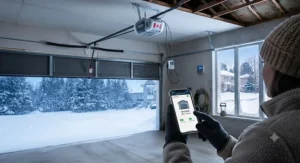
Insulating an Unheated Garage: Does It Actually Help Your Opener?
Unheated garage insulation is often framed purely as an energy-saving move, but it has a direct mechanical payoff for your opener too. Natural Resources Canada’s guidance on insulating walls and additions notes that garage ceilings and walls benefit from continuous insulation layers to reduce heat loss and limit the temperature swings that stress building components — and a garage door opener is, mechanically speaking, just another building component subjected to those swings. A garage that holds even a modest buffer above outdoor temperature reduces how much the door’s weatherstripping, springs, and lubricant have to fight extreme cold on every cycle, which in turn reduces wear on the opener motor over years of use. According to Save on Energy’s insulation guidance, walls between heated and unheated spaces — including an attached garage — are a genuinely cost-effective place to add insulation compared with larger whole-home projects. You don’t need to fully finish the space; even insulating the garage door itself and sealing obvious drafts around the frame measurably reduces the temperature extremes your opener has to operate through.
Common Mistakes When Buying an Opener for a Cold Climate
The most frequent mistake is buying strictly on horsepower number without checking drive type, which means shoppers sometimes pay a premium for a high-HP chain drive when a lower-rated jackshaft unit would have performed better in the cold for less money. A close second is skipping battery backup entirely to save fifty or sixty dollars, then discovering during the first winter power outage that a manual release in a snowstorm, in the dark, isn’t nearly as convenient as it sounds. Buyers also frequently ignore door weight and balance entirely, assuming any opener rated “for residential doors” will handle their specific insulated, double-wide slab — when in reality an out-of-balance or underrated setup is the single biggest predictor of a winter motor failure. Another common misstep is treating “smart” features as the primary decision factor while overlooking the physical mechanics that actually determine cold-weather survival; a beautiful app interface won’t help if the belt has stiffened and the door won’t budge. Finally, some buyers skip professional installation on jackshaft or screw-drive units specifically to save money, only to face warranty complications later, since several manufacturers require certified installation for full coverage on their premium lines.
Long-Term Cost & Maintenance in Canadian Winters
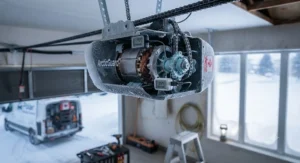
Total cost of ownership for a cold weather rated garage door opener extends well past the sticker price, and winter climates accelerate that math. A budget chain drive under C$250 might save you money upfront, but neglected lubrication in a detached, unheated garage can shorten its working life meaningfully compared with the same unit properly maintained — meaning a “cheaper” opener replaced twice can cost more over a decade than a single premium unit. Factor in roughly two lubrication sessions a year using a proper freeze-resistant lubricant, an annual balance check, and periodic battery replacement on backup-equipped models, and the real annual cost of ownership narrows considerably between budget and premium tiers. Reviewers consistently note that jackshaft and screw-drive openers, while pricier initially, tend to need less frequent intervention specifically because they have fewer temperature-sensitive components exposed to the swing between a mild autumn day and a January deep freeze. The honest verdict: if your garage sees genuine extreme cold and heavy daily use, the upfront premium on a jackshaft or screw-drive unit is usually recovered in reduced service calls within five to seven years. If you’re weighing a broader garage insulation upgrade alongside a new opener, it’s worth checking whether the work qualifies under Natural Resources Canada’s home retrofit programs, since some insulation upgrades to spaces like attached garages can be eligible.
FAQ
❓ What is the best garage door opener for a cold climate?
❓ Do garage door openers work in extreme cold?
❓ What temperature is too cold for a garage door opener?
❓ Should I use silicone or lithium grease in winter?
❓ Does an unheated garage need an insulated door for the opener to work well?
Conclusion
Winter doesn’t ask a garage door opener to do anything more complicated than it does every other day of the year — open, close, repeat — it just makes every one of those mechanical steps harder, from thickened lubricant to contracting metal to batteries that quietly lose their edge below freezing. The good news is that the difference between a frustrating winter and an uneventful one usually comes down to a handful of deliberate choices: picking a drive type suited to your garage’s exposure, matching torque to your actual door weight rather than a bare minimum, and keeping up with freeze-resistant lubricant and balance checks before the first real cold snap arrives. Whether that means the fewer-moving-parts confidence of the LiftMaster 8500W Elite Series, the raw torque of the Genie MachForce Connect 4063, or the honest budget simplicity of the Craftsman 1/2 HP Chain Drive Opener, there’s a genuinely good option in this lineup for nearly every Canadian garage and every Canadian budget. Spend a little time matching the opener to your specific garage, and the payoff is a door that just works — quietly, reliably, on the coldest morning of the year, without you ever having to think about it.
✨ Don’t Miss These Exclusive Deals!
🔍 Take your winter garage setup to the next level with these carefully selected openers. Click on any highlighted product above to check current pricing and availability. A properly chosen opener means one less thing to fight with on the coldest morning of the year!
Recommended for You
- Garage Door Opener for Extreme Cold: 7 Best Picks for 2026
- Garage Door Openers: 7 Best Picks for Canadian Garages in 2026
- Chain Drive vs Belt Drive Garage Door Opener: 7 Top Picks for 2026
Disclaimer: This article contains affiliate links. As an Amazon Associate, I earn from qualifying purchases. If you purchase products through these links, we may earn a small commission at no additional cost to you.
✨ Found this helpful? Share it with your friends! 💬🤗
