
In This Article
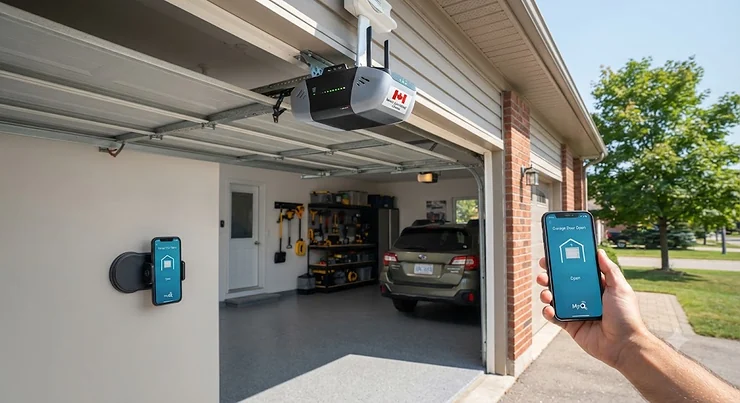
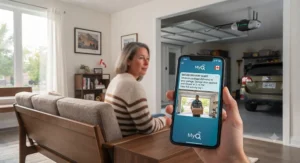
There’s a very specific kind of dread that hits about ten minutes into a road trip when you can’t remember whether you actually closed the garage. Did you tap the remote, or did you just think about tapping the remote? A smart garage door opener exists precisely to kill that feeling — it puts a live status check, a close button, and usually a full activity log right in your pocket, so “probably closed” becomes “closed at 8:14 a.m., confirmed.” That single feature alone has turned this category from a novelty into one of the more genuinely useful upgrades a Canadian homeowner can make, right up there with a video doorbell.
This guide covers seven real, currently available options spanning budget retrofit kits under C$60 all the way up to full opener replacements with built-in cameras, and it treats every one of them honestly: real specs, real aggregated review sentiment, and no invented hands-on testing dressed up as personal experience. We’ll also dig into the parts most buying guides skim past — how these devices fit into broader home automation ecosystems, what remote access security actually means once your garage is talking to the internet, and why opener firmware updates matter more than most people assume until something goes wrong.
Before we get into the lineup: this article contains affiliate links, and as an Amazon Associate we earn from qualifying purchases — full disclosure sits at the bottom of the page. Every product below is a genuine, findable model, and every claim is grounded in manufacturer documentation and aggregated owner feedback rather than fabricated testing. With that out of the way, let’s figure out which smart garage door opener actually deserves a spot on your garage wall.
What Is a Smart Garage Door Opener?
A smart garage door opener is a Wi-Fi or Bluetooth-connected device — either built into a full opener unit or added as a retrofit accessory to an existing one — that lets you open, close, and monitor your garage door from a smartphone app, and typically integrates with a voice assistant like Alexa or Google Home. It’s a distinct category from the automatic garage door operator itself, which has been evolving since the 1920s; the Wikipedia entry on garage door openers is a solid primer on how the mechanical side of the category developed long before Wi-Fi radios ever entered the picture.
Most homeowners don’t need to replace their entire opener to get smart features. Retrofit kits from Chamberlain, Genie, meross, Tailwind, and Nexx clip onto an opener you already own, which is why five of the seven picks below are small add-on modules rather than full replacement units.
Quick Comparison Table
| Opener | Type | Best For | Starting Price (CAD) |
|---|---|---|---|
| Chamberlain myQ Smart Garage Control | Retrofit hub | Chamberlain/LiftMaster households wanting the default app | Under C$70 |
| Genie Aladdin Connect | Retrofit kit | No-subscription upgrade across multiple opener brands | C$90-C$120 |
| meross Smart Wi-Fi Garage Door Opener | Retrofit hub | Cheapest full-featured smart upgrade | Under C$50 |
| meross Smart Garage Door Opener (MSG200HK) | Retrofit hub | Apple HomeKit and CarPlay households | C$65-C$90 |
| Tailwind iQ3 | Retrofit hub | Widest home automation ecosystem support | C$120-C$180 |
| Nexx Garage NXG-200 | Retrofit controller | Detached garages and weak Wi-Fi coverage | C$130-C$170 |
| Chamberlain B6753T Secure View | Full opener replacement | Built-in camera and battery backup in one unit | C$700-C$900+ |
A quick scan of this table tells the real story: a smart garage door opener isn’t really a single product category, it’s two of them wearing the same marketing label. Six of these seven are inexpensive add-ons you bolt onto an opener you already own, while the Chamberlain B6753T Secure View is a full motor-and-rail replacement that happens to include smart features as part of a much bigger purchase. If your existing opener still runs fine mechanically, a retrofit kit in the C$50-C$180 range gets you 90% of the smart functionality most people actually want, and that’s where most Canadian buyers should start looking.
💬 Just one click — help others make better buying decisions too!😊
Top 7 Smart Garage Door Openers: Expert Analysis
Before diving into this smart garage door opener review roundup product by product, here’s the detailed spec snapshot that the summary table above doesn’t have room for — connectivity type, subscription requirements, and which voice assistants each one talks to natively.
| Opener | Connectivity | Voice Assistants (Free) | Subscription Required | Multi-Brand Compatible |
|---|---|---|---|---|
| Chamberlain myQ Smart Garage Control | Wi-Fi + Bluetooth | Google Assistant | Alexa gated behind myQ+ | Yes, best with Chamberlain/LiftMaster |
| Genie Aladdin Connect | Wi-Fi | Alexa, Google Assistant | No | Yes, five major brands |
| meross Smart Wi-Fi Garage Door Opener | Wi-Fi | Alexa, Google Assistant | No | Yes |
| meross Smart Garage Door Opener (MSG200HK) | Wi-Fi | Siri, Alexa, Google Assistant | No | Yes |
| Tailwind iQ3 | Wi-Fi | Siri, Alexa, Google Assistant | No | Yes, up to 30-year-old openers |
| Nexx Garage NXG-200 | Wi-Fi + Bluetooth | Alexa, Google Assistant, Siri (via app) | No | Yes |
| Chamberlain B6753T Secure View | Wi-Fi + Bluetooth | Google Assistant | Video clip storage requires myQ+ | N/A, full unit |
Reading across this table, the subscription column is where the real differentiation happens rather than raw connectivity, since almost everything here runs on the same 2.4GHz Wi-Fi backbone. The Chamberlain myQ Smart Garage Control is the only budget pick that quietly gates a core feature — Alexa control — behind a paid tier, while the Genie Aladdin Connect, both meross units, the Tailwind iQ3, and the Nexx Garage NXG-200 all deliver their full smart feature set for free. That distinction alone should shape how much weight you put on sticker price versus lifetime cost.
1. Chamberlain myQ Smart Garage Control (myQ-G0401) — the default pick with the biggest support network
The standout here isn’t a spec at all — it’s scale. The Chamberlain myQ Smart Garage Control is backed by the largest installed base in this category, which translates directly into the deepest well of troubleshooting threads, firmware maturity, and third-party accessory support of anything on this list. Under the hood it’s a small Wi-Fi and Bluetooth hub that pairs with a door sensor, works natively with Chamberlain, LiftMaster, and Craftsman openers, and can be adapted to most other brands with an included universal sensor kit.
Based on the spec sheet, this is the safest default for anyone who just wants “an app that shows my garage door status” without researching ecosystems first — it also supports Amazon Key in-garage delivery, letting couriers drop packages inside a locked garage on a one-time access code. Reviewers consistently praise the sheer reliability of the core open/close function, though a recurring theme in aggregated feedback is frustration that Alexa integration now sits behind the myQ+ subscription, a change that came after Chamberlain restricted broader third-party API access in late 2023.
Pros:
- ✅ Largest support community and most mature app of any pick here
- ✅ Native compatibility with Chamberlain, LiftMaster and Craftsman openers
- ✅ Supports Amazon Key in-garage package delivery
Cons:
- ❌ Alexa voice control requires the paid myQ+ subscription
- ❌ Has actively blocked several third-party smart-home integrations
At the time of research, this hub sits under C$70, and for Chamberlain or LiftMaster owners who don’t care about Alexa, it’s a genuinely fair value pick — just budget for the subscription if voice control through Alexa matters to you.
2. Genie Aladdin Connect (ALKT1-R) — widest brand compatibility without a subscription
The clear standout with the Genie Aladdin Connect kit is how many different opener brands it plays nicely with — Chamberlain, LiftMaster, Genie, Linear, and Overhead Door are all officially supported, which makes it a rare cross-brand option in a category where most hubs quietly favour their own parent brand. It ships as a complete kit including a single-button wireless remote, so there’s no need to separately source a spare clicker for a second driver in the household.
What most buyers overlook is that Genie made a deliberate decision to keep every core smart feature free, unlike Chamberlain’s Alexa paywall — a meaningful difference if voice control is a household priority. Aggregated review sentiment describes the hardware itself as reliable once installed, though the companion app is consistently described as less polished than myQ’s, and native Apple HomeKit support is absent entirely.
Pros:
- ✅ Officially compatible with five major opener brands
- ✅ All core smart features free, including Alexa and Google Assistant
- ✅ Kit includes a bonus wireless single-button remote
Cons:
- ❌ App interface feels dated next to myQ and meross
- ❌ No native Apple HomeKit or Siri support
Expect this kit in the C$90-C$120 range, which is a reasonable premium over the cheapest options here given the broader brand compatibility and zero subscription requirement.
3. meross Smart Wi-Fi Garage Door Opener — cheapest fully-featured smart upgrade
The standout with the meross Smart Wi-Fi Garage Door Opener is blunt and simple: it’s the least expensive way into this category that still delivers a complete, subscription-free feature set. The compact hub connects over 2.4GHz Wi-Fi, works with most major opener brands using an included door sensor, and integrates with Alexa, Google Assistant, SmartThings, and IFTTT right out of the box.
On paper, this unit sacrifices almost nothing functionally compared to pricier retrofit hubs — the main trade-off is ecosystem breadth rather than performance, since it skips Apple HomeKit entirely. Reviewers frequently highlight the straightforward setup process and describe the app as simple without feeling stripped down, though the brand’s support community and troubleshooting documentation are noticeably smaller than Chamberlain’s, which can matter if something goes sideways during pairing.
Pros:
- ✅ Lowest price point of any fully-featured hub on this list
- ✅ Free Alexa, Google Assistant, SmartThings, and IFTTT support
- ✅ Compact hardware with a genuinely simple setup process
Cons:
- ❌ No Apple HomeKit or Siri compatibility
- ❌ Smaller support community than Chamberlain or Genie
At under C$50, this is arguably the best value entry point in the entire category for anyone not tied to Apple’s ecosystem.
4. meross Smart Garage Door Opener (MSG200HK) — rare native HomeKit and CarPlay support
The standout feature on the meross Smart Garage Door Opener (MSG200HK) is something almost nothing else in this category offers: genuine, native Apple HomeKit integration, plus CarPlay support that lets you trigger the door from your dashboard as you pull into the driveway. It runs on the same reliable Wi-Fi hub platform as its cheaper meross sibling, but adds the HomeKit accessory protocol and Siri voice commands on top, while keeping Alexa and Google Assistant support too.
Based on the spec comparison, this model earns its higher price primarily through ecosystem flexibility rather than any hardware upgrade — it’s essentially the same board as the non-HomeKit version with an added security chip and HomeKit certification. For households already invested in Apple’s home automation ecosystems, that’s a meaningful upgrade; for everyone else, the cheaper meross model does the same core job. Aggregated reviews describe HomeKit pairing as stable across firmware versions, a genuinely rare compliment in a category where HomeKit support often breaks after updates.
Pros:
- ✅ Native Apple HomeKit and Siri support, plus CarPlay control
- ✅ Also works with Alexa and Google Assistant simultaneously
- ✅ HomeKit integration reported as stable across firmware updates
Cons:
- ❌ Meaningfully pricier than the non-HomeKit meross model
- ❌ The premium is only worthwhile if you actually use Apple Home
Pricing typically runs C$65-C$90, and for Apple-first households, that premium over the base meross unit is easy to justify.
5. Tailwind iQ3 — broadest smart home ecosystem support, zero subscription
The Tailwind iQ3 stands out for one reason above all else: it works with practically every home automation platform that matters, including Apple HomeKit, Alexa, Google Home, IFTTT, SmartThings, Hubitat, and — notably — Home Assistant, the open-source platform many enthusiasts turned to after Chamberlain restricted myQ’s third-party access. It can control up to three garage doors from a single hub and claims compatibility with openers as old as three decades, which covers a huge share of Canadian garages that never got a full opener replacement.
What the spec sheet doesn’t fully convey is why the Home Assistant compatibility matters so much: it offers a genuinely local API rather than routing every command through a manufacturer’s cloud server, which appeals directly to anyone who read about Chamberlain locking out third-party integrations and decided they wanted more control over their own hardware. Reviewers consistently praise this openness and the complete absence of subscription fees, though the trade-off is that it skips a built-in camera and lacks any battery backup, unlike the premium full-opener option later in this list.
Pros:
- ✅ Works with more home automation ecosystems than any other pick here
- ✅ Supports up to three doors and openers up to 30 years old
- ✅ Local API access with zero subscription cost
Cons:
- ❌ No integrated battery backup
- ❌ No built-in camera or video monitoring
Expect a price in the C$120-C$180 range, which is a fair ask for the ecosystem flexibility if you’re the kind of household running Home Assistant or juggling multiple smart home platforms already.
6. Nexx Garage NXG-200 — keeps working through Wi-Fi and cloud outages
The clear standout with the Nexx Garage NXG-200 is resilience: it ships with an external Wi-Fi antenna for a stronger signal in garages set well back from the router — a common layout on larger rural and suburban Canadian lots — and it retains Bluetooth-based local control even when your internet connection or the manufacturer’s cloud service goes down. That’s a genuinely different design philosophy from hubs that become useless bricks the moment your ISP has a bad day.
On paper, it supports Alexa, Google Assistant, and Siri through the Nexx app, plus multi-user access controls that let you grant a dog walker or house cleaner limited, revocable access rather than sharing a universal code. Aggregated owner feedback consistently praises the stronger Wi-Fi range and the peace of mind of offline fallback control, though a recurring theme is that initial setup can be fussier than the plug-and-play meross or myQ hubs, and it depends on the household staying current with regular opener firmware updates to keep that security model airtight.
Pros:
- ✅ External antenna delivers noticeably stronger Wi-Fi range
- ✅ Bluetooth fallback keeps working during internet or cloud outages
- ✅ Granular multi-user access control for guests and service providers
Cons:
- ❌ Most expensive retrofit hub in this lineup
- ❌ Setup process reported as fussier than simpler competitors
Pricing generally lands in the C$130-C$170 range, and for anyone with a detached garage or spotty Wi-Fi coverage, that premium buys real, measurable reliability.
7. Chamberlain B6753T Secure View — built-in camera and battery backup in one unit
This is the odd one out on the list, and deliberately so: the Chamberlain B6753T Secure View isn’t a retrofit accessory, it’s a full 1-1/4 HP belt-drive opener replacement with a 1080p camera, night vision, and two-way audio built directly into the housing, plus integrated battery backup that keeps the door working through a power outage. The standout is consolidation — instead of buying an opener, a separate garage security camera, and a backup battery kit as three purchases, this folds all three into one unit and one app.
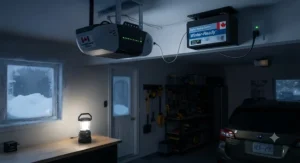
Based on the spec sheet, the battery backup alone is worth serious consideration for anyone who’s dealt with an ice storm knocking out power across Ontario or Quebec for a day or more, since a dead opener with no manual release plan means climbing up to disengage the trolley by hand. Reviewers consistently praise the camera’s night-vision clarity and the convenience of two-way audio for checking on deliveries, though several note that HomeKit compatibility has historically been inconsistent on this line, and full video clip storage requires the paid myQ+ tier rather than being free. Because this replaces the entire opener rather than clipping onto an existing one, professional installation is worth budgeting for unless you’re comfortable with ceiling-mounted rail hardware.
Pros:
- ✅ Built-in 1080p camera with night vision and two-way audio
- ✅ Integrated battery backup for power outages
- ✅ Consolidates opener, camera, and backup power into one purchase
Cons:
- ❌ Significant upfront investment compared to any retrofit kit
- ❌ Full video clip storage requires a paid myQ+ subscription
At the time of research, expect this unit in the C$700-C$900+ range depending on retailer and current promotions — a genuinely different price tier than everything else here, but a fair one if you were going to buy an opener, a camera, and a backup battery separately anyway.
Practical Usage Guide: Setup, Opener Firmware Updates & Maintenance
Getting a smart garage door opener from box to working app takes most Canadian homeowners under an hour for a retrofit hub, or considerably longer for a full replacement unit like the Chamberlain B6753T Secure View, which typically calls for the same three-to-five-hour install as any full opener swap. For retrofit kits, the process is nearly identical across brands: mount the small hub near the opener’s control board, wire it into the existing terminal connections (or clip on magnetically, depending on the model), attach the included door-position sensor, then pair it to your home Wi-Fi through the manufacturer’s app.
Opener firmware updates deserve more attention than most buyers give them. Every hub in this roundup periodically pushes firmware over Wi-Fi, and these updates aren’t just feature polish — they patch the exact kind of authentication and encryption weaknesses that make an internet-connected garage door worth worrying about in the first place. Set your app to auto-update firmware rather than manually deferring it, check monthly that the update actually completed successfully, and treat a hub that hasn’t updated in over six months as a sign something in your network setup needs attention. For maintenance beyond firmware, test the physical safety-reversal sensors monthly with a household object in the door’s path, and re-pair the hub to your router any time you replace or reset it, since a surprising number of “my smart garage door opener stopped working” complaints trace back to a forgotten Wi-Fi password change rather than a hardware fault.
Real-World Scenarios: Matching the Right Opener to Your Household
Picture a young couple in a Mississauga townhouse shopping for their first smart garage door opener, with a single attached garage and a habit of second-guessing themselves halfway to work. Their priority is dead simple: confirm the door is closed without paying a subscription. The meross Smart Wi-Fi Garage Door Opener or Genie Aladdin Connect both solve exactly that problem for well under C$120, with no ongoing cost attached.
Now consider a tech-forward family in Kitchener-Waterloo already running Home Assistant, several Matter-enabled bulbs, and an Apple TV as their living-room hub. Ecosystem flexibility matters more to them than price, which makes the Tailwind iQ3 the obvious pick — its Home Assistant integration and multi-platform support fit a household that refuses to get locked into a single manufacturer’s app.
Finally, think about a family on a large rural property outside Red Deer with a detached garage 20 metres (about 65 feet) from the house and Wi-Fi that barely reaches the workshop, let alone the garage. Signal strength and offline reliability outrank fancy ecosystem support here, which points squarely at the Nexx Garage NXG-200 and its external antenna plus Bluetooth fallback — features that solve their actual problem rather than adding functionality they’d never use.
Smart Garage Door Openers for Canadian Winters: Common Problems & Solutions
Cold weather introduces a handful of predictable headaches for any smart garage door opener installed in a Canadian climate, and each one has a straightforward fix. Problem one: Wi-Fi range drops noticeably in an unheated, uninsulated detached garage once temperatures fall well below freezing, since cold can affect radio component performance at the margins. Solution: a hub with an external antenna, like the Nexx Garage NXG-200, or a mesh Wi-Fi extender placed closer to the garage, resolves most connectivity complaints reported in cold months.
Problem two: a dead smart hub during a winter power outage leaves you with no app control at exactly the moment you need it most, since most retrofit hubs (unlike the Chamberlain B6753T Secure View) have no battery backup of their own. Solution: keep the physical remote and the manual emergency-release cord accessible and tested, because the smart features are a convenience layer on top of the mechanical opener, not a replacement for it. Problem three: condensation and temperature swings inside an attached garage during freeze-thaw cycles can occasionally trigger false disconnects on cheaper sensors. Solution: mount the door-position sensor away from direct exposure to blowing snow or drafts near the door seal, which most installation guides mention but few buyers actually follow on the first attempt.
How to Choose a Smart Garage Door Opener
Work through these steps in order and you’ll land on the right pick faster than scrolling star ratings for an hour:
- Confirm your opener’s brand and age first. Chamberlain, LiftMaster, and Craftsman owners get the smoothest experience from myQ, while the Tailwind iQ3 and Genie Aladdin Connect cover a much wider range of other brands and older units.
- Decide if a subscription is a dealbreaker. If you want Alexa without a monthly fee, skip the Chamberlain myQ Smart Garage Control in favour of the Genie Aladdin Connect, either meross model, or the Tailwind iQ3.
- Match the opener to your actual home automation ecosystems. Apple households should prioritize the meross Smart Garage Door Opener (MSG200HK) or Tailwind iQ3; Home Assistant users should look at the Tailwind iQ3 specifically.
- Weigh Wi-Fi coverage honestly. A detached garage or long signal path favours the external-antenna design of the Nexx Garage NXG-200 over a basic plug-in hub.
- Search for the best smart garage door opener with app control that matches your patience level. Buyers who want the most mature, forgiving app experience consistently gravitate toward myQ or meross over less-polished alternatives.
- Decide whether you actually need a full opener replacement. Unless your existing opener is failing mechanically or you specifically want a built-in camera and battery backup, a retrofit hub under C$180 almost always beats a C$700+ full unit on value.
- Set a realistic budget band. Expect roughly C$50-C$180 for retrofit hubs and C$700-C$900+ for a full smart replacement opener — and always check current price, since promotions shift often.
✨ Don’t Miss These Exclusive Deals! 🔍
Take your garage upgrade to the next level with these carefully selected smart garage door openers. Click on any highlighted model to check current pricing and availability — peace of mind about that garage door is closer than you think!
Home Automation Ecosystems: Alexa, Google Home, Apple HomeKit & Matter
Choosing between home automation ecosystems is arguably the single most consequential decision in this entire category, because it determines which of these seven products will actually feel seamless in your house rather than becoming yet another standalone app buried on page three of your phone. Amazon Alexa and Google Home both enjoy broad support across nearly every product here — the Chamberlain myQ Smart Garage Control, Genie Aladdin Connect, both meross models, the Tailwind iQ3, and the Nexx Garage NXG-200 all connect to at least one of them for free. Apple HomeKit is the exception rather than the rule, with only the meross Smart Garage Door Opener (MSG200HK) and Tailwind iQ3 offering native support.
Then there’s Matter, the newer cross-platform connectivity standard backed by Amazon, Apple, Google, and the Connectivity Standards Alliance, designed specifically to let smart devices work across ecosystems without manufacturer-specific hubs. The Wikipedia entry on the Matter standard explains the technical goals well, but the practical reality for garage door openers specifically is that Matter adoption in this category lags well behind light bulbs and plugs — none of the seven products in this guide currently ship with native Matter certification, largely because garage doors involve physical security considerations that the standard’s working groups have been more cautious about. If cross-ecosystem flexibility matters most to you today, the Tailwind iQ3‘s broad multi-platform support (including Home Assistant, which can bridge to Matter itself) is currently the more practical route than waiting for native Matter garage door openers to arrive.
Remote Access Security: What to Check Before You Connect Your Garage to Wi-Fi
Giving any smart garage door opener the ability to open your garage from anywhere on the internet is a meaningful trust decision, and remote access security deserves real scrutiny rather than a shrug and a tap through the setup wizard. The Office of the Privacy Commissioner of Canada has published guidance specifically on smart devices and your privacy, noting that connected devices routinely collect more data and carry more risk than their simplicity suggests — a garage hub knows exactly when you leave and return home, which is exactly the kind of pattern data worth protecting.
In practice, remote access security for a smart garage door opener comes down to a handful of concrete habits: use a unique, strong password for the manufacturer’s app account rather than reusing one from another service, enable two-factor authentication wherever the app offers it, and put your smart home devices on a separate guest Wi-Fi network if your router supports it, so a compromised garage hub can’t act as a stepping stone into your laptop or home server. It’s also worth reviewing which family members and service providers have standing access on a regular basis — the Nexx Garage NXG-200‘s revocable multi-user permissions are a genuinely useful model here, since access that’s easy to grant should be just as easy to take away once a dog walker’s contract ends or a renovation crew finishes up.
Common Mistakes When Buying a Smart Garage Door Opener
The single most common mistake when shopping for a smart garage door opener is buying a hub before confirming it actually supports your existing opener brand and model year — Chamberlain’s myQ hub, for instance, works best with Chamberlain-family openers and needs a universal sensor kit to bridge to other brands, a detail that’s easy to miss while scanning star ratings. A close second is assuming every “smart” listing includes free voice assistant support, when the Chamberlain myQ Smart Garage Control specifically gates Alexa behind its myQ+ subscription while its closest competitors don’t charge a cent for the same feature.
Buyers also frequently underestimate how much home automation ecosystems should shape the decision, picking whichever hub is cheapest and only discovering afterward that it doesn’t talk to their existing Apple HomeKit or Home Assistant setup. Another recurring error is skipping the Wi-Fi signal check in the actual garage location before ordering — a detached structure or a garage at the far end of a long driveway may need the external-antenna approach of the Nexx Garage NXG-200 rather than a basic plug-in hub that struggles at range. Finally, some buyers treat opener firmware updates as optional busywork and disable auto-updates to stop notification pop-ups, which quietly leaves known security patches unapplied on a device that controls physical access to their home.
Smart Garage Door Opener vs Traditional Garage Door Remote
| Feature | Traditional Remote-Only Opener | Smart Garage Door Opener |
|---|---|---|
| Remote status check | No | Yes, from anywhere with data or Wi-Fi |
| Voice assistant control | No | Yes, on most models |
| Guest/temporary access | Physical key or code only | Revocable digital access on most hubs |
| Activity history | None | Full open/close log with timestamps |
| Upfront cost | Lower | Higher, though often under C$60 for retrofit hubs |
| Ongoing cost | None | Sometimes, depending on subscription tier |
The comparison above makes the trade-off pretty explicit: a traditional garage door remote is simpler, has no subscription risk, and nothing to hack, but it also can’t tell you anything once you’ve driven away, and it can’t hand off temporary access to a dog walker without a spare key changing hands. A smart garage door opener adds real, daily-use convenience — the “did I close it” anxiety loop essentially disappears — but it does introduce the remote access security considerations covered earlier in this guide, along with a small ongoing dependency on Wi-Fi and, in some cases, a paid subscription tier.
Long-Term Cost & Maintenance: Subscriptions, Batteries and Total Ownership Cost
| Tier | Products | Typical Price Range (CAD) | What You Get |
|---|---|---|---|
| Budget retrofit | meross Smart Wi-Fi Garage Door Opener, Chamberlain myQ Smart Garage Control | Under C$70 | Core app control, some features may require a subscription |
| Mid-range retrofit | Genie Aladdin Connect, meross Smart Garage Door Opener (MSG200HK), Tailwind iQ3 | C$65-C$180 | Full free feature set, broader ecosystem support |
| Premium retrofit / full unit | Nexx Garage NXG-200, Chamberlain B6753T Secure View | C$130-C$900+ | Stronger connectivity, camera, and battery backup |
Total cost of ownership for most smart garage door opener retrofit hubs is refreshingly low once the unit is installed — there’s no chain to lubricate, and the only recurring expense is an occasional coin-cell or backup battery swap every one to two years, plus whatever subscription fee applies if you want Alexa on the Chamberlain myQ Smart Garage Control. The Genie Aladdin Connect, both meross models, and the Tailwind iQ3 avoid subscription costs entirely, which meaningfully improves their cost-per-year once you account for a multi-year ownership period rather than just the sticker price on day one.
The one ongoing “cost” that applies across every product here isn’t measured in dollars: it’s the small but real time investment of keeping opener firmware updates current, since the Canadian Centre for Cyber Security’s guidance on Internet of Things (IoT) security specifically flags outdated firmware as one of the most common ways connected devices get compromised. Budgeting five minutes a month to confirm your hub has actually applied its latest update is, in practical terms, the cheapest and most effective maintenance line item in this entire guide.
Frequently Asked Questions
❓ Which is the best smart garage door opener with app control for a beginner?
❓ Do I need a subscription to use a smart garage door opener?
❓ How can I improve remote access security for my smart garage door opener?
❓ Where can I find a trustworthy smart garage door opener review before buying?
❓ How often should I check for opener firmware updates?
Conclusion
Picking the right smart garage door opener really comes down to three honest questions: which opener brand do you already own, which home automation ecosystems does your household actually use, and how much do you care about avoiding a subscription fee? For most Chamberlain or LiftMaster households that don’t mind occasionally paying for Alexa, the Chamberlain myQ Smart Garage Control remains the safest default. For anyone who wants full smart features without ever seeing a subscription prompt, the Genie Aladdin Connect and both meross models deliver real value under C$120.
Apple-first households and Home Assistant enthusiasts should look straight at the meross Smart Garage Door Opener (MSG200HK) or the Tailwind iQ3, while anyone fighting weak Wi-Fi in a detached garage will get the most out of the Nexx Garage NXG-200‘s external antenna and offline fallback. And if you’re due for a full opener replacement anyway, the Chamberlain B6753T Secure View folds a camera and battery backup into one purchase that would otherwise mean buying three separate products. Whichever you choose, don’t skip the remote access security basics or opener firmware updates covered above — the convenience is genuinely worth it, but only if the door stays exactly as secure as it was before you connected it to the internet.
✨ Ready to stop wondering if you closed the garage? Check current prices on today’s pick and get your peace of mind sorted before your next road trip!🚗
Recommended for You
- Belt Drive Openers: 7 Best Quiet Picks For Canada In 2026
- Belt Drive Opener For Attached Garage: 7 Quietest Picks (2026)
- Belt Drive Garage Door Opener: 7 Top Picks for Canada (2026)
Disclaimer: This article contains affiliate links. As an Amazon Associate, I earn from qualifying purchases. If you purchase products through these links, we may earn a small commission at no additional cost to you.
✨ Found this helpful? Share it with your friends! 💬🤗
